China’s automakers race to build AI-powered cars, cut foreign chips
Chinese automakers pushed beyond EV scale into AI cockpits that can take broad commands, plan routes and cut reliance on foreign chips.
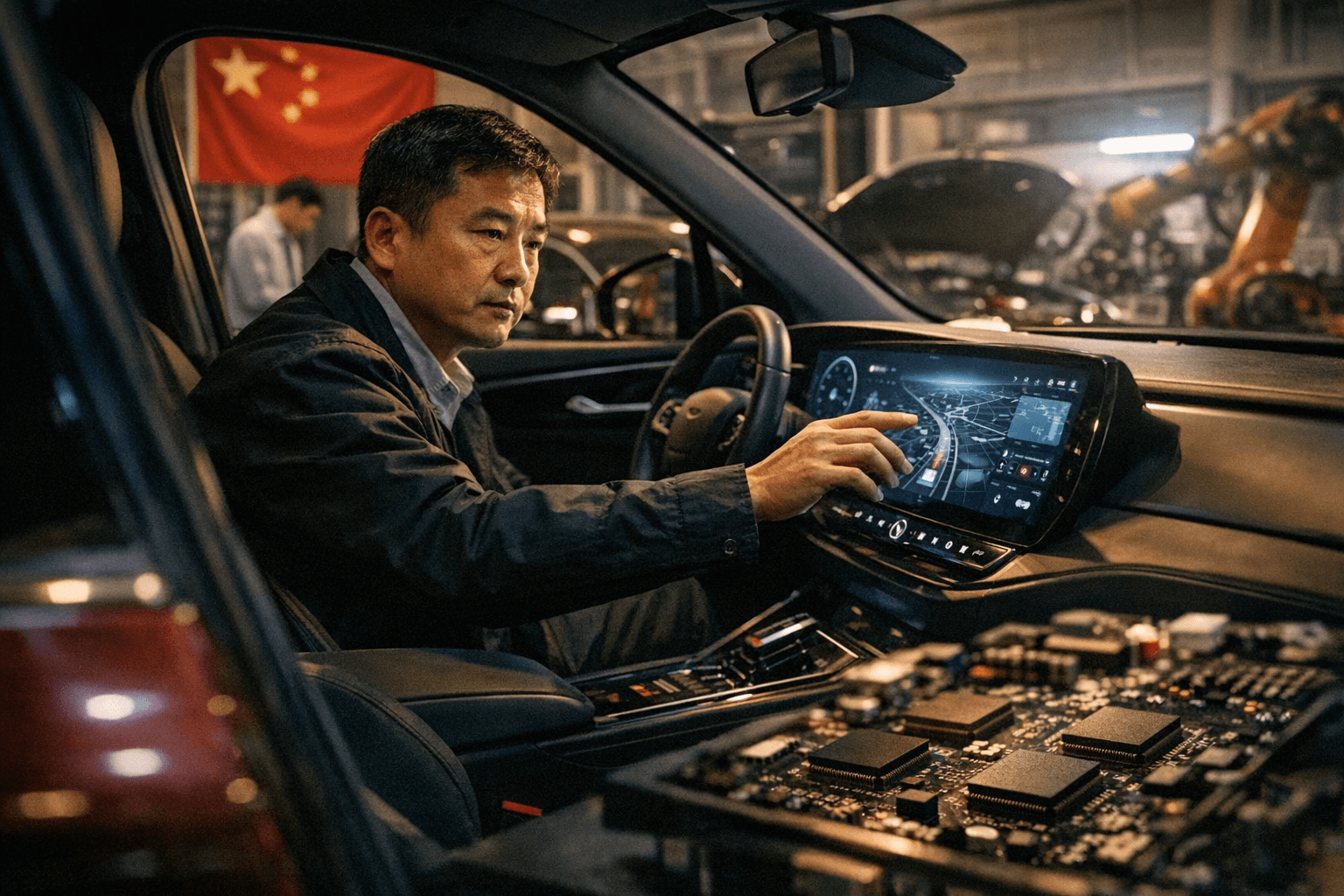
China’s carmakers have moved from winning on electric-vehicle volume and price to pursuing the software layer that could define the next auto market. At the Beijing Auto Show, executives described a business in which the line between automaker and technology company had largely disappeared, as the country’s AI push spilled into vehicles built to reason, assist and adapt in real time.
That shift was tied to Beijing’s AI Plus strategy, which has encouraged companies to embed artificial intelligence across manufacturing, healthcare and the broader economy. In autos, the goal went beyond convenience features. Chinese manufacturers have been redesigning EVs as software platforms built on domestic chips and homegrown code, a move meant to reduce dependence on high-end semiconductors controlled by U.S. firms and other foreign suppliers.
The most visible examples came from Xpeng and Xiaomi. Their updated systems have been designed to handle broad commands from drivers, navigate without fixed mapping in some cases, and take over routine tasks such as reservations and note-taking. The systems can also adjust lighting and music when they detect stress, turning the cabin into something closer to an AI assistant than a conventional dashboard. For consumers, the appeal is clear: fewer manual steps, more personalization and a car that responds to context instead of only to touchscreens and buttons.

The harder question is whether those features create a durable advantage or just a more polished demo. If the systems work reliably, they could make Chinese cars harder to match on user experience, especially as software becomes a bigger part of what buyers expect from a vehicle. But the competitive edge will depend on how well automakers balance novelty with safety, latency, data security and regulatory scrutiny. A car that can plan, speak and adapt will also need to prove that it can do those things consistently on the road.
The industrial stakes are larger than one product cycle. If Chinese automakers succeed in turning AI into the core of the car, they will pressure U.S. rivals not only on price and battery scale, but on software architecture, chip sourcing and the ownership of mobility data. That would ripple through supply chains from semiconductors to sensors and reshape the technology standards that govern the global auto industry. What began as an EV race has become a fight over who controls the intelligence inside the vehicle.
This article was produced by Prism’s automated news system from verified source data, official records, and press releases, then run through automated quality and moderation checks before publishing. The system is built and supervised by the people who set the standards it runs under. Read our full AI policy.
Did this article answer your question?