China’s EV factories dominate global auto industry as exports surge
China’s EV surge is now a geopolitical contest, as record production and exports force the U.S. and Europe to defend jobs, supply chains, and industrial power.
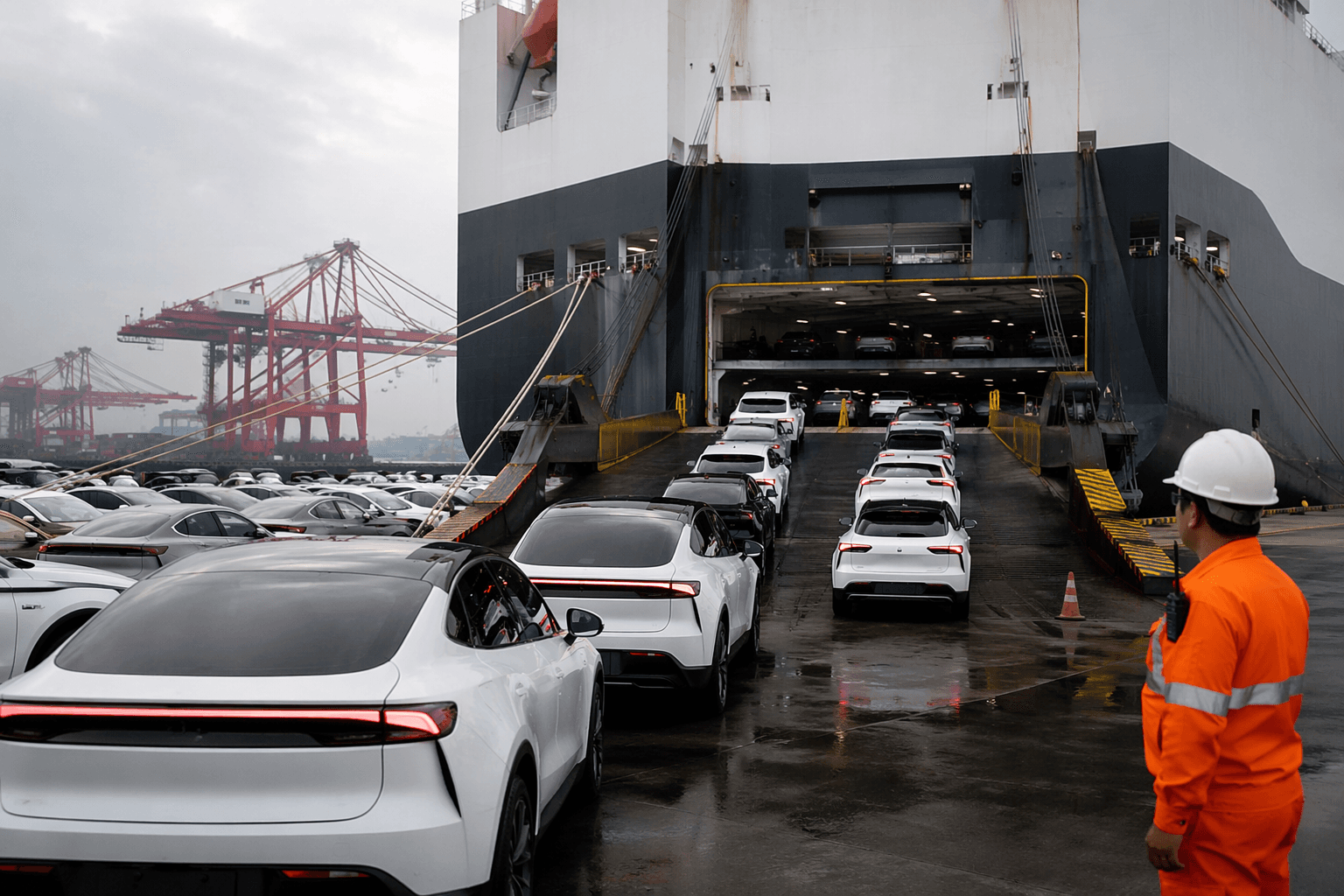
China’s EV machine now sets the pace
China’s electric vehicle industry has become the gravitational center of the global auto market. In 2024, the world produced 17.3 million electric cars, and 12.4 million of them were made in China, giving the country more than 70% of global EV production. That dominance is not just about volume. It means China controls the most important part of the modern car industry’s cost curve, from mass manufacturing to batteries, software integration, and the scale that lets suppliers and assemblers learn faster than rivals.
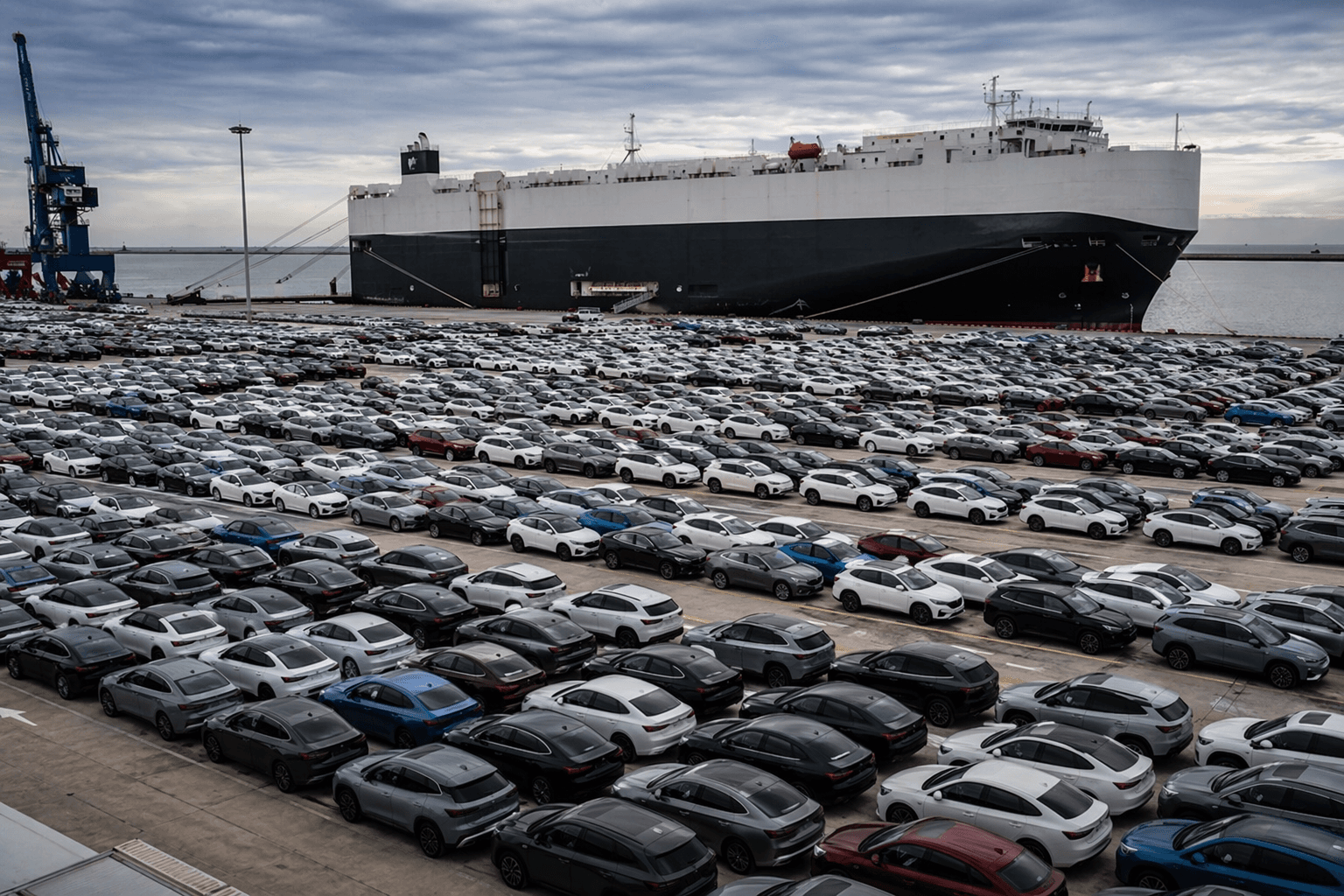
The International Energy Agency says the 2024 market was shaped by the continued expansion of Chinese manufacturers, and the numbers explain why. Chinese OEMs accounted for more than 80% of domestic production in China last year, up from roughly two-thirds in 2021. The home market is no longer a battleground where foreign brands can rely on legacy strength. It is increasingly a system built around local firms, local suppliers, and local technological standards.
Domestic pressure is pushing Chinese firms abroad
The deeper story is not only that China makes more EVs than anyone else. It is that the internal competition has become so intense that Chinese automakers are being pushed to look beyond their borders. Reuters reported that Chinese electric car makers invested more abroad than at home for the first time in 2024, a striking marker of how much the domestic market has tightened. Rhodium Group data show why: domestic EV investment in China fell from $94 billion in 2022 to $15 billion in 2024.
That collapse does not suggest weakness in the industry so much as a shift from expansion at home to strategic deployment overseas. Chinese brands are still scaling, but they are doing it in a market where the winners have already hardened, margins have become thinner, and survival depends on export channels and foreign plants. Reuters also reported that Chinese carmakers shipped 6.4 million passenger and commercial vehicles from China last year, a reminder that exports are now a core outlet for excess capacity and a tool for global expansion.
Trade barriers are rising in response
That export surge has triggered a political and commercial backlash. In the United States, the Biden administration announced on May 14, 2024, that tariffs on Chinese EVs under Section 301 would rise from 25% to 100%. The stated logic was blunt: China’s subsidies, overcapacity, and export growth were distorting competition.
The European Union moved in a similar direction. The European Commission adopted definitive countervailing duties on battery electric vehicles from China, with the measures applicable from October 30, 2024. EU member states backed the tariff plan in a vote on October 4, 2024, after the Commission concluded that China’s BEV value chain benefits from unfair government subsidies and threatens injury to EU producers. The political message in both markets is the same: Chinese EV scale is no longer being treated as ordinary competition, but as a strategic challenge that demands defensive policy.
Yet analysts at the Center for European Reform argue that tariffs alone will not solve Europe’s deeper competitiveness problem. That warning matters because it points to the limits of trade barriers. Duties can slow imports, but they do not automatically rebuild battery supply chains, software capabilities, charging ecosystems, or the industrial depth needed to match China’s scale.
The full ecosystem is the real advantage
China’s advantage is not confined to final assembly lines. It comes from controlling the full EV ecosystem, where manufacturing, batteries, software, and supplier networks reinforce one another. That integration compresses costs, speeds iteration, and helps Chinese brands move from domestic dominance to international pressure campaigns.
Rhodium Group says the zero-emission vehicle supply chain is the first major test case for Chinese manufacturers’ ambition to globalize through foreign direct investment. That is the right framework for understanding the current moment. Chinese companies are not just exporting finished vehicles. They are trying to export an industrial model that can be reproduced abroad, even if the IEA notes that overseas production has not yet ramped up enough to offset pressure at home.
For non-Chinese carmakers, that creates a difficult strategic choice. Competing only on price is increasingly unrealistic. Competing only on brand is dangerous when Chinese firms can offer scale, speed, and lower costs at the same time. The result is a narrowing window for legacy automakers to localize battery sourcing, cut software lag, and rework their supply chains before the market hardens around Chinese-led standards.
What this means for U.S. industrial policy and jobs
For the United States, the EV race is now a test of industrial policy, not just tariff policy. A 100% tariff may reduce near-term pressure from Chinese imports, but it does not by itself create domestic battery plants, software talent, mineral processing capacity, or the supplier ecosystems that make EV manufacturing durable. If China’s edge lies in integrated scale, then the U.S. answer has to be equally systemic.
That has direct implications for jobs. Assembly work, battery manufacturing, component supply, logistics, and engineering are all tied to where the next generation of vehicles is built. If Chinese firms continue to undercut rivals abroad while expanding selectively overseas, the jobs at risk are not just in auto plants. They also include the wider industrial network that depends on vehicle production, from parts suppliers to port and freight activity.
The pressure is spreading beyond the United States and Europe as Chinese brands gain share quickly in fast-growing markets such as Brazil and Southeast Asia. In those places, the stakes are especially visible. Cheaper imports can bring more EVs to market faster, but labor and industry groups warn they can also crowd out local production before domestic industries have time to mature.
China’s EV boom is no longer a story about one country’s carmakers getting ahead. It is a contest over who sets the rules of the next auto era. With output, exports, and investment all pointing outward, China has turned EVs into a strategic instrument of industrial power, and the rest of the world is now racing to decide whether it can respond before the gap becomes permanent.
This article was produced by Prism’s automated news system from verified source data, official records, and press releases, then run through automated quality and moderation checks before publishing. The system is built and supervised by the people who set the standards it runs under. Read our full AI policy.
Know something we missed? Have a correction or additional information?
Submit a Tip
