Goldman Sachs raises S&P 500 target to 8,000 on earnings strength
Goldman Sachs pushed its S&P 500 target to 8,000, but the call rests on a narrow earnings engine: AI-linked companies and mega caps.
Goldman Sachs lifted its 2026 year-end target for the S&P 500 to 8,000 from 7,600, arguing that corporate profits have held up well enough to carry U.S. stocks higher. The new target sits 6.4% above the index’s last close of 7,519.12, a gap that looks modest on paper but requires a very specific earnings path to hold.
The bank also raised its earnings-per-share forecast for the S&P 500 to $340 in 2026, implying 24% year-over-year growth, and to $385 in 2027, a further 13% increase. That is a sharp upgrade from Goldman’s April outlook, when it expected the index to end 2026 at 7,600 and modeled 12% EPS growth in 2026 and 10% in 2027. The revised forecast was led by chief U.S. equity strategist Ben Snider.

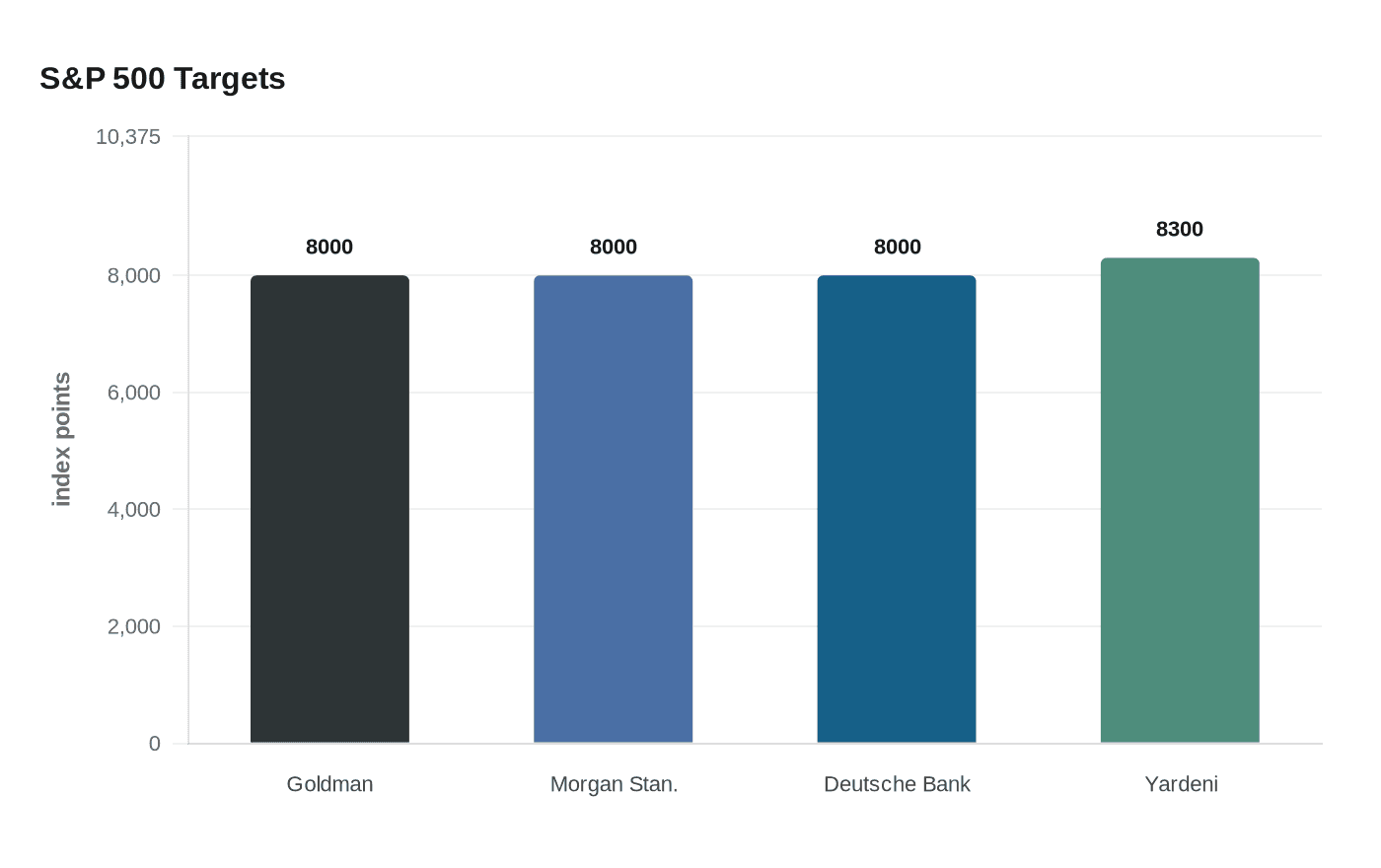
The message is less about valuation exuberance than about whether earnings can keep outrunning the economy. Goldman said earnings growth has powered the market’s returns so far this year and expects that pattern to continue, even as the S&P 500 logged its 19th record close of 2026 around the time of the call. Bloomberg reported that Goldman now joins Morgan Stanley and Deutsche Bank AG in projecting a 17% return for the index this year, while MarketWatch said Goldman’s 8,000 target now matches those peers; Yardeni Research is even higher at 8,300.
Goldman’s own numbers show how much the rally depends on a narrow set of winners. The firm said artificial intelligence infrastructure beneficiaries could drive roughly half of S&P 500 earnings growth this year, with semiconductor shares at the center of the build-out already outpacing forward earnings. That leaves the rest of the market, and the broader economy, in a slower lane. Weak consumer spending and elevated costs remain real constraints, while tariffs, geopolitics and skepticism about the durability of AI profits all hang over the outlook.
Goldman also said valuation multiples were likely to stay broadly flat, suggesting that any further gains would have to come mainly from profits rather than richer prices. Modestly lower Treasury yields could help, but the firm warned that slower economic and earnings growth, along with uncertainty over geopolitics, could offset that support. For workers and consumers, the disconnect is clear: a rising index does not mean household demand is strong. For retirement savers, the upside still depends on whether mega-cap technology, chipmakers and other AI-linked companies can keep delivering the earnings that now justify Wall Street’s latest round of optimism.
This article was produced by Prism’s automated news system from verified source data, official records, and press releases, then run through automated quality and moderation checks before publishing. The system is built and supervised by the people who set the standards it runs under. Read our full AI policy.
Know something we missed? Have a correction or additional information?
Submit a Tip