China's Factory Prices Rise for First Time in 41 Months Amid Middle East Conflict
China's factory prices rose 0.5% in March, ending 41 months of deflation as Strait of Hormuz war disruptions pushed energy costs deep into Chinese supply chains.
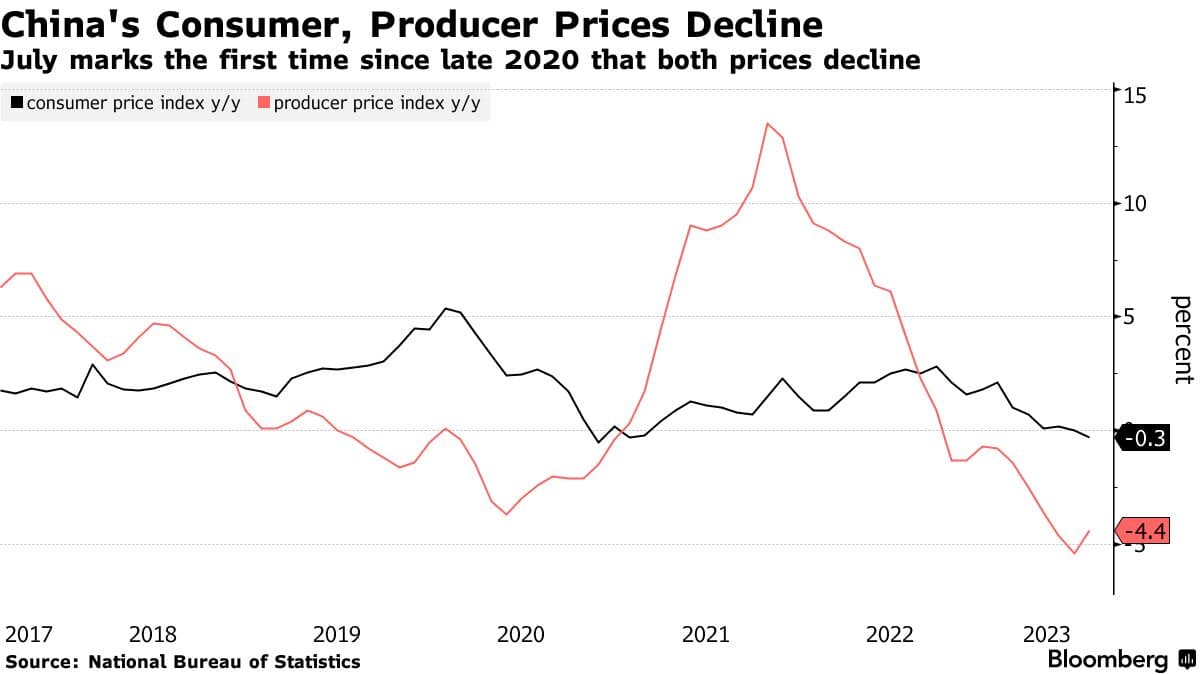
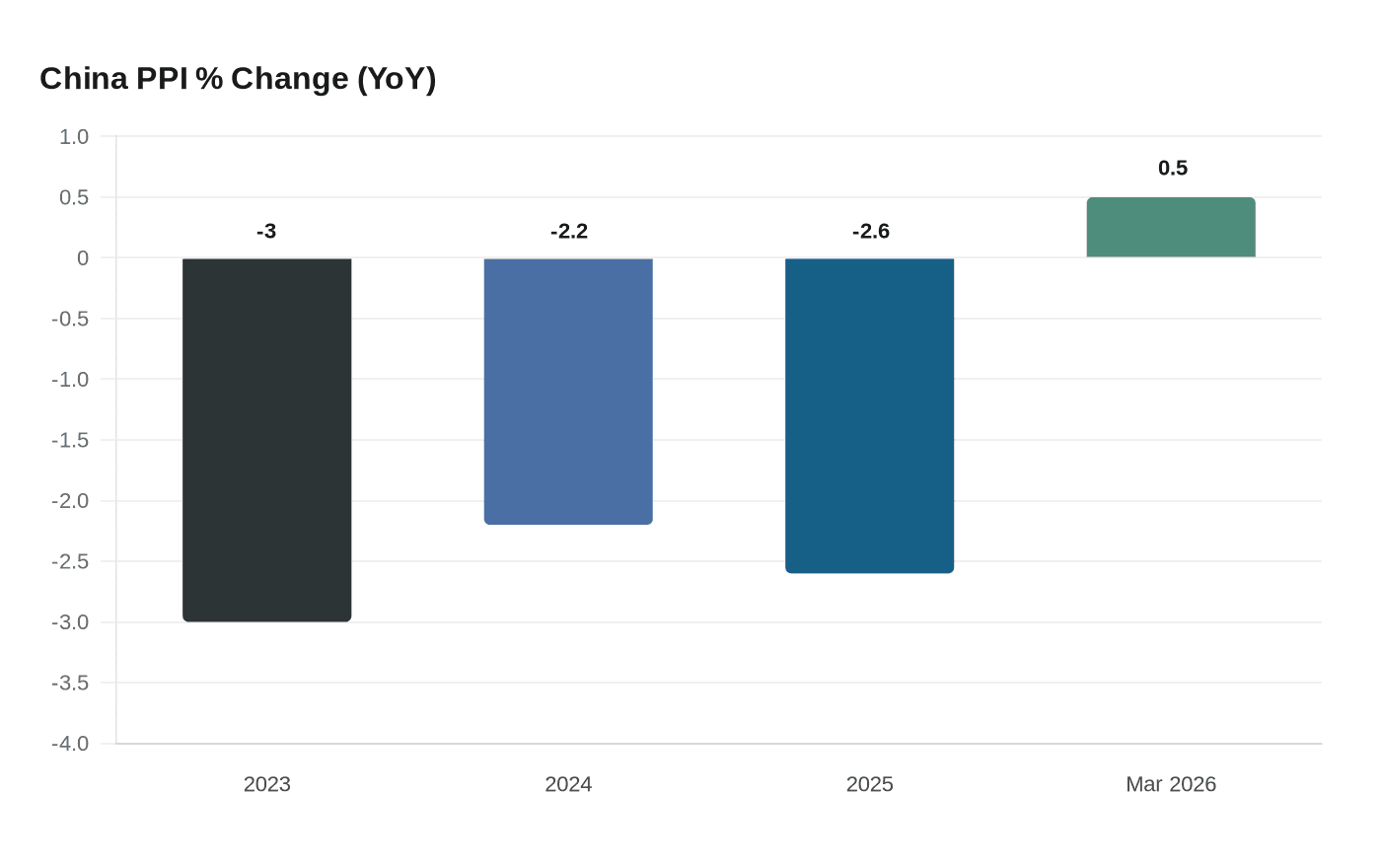
Three and a half years of downward pressure on Chinese factory prices reversed course in March 2026, when the National Bureau of Statistics reported that the producer price index climbed 0.5 percent year-on-year, its first positive reading since October 2022. The number beat a Reuters analyst poll forecasting a 0.4 percent gain and arrived as energy costs from a disrupted Middle East supply chain reached into Chinese industrial operations with growing force.
NBS statistician Dong Lijuan attributed the turnaround to imported inflationary pressures driven by escalating regional conflict, as well as improved supply-demand dynamics in select domestic industries. The source of those pressures is the Strait of Hormuz, which since the outbreak of war between U.S.-Israeli forces and Iran on February 28 has been effectively shut to normal traffic. The strait ordinarily carries about 25 percent of global oil trade and 20 percent of global liquefied natural gas shipments, a chokepoint whose disruption ricochets across every supply chain that runs on fossil fuels.
The numbers illustrate the scale of what China's factories are now absorbing. Shipments through the strait have been restricted by more than 90 percent, cutting off roughly 10 million barrels per day of oil production. Brent crude prices jumped 10 to 13 percent in early trading on the conflict's outbreak, with analysts warning the benchmark could breach $100 per barrel if disruptions persist. Iraq and Kuwait, unable to move crude out of the Gulf, began curtailing their own production in early March as onshore storage filled to capacity. As of April 9, Abu Dhabi National Oil Company CEO Sultan Al Jaber confirmed the strait remained effectively closed despite a ceasefire agreement, with Iran still restricting and conditioning vessel traffic and 230 loaded oil tankers idling inside the Gulf.
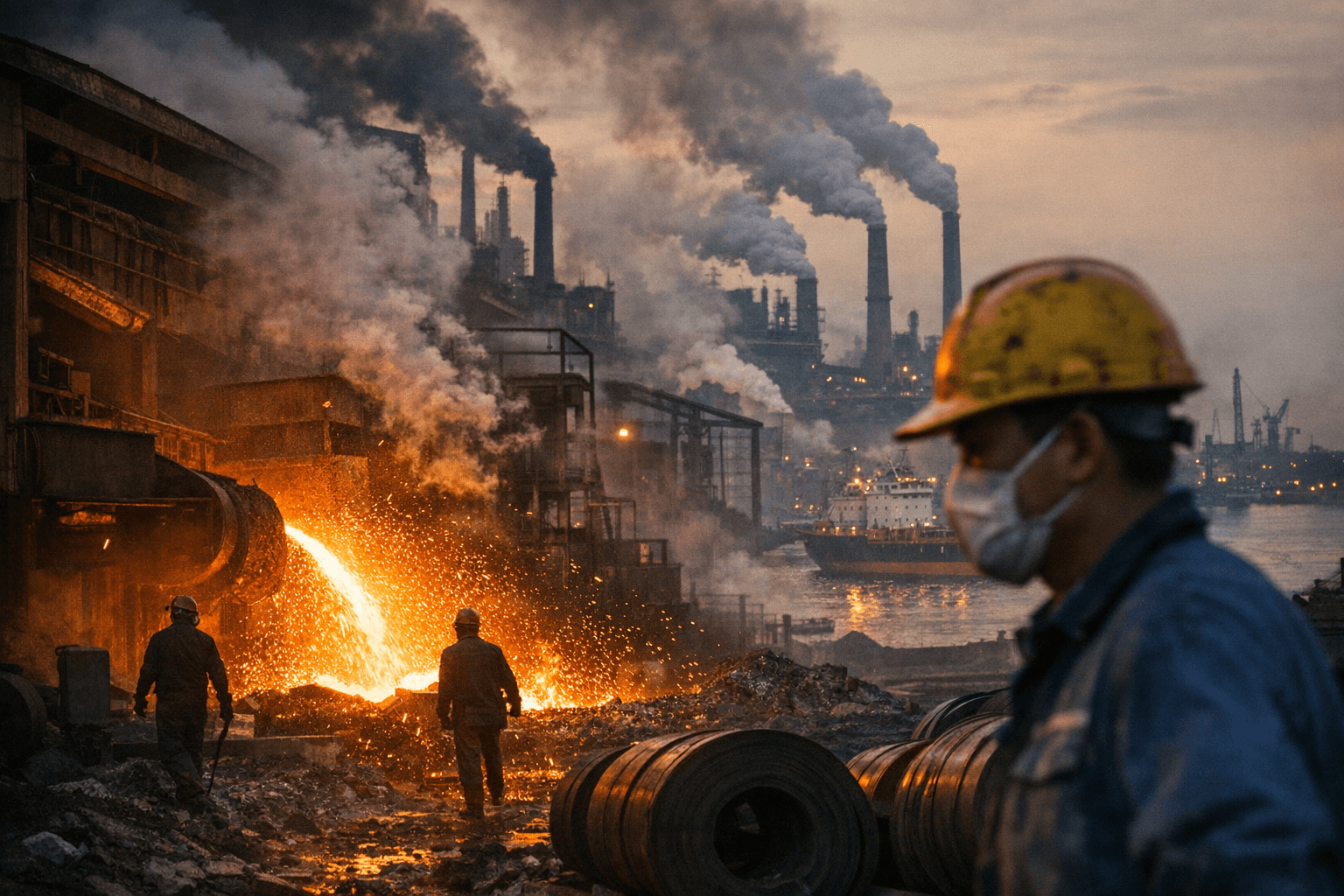
The Dallas Federal Reserve estimated that a complete cessation of Gulf exports would remove close to 20 percent of global oil supplies, roughly 80 percent of which normally flows to Asia. That asymmetric exposure means China faces outsized pressure from the closure relative to Western economies.
China's position is complicated by a separate arrangement with Iran, which has continued routing crude specifically to Chinese ports. TankerTrackers.com co-founder Samir Madani reported that Iran sent at least 11.7 million barrels through the strait to China since hostilities began on February 28, helping partially offset the broader supply crunch. Beijing has also capped domestic fuel price increases to cushion consumers from the sharpest pump-price spikes.
The reversal carries substantial implications beyond China's borders. For the better part of three years, falling Chinese factory prices acted as a global disinflationary force, with the PPI declining 3 percent in 2023, 2.2 percent in 2024, and 2.6 percent in 2025. As Chinese export prices fell, they helped suppress consumer price pressures in importing nations, including the United States, where electronics, machinery, consumer goods, and industrial components from Chinese factories have served as a persistent check on inflation. That buffer is now eroding. Higher energy input costs at the factory gate will either compress margins for Chinese exporters or push export prices upward, transferring costs to American importers and, eventually, consumers.
Beijing faces a difficult balancing act. The People's Bank of China had signaled scope for further monetary easing to support growth, but firming inflation could constrain those plans. A central bank adviser warned in late March that China must now juggle rising inflation against persistent growth risks. Core CPI, which strips out food and fuel, grew 1.1 percent year-on-year in March, down from 1.8 percent in February, suggesting the inflationary impulse remains concentrated in energy-related sectors for now.
The Dallas Fed drew a direct line between the current disruption and three previous oil shock episodes: the Yom Kippur War in 1973, the Iranian Revolution in 1979, and the Iran-Iraq War in 1980, each of which triggered significant global inflationary shockwaves. With 230 tankers still trapped in the Gulf and the strait far from reopening, March's 0.5 percent PPI reading may prove only the beginning of China's price turn.
This article was produced by Prism’s automated news system from verified source data, official records, and press releases, then run through automated quality and moderation checks before publishing. The system is built and supervised by the people who set the standards it runs under. Read our full AI policy.
Did this article answer your question?

