Stock Futures Pause as Iran Claims Ceasefire Broken Within Hours
Iran claimed the U.S. broke the two-week ceasefire within hours, sending S&P 500 futures down 0.4% and reversing a 1,325-point Dow rally.
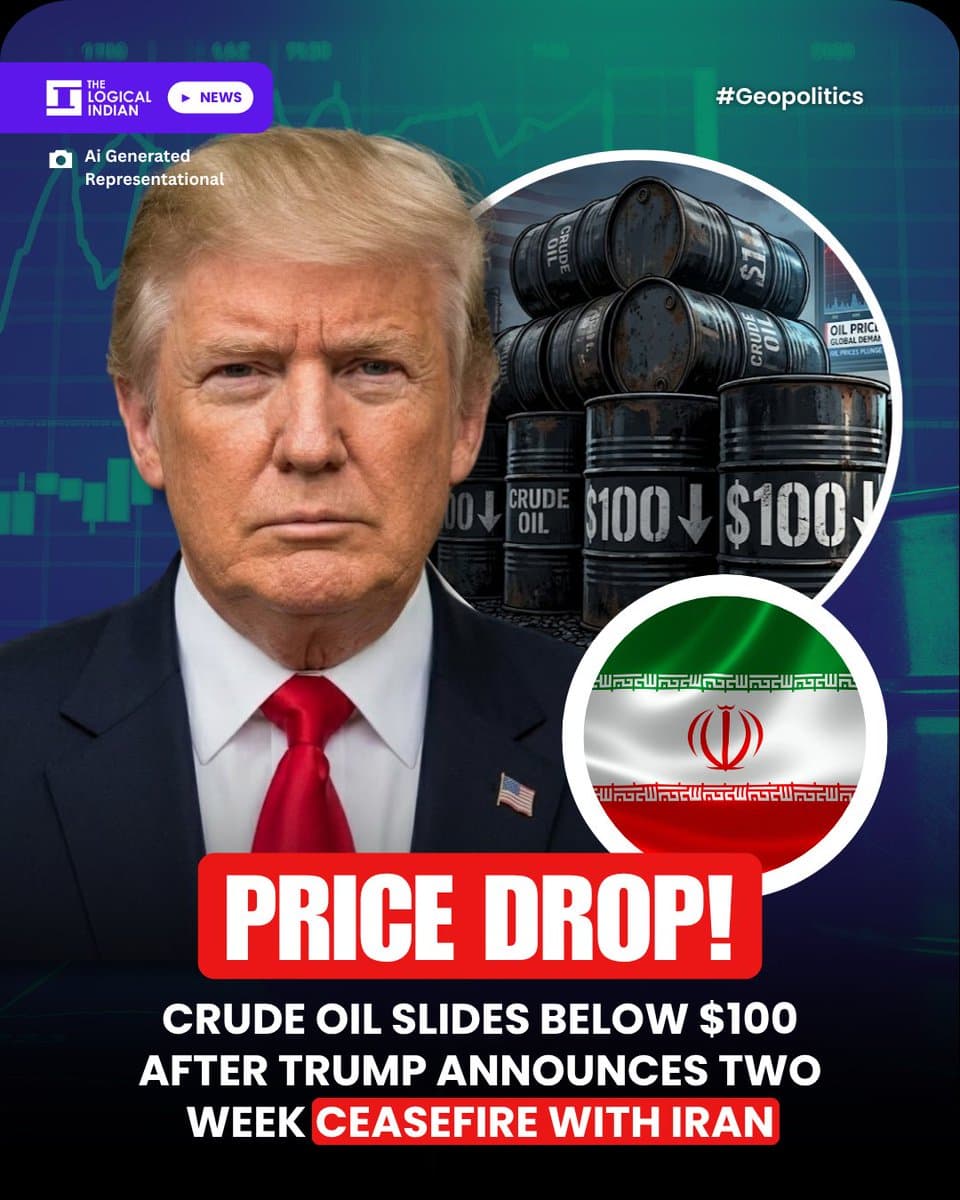
Less than 24 hours after President Donald Trump announced a two-week suspension of hostilities with Iran, Tehran accused Washington of breaking the deal, rattling markets that had just staged one of their most dramatic single-day rallies in over a year.
S&P 500 and Nasdaq futures each slid roughly 0.4% before Thursday's opening bell, while Dow futures dipped approximately 0.5%, pulling back from the explosive gains of April 8, when the Dow surged 1,325.46 points, or 2.85%, to close at 47,909.92 — its best single session since April 2025. The S&P 500 gained 2.51% to 6,782.81 and the Nasdaq climbed 2.80% to 22,635.00 on Wednesday as investors priced in de-escalation. Oil told a similar story: Brent crude plunged roughly 13% to settle at $94.75 per barrel on the ceasefire news, down from a Tuesday high of $117.
The source of Thursday's unease was pointed. Iran's parliamentary speaker Mohammad Bagher Ghalibaf accused the United States of breaching the agreement, stating: "The deep historical distrust we hold toward the United States stems from its repeated violations of all forms of commitments." Iranian President Masoud Pezeshkian went further, calling Israel's ongoing strikes in Lebanon a "clear violation" of the ceasefire. Israeli Prime Minister Benjamin Netanyahu offered a flat rebuttal: "There is no ceasefire in Lebanon."
That single line crystallized the core fault line threatening the entire framework. The Trump administration pressed Netanyahu to scale back strikes on Lebanon, but Israel moved ahead regardless, leaving open the question of whether the ceasefire's scope ever included Lebanon at all.
Trump's deal was itself announced under extraordinary pressure, coming less than two hours before his self-imposed 8 p.m. ET deadline on April 7, at which point he had threatened strikes on Iranian power plants and bridges if the Strait of Hormuz was not reopened. The agreement was brokered with significant input from Pakistan, specifically through conversations with Prime Minister Shehbaz Sharif and Field Marshal Asim Munir, with peace talks set to follow in Islamabad.
The stakes surrounding the Strait remain immense. Iran effectively declared the waterway closed on March 4, 2026, following U.S. and Israeli military operations that began in February, triggering what analysts have described as the largest disruption to world energy supply since the 1970s oil crisis. Roughly 20% of the world's seaborne crude and LNG transits the strait; 84% of those shipments are bound for Asian markets. Before the ceasefire, some Wall Street forecasts had oil approaching $200 per barrel. QatarEnergy declared force majeure on all exports after Brent surged past $120. U.S. gasoline prices crossed $4 per gallon nationally.
Even after Wednesday's oil plunge, Brent at $94.75 remains far above the approximately $70 per barrel level that prevailed before the conflict began.
Despite the futures weakness, U.S. stocks ultimately closed higher on April 9: the Dow finished at 48,150.80, up 0.58%, with the S&P 500 adding 0.62% to 6,824.66, extending win streaks for both indexes. The Russell 2000, notably, remains up more than 5% year-to-date, even as the Dow, Nasdaq, and S&P 500 are all negative on the year.
The macro backdrop added another layer of concern. The Bureau of Economic Analysis revised U.S. real GDP growth for Q4 2025 down to a 0.5% annualized rate, from an initial estimate of 1.4%, underscoring the economic fragility against which this geopolitical drama is playing out.
Geoff Yu, senior market strategist at BNY, captured the prevailing mood on CNBC's Squawk Box, noting that "investors will watch for something more durable than a two-week pause." Ed Yardeni of Yardeni Research was more sanguine, saying the ceasefire confirms his prior-week call that "the bottom for equities is in." The gap between those two positions may well define market direction for the weeks ahead, with formal U.S.-Iran negotiations yet to begin in Islamabad and Lebanon's status under the agreement still unresolved.
This article was produced by Prism’s automated news system from verified source data, official records, and press releases, then run through automated quality and moderation checks before publishing. The system is built and supervised by the people who set the standards it runs under. Read our full AI policy.
Did this article answer your question?

