Chinese beef importers back deforestation-free Brazil supply chains, challenging old assumptions
Chinese importers have pledged 50,000 metric tons of certified Brazilian beef, a small share that could still shift prices and supplier behavior.
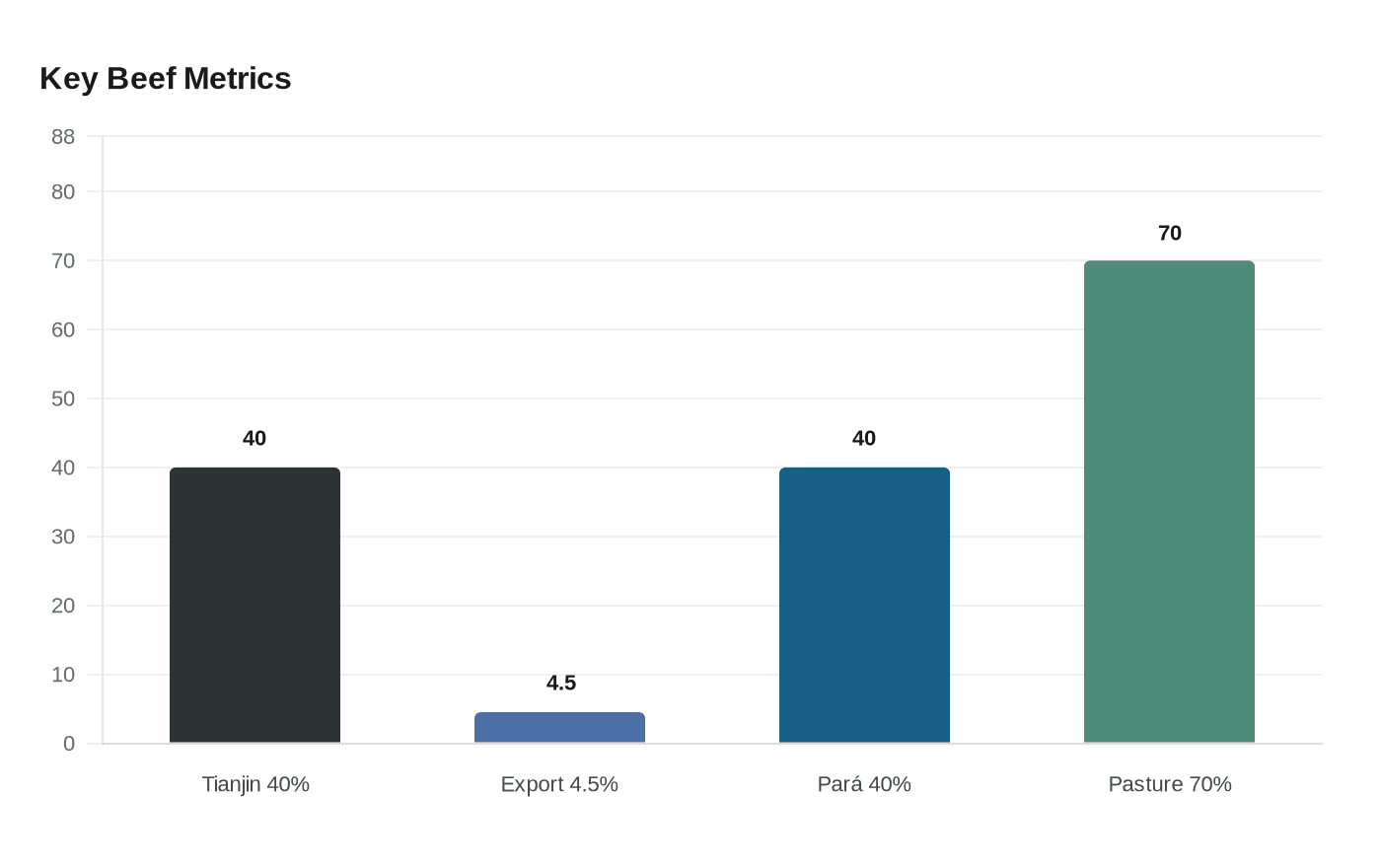
Chinese beef buyers are beginning to put real money behind deforestation-free supply chains in Brazil, a shift that could alter the incentives facing ranchers, exporters and retailers tied to Amazon-linked beef. The clearest sign is a pledge by members of the Tianjin Meat Industry Association, led by Xing Yanling, to buy 50,000 metric tons of certified Brazilian beef by year-end.
That volume is only about 4.5% of what Brazilian beef exporters are expected to sell to China this year, but it is large enough to matter commercially. The Tianjin group represents importers responsible for around 40% of China’s beef purchases from Brazil, which gives the commitment reach well beyond a symbolic premium product niche. For Brazilian sellers used to treating China as a market obsessed mainly with price, the signal is more disruptive: environmental compliance may now influence who gets access to one of their biggest customers.
Xing’s visit to the Brazilian Amazon in April appears to have sharpened that shift. On WeChat, she described the experience as being “enveloped by tens of thousands of shades of green.” That kind of language would once have sounded far removed from a hard-edged commodity trade. Now it reflects a broader change in China, where wealthier consumers are paying more attention to traceability, reputational risk and the environmental cost of what they buy.
The policy backdrop makes the move more than a one-off marketing gesture. China changed its forest law in 2019 to ban the trade of illegal timber. In 2023, China and Brazil signed a joint commitment to end illegal deforestation driven by trade. Last year, state-owned trader COFCO said it would eliminate deforestation from its supply chain. The beef sector may be the clearest test case because beef is less central to the Chinese diet than soy and is also one of the commodities most closely associated with forest loss.
That matters in Brazil because the Amazon remains highly exposed to cattle expansion. The World Economic Forum says about 40% of all deforestation in the Brazilian Amazon since 2001 has occurred in Pará state, where cattle ranching is the biggest driver of forest clearance. A 2024 scientific review found that roughly 70% of deforested land across the Amazon is occupied by pasture. Human Rights Watch says cattle ranching remains the biggest driver of deforestation in the region.
If Chinese importers keep rewarding verified, deforestation-free beef, the pressure could spread well beyond Tianjin. Traders may need cleaner sourcing to hold market share, ranchers may face stronger incentives to document land use, and Brazilian exporters may find that access to China increasingly depends on proving they did not clear forest for cattle.
This article was produced by Prism’s automated news system from verified source data, official records, and press releases, then run through automated quality and moderation checks before publishing. The system is built and supervised by the people who set the standards it runs under. Read our full AI policy.
Did this article answer your question?