Teachers union sets autumn strike ballot over pay and school funding
England’s biggest education union will ballot teachers and support staff from 3 October after warning pay, funding and workload are still heading the wrong way.

Classrooms across England could be pulled into fresh disruption this autumn, with the National Education Union preparing a strike ballot that could hit lessons, exam-year teaching and the childcare plans of working parents if ministers do not move on pay and school funding.
The NEU’s national executive has decided to open formal ballots for teachers and support staff in state-maintained schools in England on 3 October, with voting set to close on 15 December. The union says that step will follow unless the government takes urgent action to address what it sees as a worsening crisis in pay, funding and workload.

At the heart of the dispute is money. The NEU says early signals from the School Teachers’ Review Body process, together with decisions from the Chancellor and the Education Secretary, will not produce a fully funded pay offer above inflation. It also says schools are still short of the cash needed to avoid redundancies and rising workloads, leaving staffing stretched as the autumn term approaches.
The pressure behind the ballot is not new. Between February and April, indicative ballots showed strong backing for escalation. In the NEU’s pay ballot, 93.7% of teacher members in state schools in England rejected the government’s recommended unfunded 2.8% pay rise for 2025/26, and 83.4% said they would be willing to strike for a higher, fully funded award. The union says the government has also floated a 6.5% increase over three years, but argues that package is still unfunded and falls short of what is needed to repair teacher pay and improve retention.
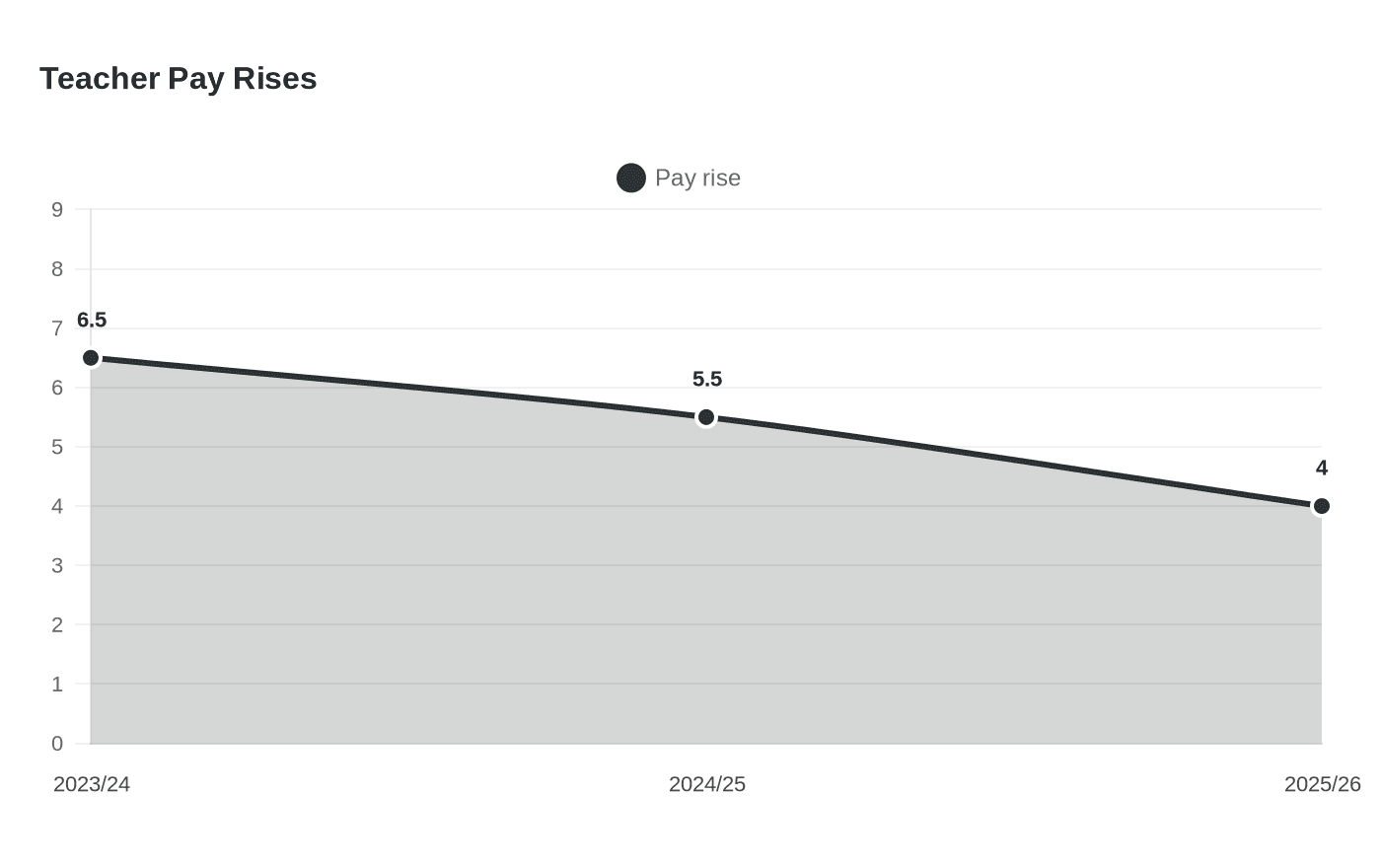
The NEU is trying to widen the argument beyond salary alone. It says schools are running on empty because of years of funding pressure, heavier workload and continuing real-terms pay cuts. Teachers received a 4% rise for 2025/26, after 5.5% in 2024/25 and 6.5% in 2023/24, when strike action by several unions helped force a settlement. Even so, the union says pay still needs to move toward reversing the losses that have built up since 2010.
The government now faces a clear test. If it wants to avert a strike ballot that could deepen disruption in the autumn, urgent action would mean a fully funded pay offer that beats inflation and enough school funding to protect jobs and ease workload. Without that, the NEU is signalling a longer fight over the future of staffing, pay and classroom stability in England.
This article was produced by Prism’s automated news system from verified source data, official records, and press releases, then run through automated quality and moderation checks before publishing. The system is built and supervised by the people who set the standards it runs under. Read our full AI policy.
Did this article answer your question?