Chinese exporters shrug off Trump visit, signal resilience amid trade tensions
Chinese exporters say they can absorb Trump’s pressure, even as tariffs once hit 164% on the U.S. side and 146% on China’s.
Chinese exporters are signaling that they can ride out another round of U.S. pressure, even as Donald Trump prepares to meet Xi Jinping in Beijing later this month on his first trip to China in eight years. On factory floors and in sales offices, the mood is less panic than hard-earned endurance.
Yu Yangxian, who sells electric lockers and vending machines, said Trump’s trip is “none of her business,” even though many of her company’s products end up in the United States. Her view reflects a broader confidence among exporters who have spent years adapting to tariff shocks, supply-chain disruptions and shifting demand. Yu said the company has been able to pass some added costs on to American consumers, and argued that as long as the United States keeps trading, it will still need Chinese suppliers.
That confidence rests on more than bravado. Yu said Chinese exporters have become more resilient because of stronger supply chains, better products and a long-running push by Beijing for self-sufficiency. Her company came through a turbulent 2025, when tariffs briefly surged to triple digits, with its U.S. client base largely intact and new markets opening elsewhere. For policymakers in Washington, that is an uncomfortable signal: pressure that once might have forced concessions now appears more likely to be absorbed, routed around or pushed downstream into prices.
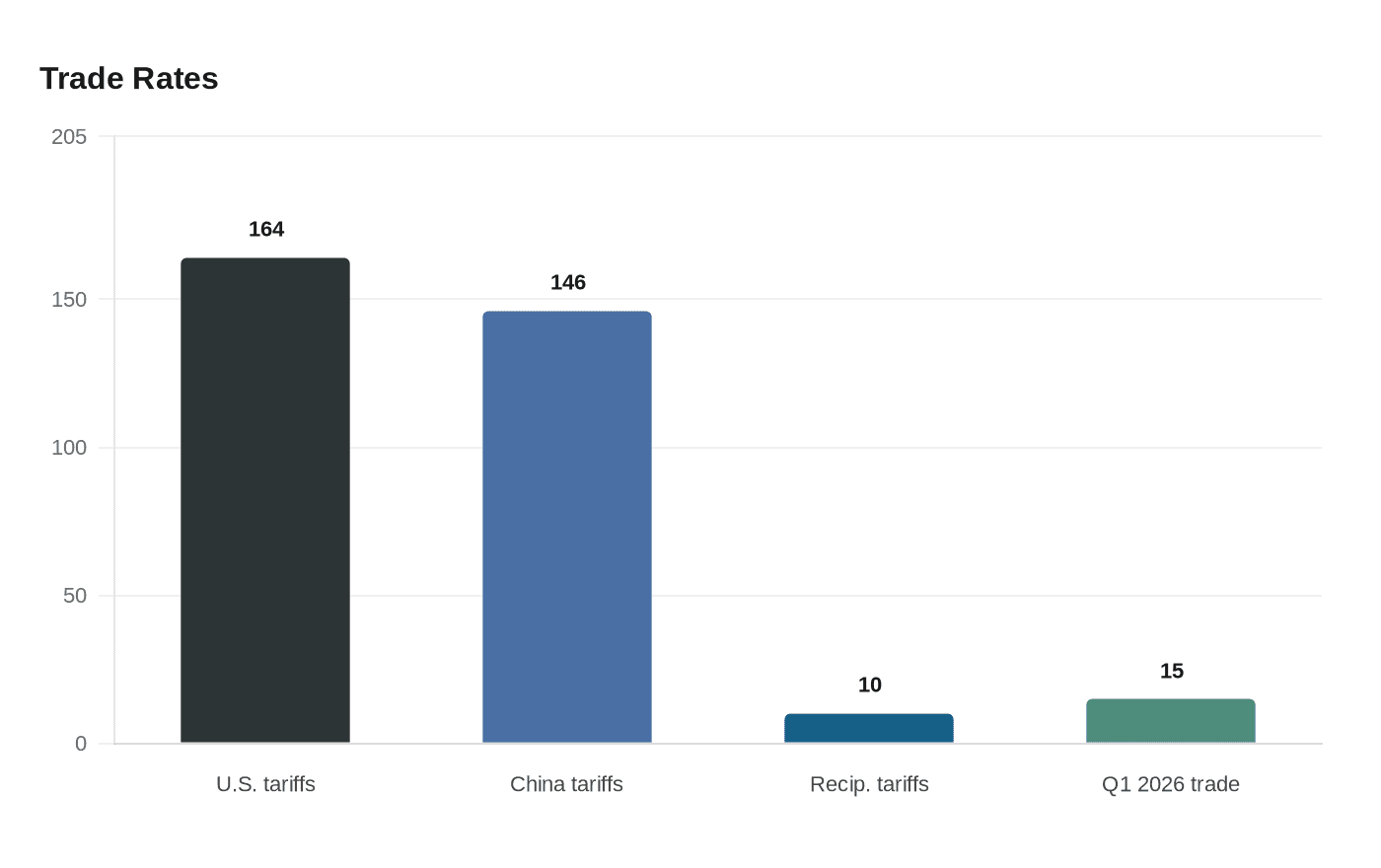
The trade conflict still carries teeth. In mid-April 2025, average U.S. tariffs on Chinese goods reached 164%, while China’s reached 146%, before both sides lowered some reciprocal tariffs to 10% for 90 days later that year. Even so, Chinese officials have since pointed to resilience in the broader economy, with the General Administration of Customs saying first-quarter 2026 foreign trade posted double-digit growth and Reuters-linked reporting putting the increase at about 15% year on year.
That momentum is already shaping business behavior. Retail and e-commerce groups including JD.com, Freshippo, Yonghui and Meituan have launched efforts to help tariff-hit exporters shift more sales into the domestic market. Beijing has also leaned on strategic leverage, including export controls on rare earths, as part of the wider trade contest.
For Trump, the trip to Beijing will test whether face-to-face diplomacy can still move Chinese business behavior, or whether exporters have truly learned to live with U.S. threats. Yu’s answer suggests the second possibility. Chinese manufacturers are not ignoring the pressure. They are recalculating around it.
This article was produced by Prism’s automated news system from verified source data, official records, and press releases, then run through automated quality and moderation checks before publishing. The system is built and supervised by the people who set the standards it runs under. Read our full AI policy.
Did this article answer your question?