Chinese Humanoid Robots Race Ahead in Beijing Half-Marathon Showcase
A Honor-built robot named Lightning finished Beijing’s half-marathon course in 50:26, outrunning the human world record time on a closed, closely managed route.
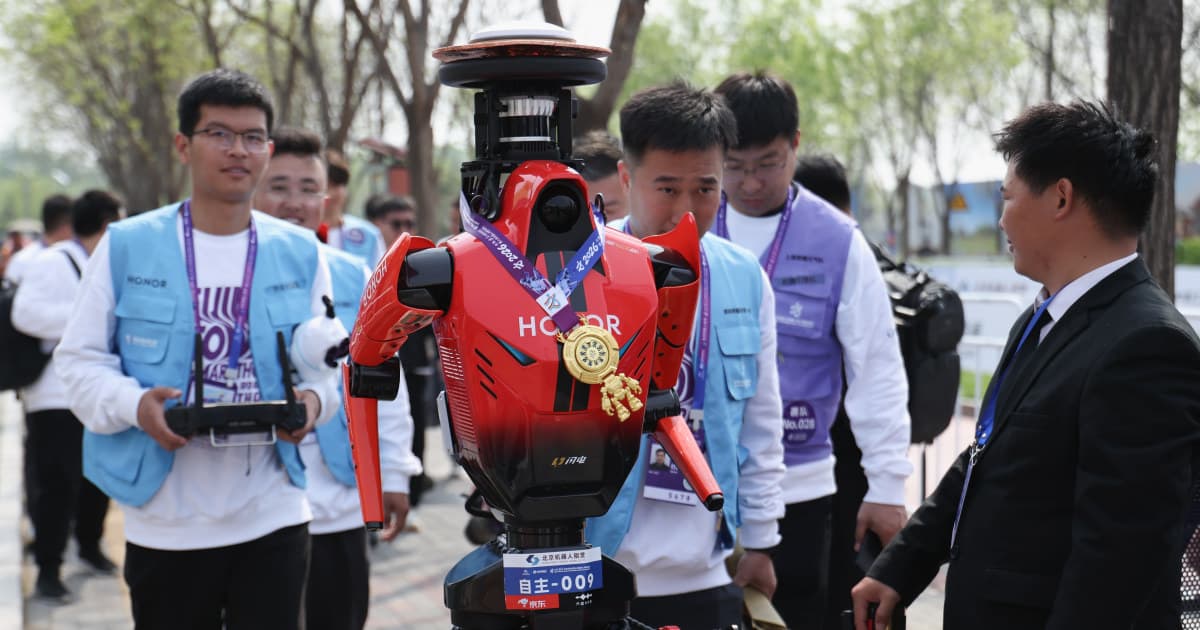
A humanoid robot named Lightning surged through Beijing’s half-marathon course in 50 minutes and 26 seconds, a result that put a machine ahead of the human world-record pace and turned the city’s latest robot race into a blunt measure of how far China’s humanoid systems have come. Built by Honor, the Chinese smartphone maker, Lightning won on a route that ran from Kechuang 17th Street by Tongming Lake to Nanhaizi Park, a course designed to test not just speed but balance, navigation and recovery under pressure.
The race, held in Beijing E-Town on April 19, was the second humanoid robot half-marathon staged in the city and drew more than 100 robot teams, with Beijing sources saying 26 brands and more than 300 humanoid robots were involved. A full-scale test had been run from the evening of April 11 into the early morning of April 12, underscoring how much logistical planning the event required. Organizers tightened the rules from last year, limiting human intervention, standardizing starts, sharpening scoring and penalties, and adding stronger safety and emergency protocols. About 12,000 human runners competed on a separate parallel course, giving the event an unusual side-by-side comparison between athletic flesh and machine engineering.
The numbers tell a story of real technical progress, but not a finished product. Nearly 40 percent of entrants in the test event were autonomous navigation teams, a sign that the field is moving beyond remote control toward systems that can read a course, adjust posture and keep moving without constant human correction. Beijing officials used the event to stress embodied artificial intelligence, battery management, balance control and millisecond-level posture correction, the exact skills a humanoid robot would need if it is ever to work reliably in factories, warehouses, hospitals or public spaces.
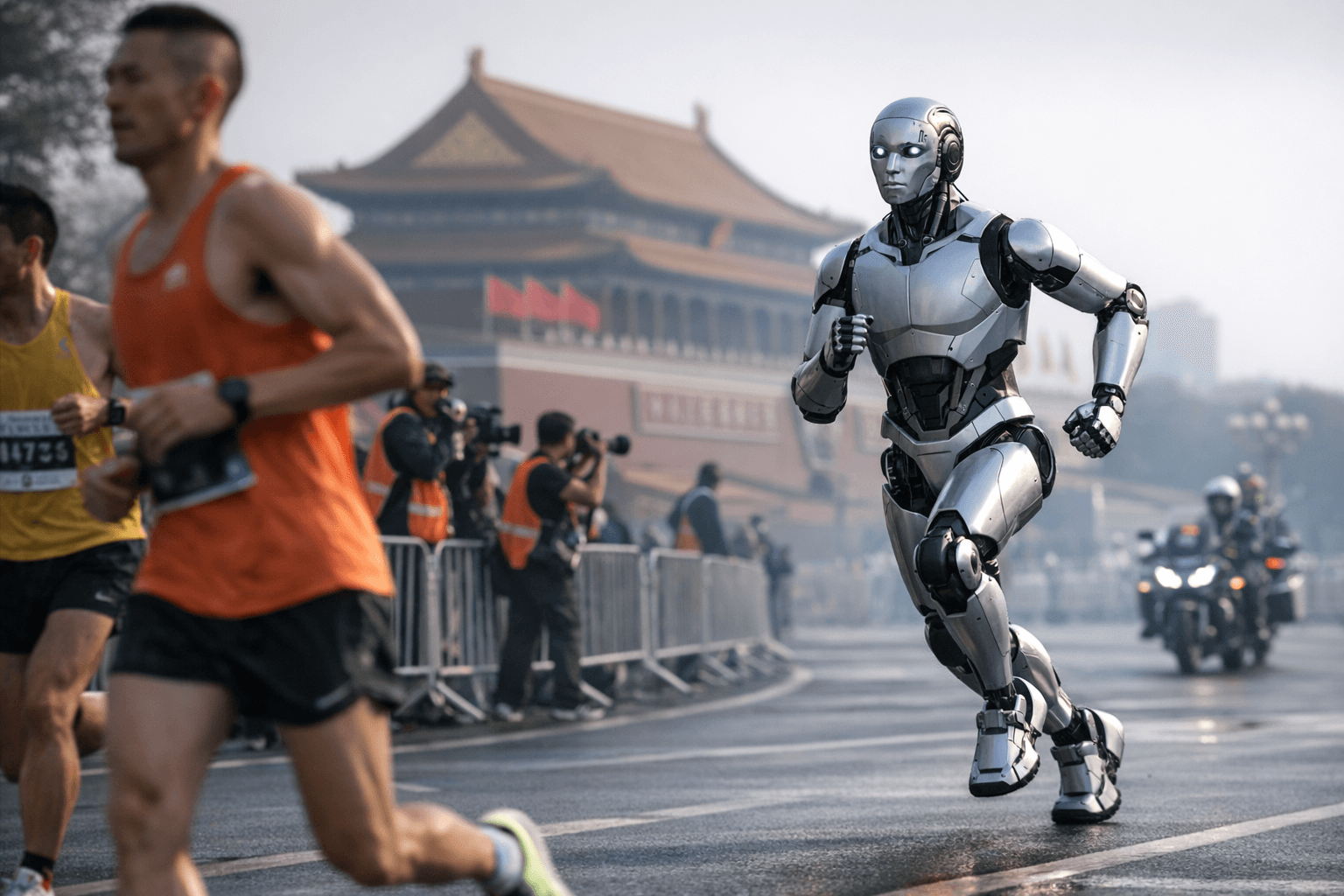
The spectacle also offered a reality check. One robot fell at the starting line and another struck a barrier, reminders that speed on a closed course is not the same as dependable autonomy in a messy world. The leap from last year’s winning time of 2 hours, 40 minutes and 42 seconds to this year’s 50:26 was dramatic, but it came on a highly managed route with separate tracks and strict oversight. What Beijing showcased was not a robot race novelty so much as a public demonstration of China’s industrial ambition, where commercialization, technical maturity and national prestige are all running the same course.
This article was produced by Prism’s automated news system from verified source data, official records, and press releases, then run through automated quality and moderation checks before publishing. The system is built and supervised by the people who set the standards it runs under. Read our full AI policy.
Did this article answer your question?