Choose Your First Outdoor Bonsai Based on Climate, Space, Season
Match the tree to your USDA zone, the light and space you actually have, and whether you can give it winter dormancy—buy a cheap one‑gallon nursery plant and learn on that before splurging.
Outdoor bonsai succeed or fail on three practical axes: climate, space, and season. Start with those, not the prettiest finished specimen. Below I lay out exactly how to use your local climate data, your balcony/garden realities, and seasonal care needs to pick a first outdoor bonsai you can keep alive and enjoy.
1. Climate: pick species that match your USDA hardiness and local weather
Decide by hardiness first. As Invivobonsai puts it, “A very helpful tool for picking an outdoor species for bonsai (and other gardening/landscaping) is the concept of USDA Hardiness Zones.” Look up your zone, then check the zone range for each species you’re considering (for example, search “Japanese maple USDA Hardiness zone”). Temperate and cold‑climate species—Japanese maple (Acer palmatum), trident maple (Acer buergerianum), most pines (Pinus spp.), junipers (Juniperus spp.), elms (Ulmus spp.) and ginkgo (Ginkgo biloba)—need winter dormancy and belong outdoors where winters get cool. Subtropical/mediterranean climates open options like olive (Olea europaea), pomegranate (Punica granatum), Japanese black pine (Pinus thunbergii), and certain Chinese elms (Ulmus parvifolia), but those still need frost protection or greenhouse cover when temperatures dip. For maritime or continental sites, follow the nuance from the selection guidance: maritime (moist summers) favors very well‑draining mixes and sun‑tolerant species; continental (hot summers/cold winters) requires summer shade and serious frost protection for container trees.
- Climate details to use: Japanese maple and trident maple will do well only where winters provide dormancy; Kishu juniper (Juniperus chinensis “Kishu”) is slower in cool climates and faster in heat—use that to decide if you want slow development or quicker ramification.
2. Space: choose a tree that fits balcony vs garden vs indoors
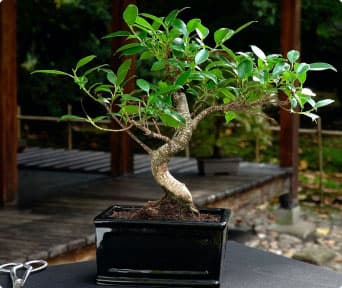
Start by matching the tree’s light and space needs to where you’ll actually keep it. If you have a balcony or garden with full sun, pines, junipers and many maples will thrive; if you have mostly shade, pick species that tolerate less sun or relocate to the sunniest spot you can. Remember: “These trees need lots of light. Place them near a south-facing window or supplement with a grow light during the darker months,” applies for indoor tropicals and for any bonsai you try to keep inside over winter. If your only option is truly indoor, Evergreengardenworks’ practical verdict is blunt: “Of course everyone wants bonsai inside, preferably on their coffee table, but bonsai is basically an outdoor activity.” For indoor beginners, stick with Ficus—“they are cheap, easy to find, and can withstand a lot of abuse.”
Container and micro‑site realities matter. Trees in shallow containers are more vulnerable to frost and heat swings—“many frost-hardy species need frost protection when they are planted in shallow containers.” If your balcony gets reflected heat or has poor drainage, favor species tolerant of drought or adapt your potting mix and watering schedule. And if you want easy wins, consider what Invivobonsai recommends for beginners: try invasive local species—they’re tough, removing them can help the environment, and “It's a triple W situation.”
3. Season: can you provide winter dormancy and protection?
Outdoor bonsai rely on seasonal change. “Outdoor Bonsai trees generally go dormant in winter. They need to experience a cold season, but should be protected from extreme frost,” and in many regions “placing them in an unheated garage or shed during the coldest months is sufficient.” If you live where freezes are extreme, plan on a sheltered frost‑free spot, insulating the pot, or a greenhouse. For subtropical growers wanting frost‑sensitive species, build a winter protection plan (move to greenhouse or indoors with care) before you buy.
Seasonal behavior should influence species choice: temperate species that show fall color—Japanese maple (Acer palmatum) and ginkgo (Ginkgo biloba) for example—will reward you with seasonal drama but must be outdoors to cycle properly. Junipers and pines are evergreen but still respond to seasonal vigor and shoot growth; they often need winter chilling to set buds properly for spring development.
4. How to buy and start: the cheap, patient approach that actually teaches you bonsai
Start small and cheap. Evergreengardenworks’ hardline advice: “Don't buy your first bonsai.” Instead, “Select a one gallon nursery plant for your first victim.” The rationale is simple: one‑gallon nursery plants are inexpensive, resilient, and give you lots of pruning and styling opportunities without the heartbreak of killing a costly, trained specimen. For your first plant the recommended workflow:
- Select a shrubby plant—“I recommend that you get a shrubby plant first; it will give you more to do from the very beginning.” Shrubby plants let you “find a trunk line” by visually eliminating extra trunks and branches; that’s basic training practice.
- Above‑ground work first—“Prune and style the top of the plant into a shape that pleases you.” Practice silhouette, branch selection, and basic wiring on the top growth before any root work.
- Hold off on root surgery—“Do not repot or prune the roots” on your first specimen; let the tree establish for at least a season. Root pruning and repotting come with timing and risk that beginners often underestimate.
- Keep it outside—“Keep your plant outside, even in winter (with protection) unless it is a tropical.” That preserves dormancy and natural growth cycles.
5. Species highlights and who they suit
I’ll list the species named in the guidance with quick, usable notes so you can match them to climate and intent:
- Japanese Maple (Acer palmatum) — vivid fall color, classic bonsai look; needs cool enough winters for dormancy and protection in shallow pots.
- Juniper (Juniperus spp.; Juniperus chinensis “Kishu”; Shimpaku) — hardy and rugged, excellent for dramatic styling; Kishu is slower in cool climates, faster in heat, and adapts well to smaller bonsai sizes.
- Pine (Pinus spp.; Japanese black pine Pinus thunbergii) — traditional bonsai subject, elegant but needs correct needle pruning and training; Japanese black pine suits subtropical/mediterranean climates.
- Elm (Ulmus spp.; Chinese elm Ulmus parvifolia) — fast, adaptable; Chinese elm works in warmer temperate and subtropical zones.
- Ginkgo (Ginkgo biloba) — unique fan leaves and striking yellow autumn color; needs temperate conditions.
- Ilex vomitoria / Yaupon Holly — American native, evergreen with small shiny leaves and tiny white flowers; “an easy tree for bonsai beginners to care for, they like to be outdoors with lots of sun and will need regular trimming.”
- Subtropical/mediterranean list (use only if your zone supports it or you can protect from frost): Olive (Olea europaea), Pomegranate (Punica granatum), Fuchsia, Mulberry (Morus), Cork oak (Quercus suber), Privet (Ligustrum sinensis), Trident maple (Acer buergerianum), Hackberry (Celtis sinensis), Bald cypress (Taxodium distichum).
- Fruit/grafted examples: Cherries (Prunus) and Apples (Malus) — interesting but watch flowering/fruit and site conditions.
6. Winter protection, dormancy management and seasonal checklist
Outline your seasonal plan before you buy. At minimum, for temperate species plan to:
- Expose the tree to winter cold but never let the root ball freeze solid; an unheated garage or shed often suffices. (Green-bonsai: “In most regions, placing them in an unheated garage or shed during the coldest months is sufficient.”)
- Insulate pots with bubble wrap, move pots close together in a protected corner, or sink containers into compost/soil for severe cold.
- For subtropical species, have a greenhouse or indoor winter plan; otherwise choose species adapted to your zone.
- Avoid major repotting/root pruning in the first year—follow Evergreengardenworks: “Do not repot or prune the roots” initially.
7. Learning curve, resources and mindset
A final reality check: this is a long, detail‑heavy hobby. As Evergreengardenworks candidly says, “There is an enormous amount of material to be digested here. I have made it as simple as I possibly can, but the rest is up to you. Believe me, EVERYTHING you need to know to start bonsai is right here in front of you. Nobody said it was going to be fast or easy, but it is fascinating and addictive. If you have the dedication, it can be done.” Use USDA Hardiness Zone tools to match species, consider a beginner course (Bonsaiempire is one well‑known option), and treat that one‑gallon nursery plant as your classroom.
Conclusion: pick patience over polish
If you want a bonsai because it looks perfect on a mantel, buy a trained specimen only after you’ve learned the basics. If you want to learn bonsai, buy a one‑gallon nursery plant, pick a species that matches your USDA zone and sunlight, “find a trunk line,” prune the top, and keep it outside with winter protection unless it’s tropical. Do that and you’ll learn the timing, pruning and seasonal rhythms that make a tree into bonsai—without wasting money on something you can’t keep alive.
Know something we missed? Have a correction or additional information?
Submit a Tip