Churchill famine claim sparks backlash at National Portrait Gallery
Helen Cammock withdrew a Churchill video after peers called its famine claim a "bare-faced lie" and the National Portrait Gallery defended artistic freedom.

A 40-minute video installation about Winston Churchill has been pulled from the National Portrait Gallery after it ignited a dispute over whether a public museum can host work that names one of Britain’s best-known wartime leaders as responsible for famine in colonial India. The row has moved beyond one artist’s withdrawal and into a wider argument over who gets to define contested historical figures inside public institutions.
Helen Cammock’s work, Persistence, was shown in the gallery’s exhibition Artists First: Contemporary Perspectives on Portraiture. The National Portrait Gallery said the piece had been commissioned in 2023 and had been on temporary display since September 2025, with the exhibition due to run until August 2026. In the installation, Cammock’s narration referred to the “wilful starvation of the Indian population by Winston Churchill” during the 1943 Bengal famine and compared Churchill’s wartime actions with Oliver Cromwell’s military campaigns in Ireland.
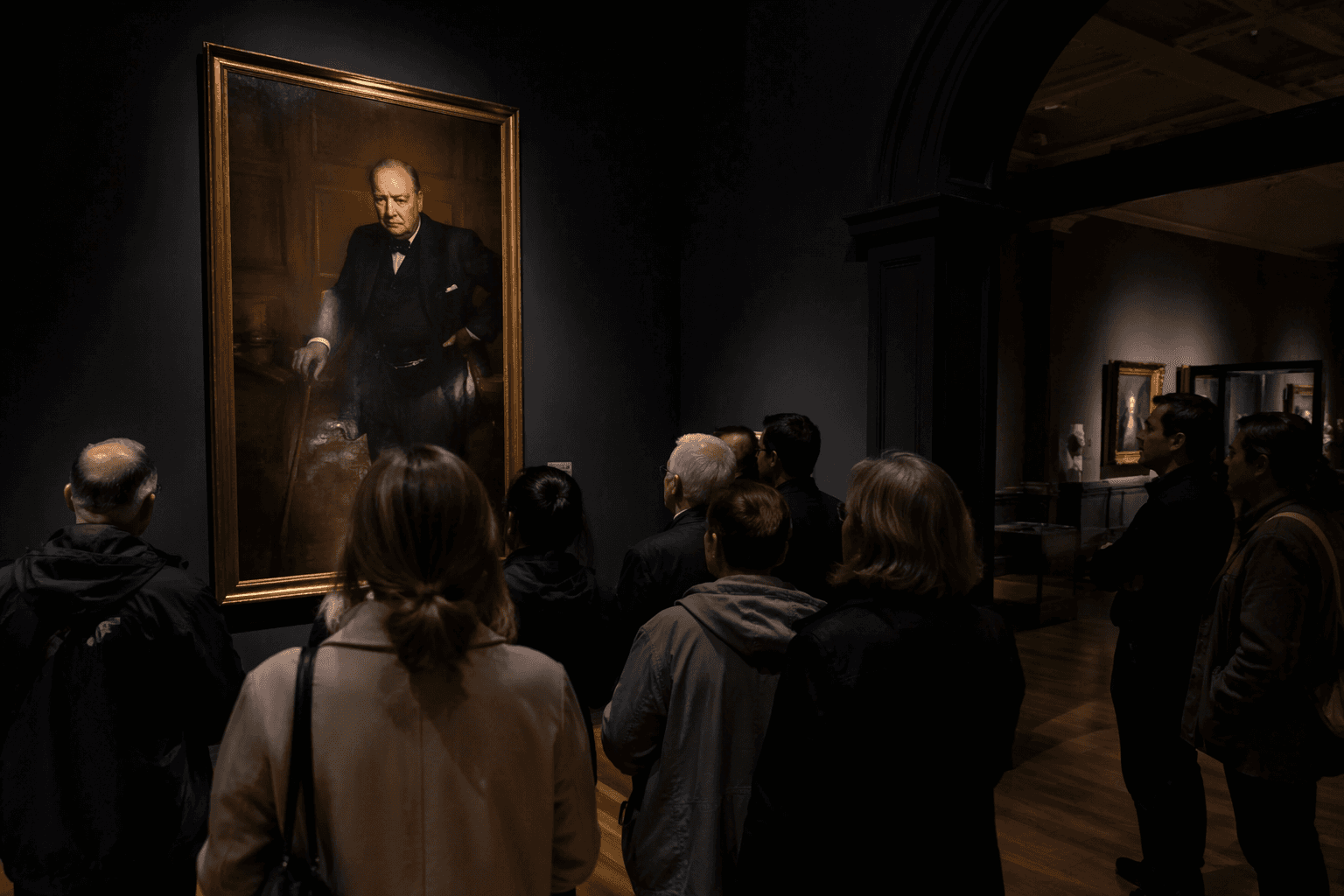
That framing triggered a sharp backlash. Lord Andrew Roberts of Belgravia, Churchill’s biographer, wrote an open letter to the gallery board that was signed by more than 50 peers, including Churchill’s grandson Sir Nicholas Soames. Other signatories named in coverage included Michael Grade and Zac Goldsmith. Roberts called the famine claim a “bare-faced lie,” “foul and vile,” and “historically ludicrous,” placing the gallery under pressure to answer not just for the work’s content but for the standards it applies to historical interpretation on public display.
The National Portrait Gallery defended “freedom of artistic expression,” saying it supports artists who respond to its collection but does not necessarily endorse the opinions expressed in the works it shows. After the backlash, Cammock said she had decided to withdraw the piece from the gallery, arguing that artists should not be pressured to be silent and that art should question and explore history.
The dispute has reopened a longstanding historical argument over the Bengal famine of 1943, in which an estimated three million people died in eastern India. Critics of Churchill say his policies worsened the disaster; Roberts has argued that the famine was triggered by a typhoon and that Churchill directed efforts to alleviate shortages, including by diverting shipping and seeking grain supplies. For the museum, the episode has sharpened the question of whether public institutions can present politically charged art without appearing to arbitrate the history inside it.
This article was produced by Prism’s automated news system from verified source data, official records, and press releases, then run through automated quality and moderation checks before publishing. The system is built and supervised by the people who set the standards it runs under. Read our full AI policy.
Know something we missed? Have a correction or additional information?
Submit a Tip