CIA director's two-hour Caracas visit signals U.S.-Venezuela rapprochement
Ratcliffe met interim president Delcy Rodríguez in Caracas to begin rebuilding ties and discuss intelligence, economic cooperation and narcotrafficking.
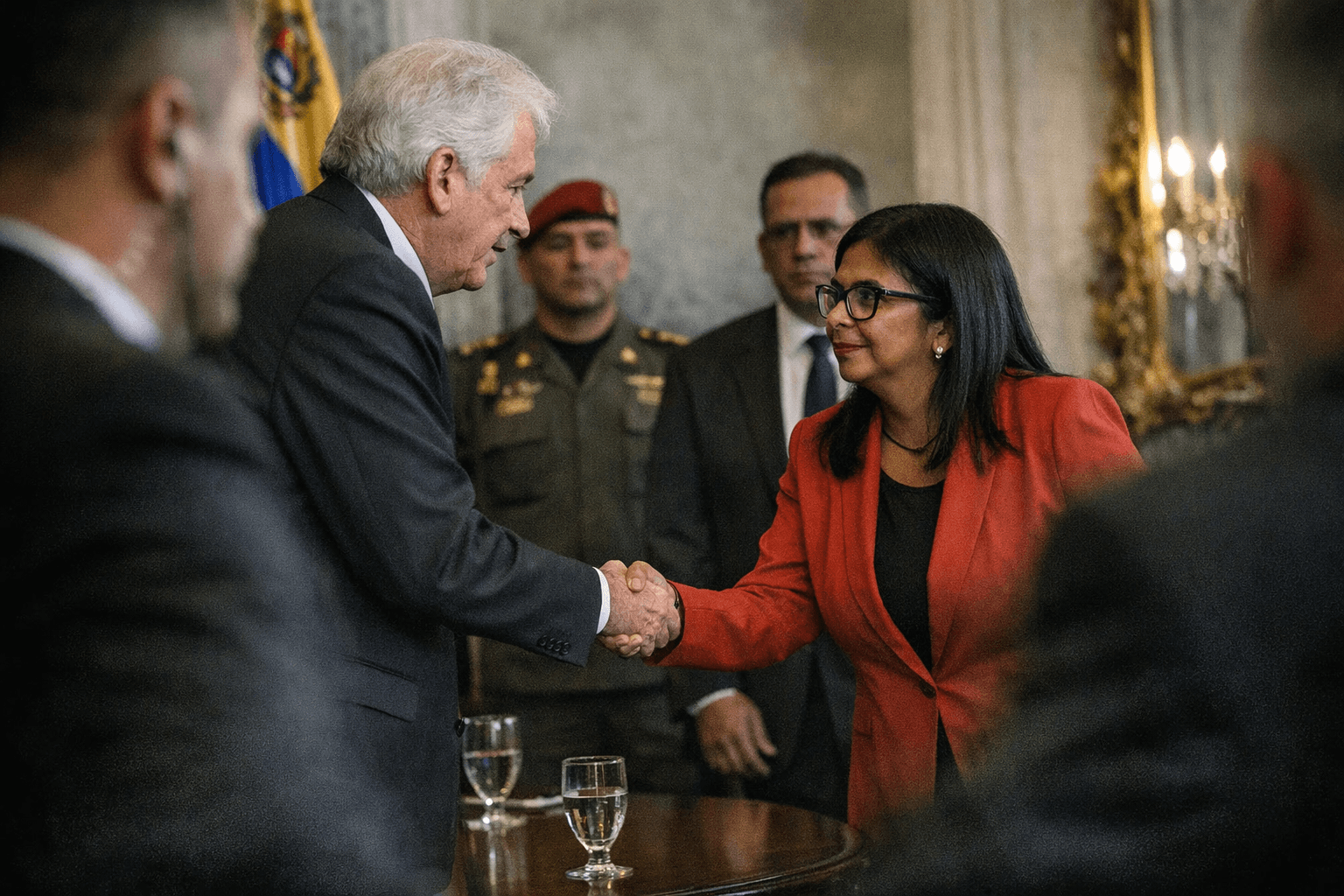
CIA Director John Ratcliffe flew to Caracas and met for roughly two hours on Jan. 15 with Delcy Rodríguez, who is serving as Venezuela’s interim president, in a trip U.S. officials described as intended to begin rebuilding trust and practical cooperation between Washington and the new Venezuelan authorities. The session focused on intelligence sharing, economic stability and preventing Venezuela from becoming a safe haven for the United States' adversaries, officials said.
The visit came less than two weeks after U.S. forces carried out an operation in Caracas that removed Nicolás Maduro from power. Maduro and his wife, Cilia Flores, were subsequently detained in New York and have pleaded not guilty to drug trafficking and related charges. Rodríguez was sworn in as interim president on Jan. 5 and has been positioned by U.S. intelligence as someone capable of maintaining short-term stability while Washington assesses longer-term political options.
U.S. officials said Ratcliffe traveled at President Trump’s direction and that the meeting represented the most senior U.S. government engagement in Caracas since the operation that ousted Maduro. The discussions included explicit reference to narcotrafficking networks; U.S. officials named the Tren de Aragua criminal gang as an example of groups that must not be allowed to operate with impunity from Venezuelan territory. The intelligence theme underscores an immediate security priority for Washington even as diplomatic and economic questions are negotiated.
Beyond security cooperation, Ratcliffe and Rodríguez discussed pathways for economic stabilization and possible collaboration to revive investment flows. Venezuela’s economy has been deeply contracted for years, with production and public revenues suppressed by sanctions, mismanagement and underinvestment. A guarded normalization of U.S.-Venezuelan relations could, in theory, unlock channels for foreign direct investment, oil-sector servicing and access to international financial systems, but officials emphasized that any economic opening would likely be contingent on concrete actions by Caracas on law enforcement and governance.
The trip also reflected an internal U.S. assessment that existing Maduro-aligned officials, including Rodríguez, are the most viable managers of Venezuela in the short term. That analytic judgment, briefed to a limited group of senior administration figures, appears to have driven a tactical shift from isolation toward selective engagement intended to stabilize markets and stem migration pressures while preserving leverage on criminal networks and human-rights obligations.
Markets and investors will watch two key indicators: signs of a controlled easing of sanctions that could affect oil exports and the degree to which Caracas implements anti-money-laundering and anti-narcotics measures that would reassure banks and trading partners. Any substantial shift in Venezuelan oil flows would have outsized effects on regional energy markets and on companies with exposure to Latin American hydrocarbons.
The White House did not immediately respond to requests for comment. The Ratcliffe trip, unusually public for a CIA director, underscores the administration’s willingness to use intelligence diplomacy to shape rapid geopolitical and economic transitions. For investors, regional governments and humanitarian agencies, the meeting signals that Washington is testing an engagement model that balances immediate security aims against longer-term economic and political recalibration in Venezuela.
This article was produced by Prism’s automated news system from verified source data, official records, and press releases, then run through automated quality and moderation checks before publishing. The system is built and supervised by the people who set the standards it runs under. Read our full AI policy.
Did this article answer your question?