CIA officer’s China spying role sparks questions after gold cache discovery
Agents said they found 303 gold bars, $2 million in cash and more than 30 luxury watches at a CIA officer’s home after he worked with Pentagon leaders on a classified China program.
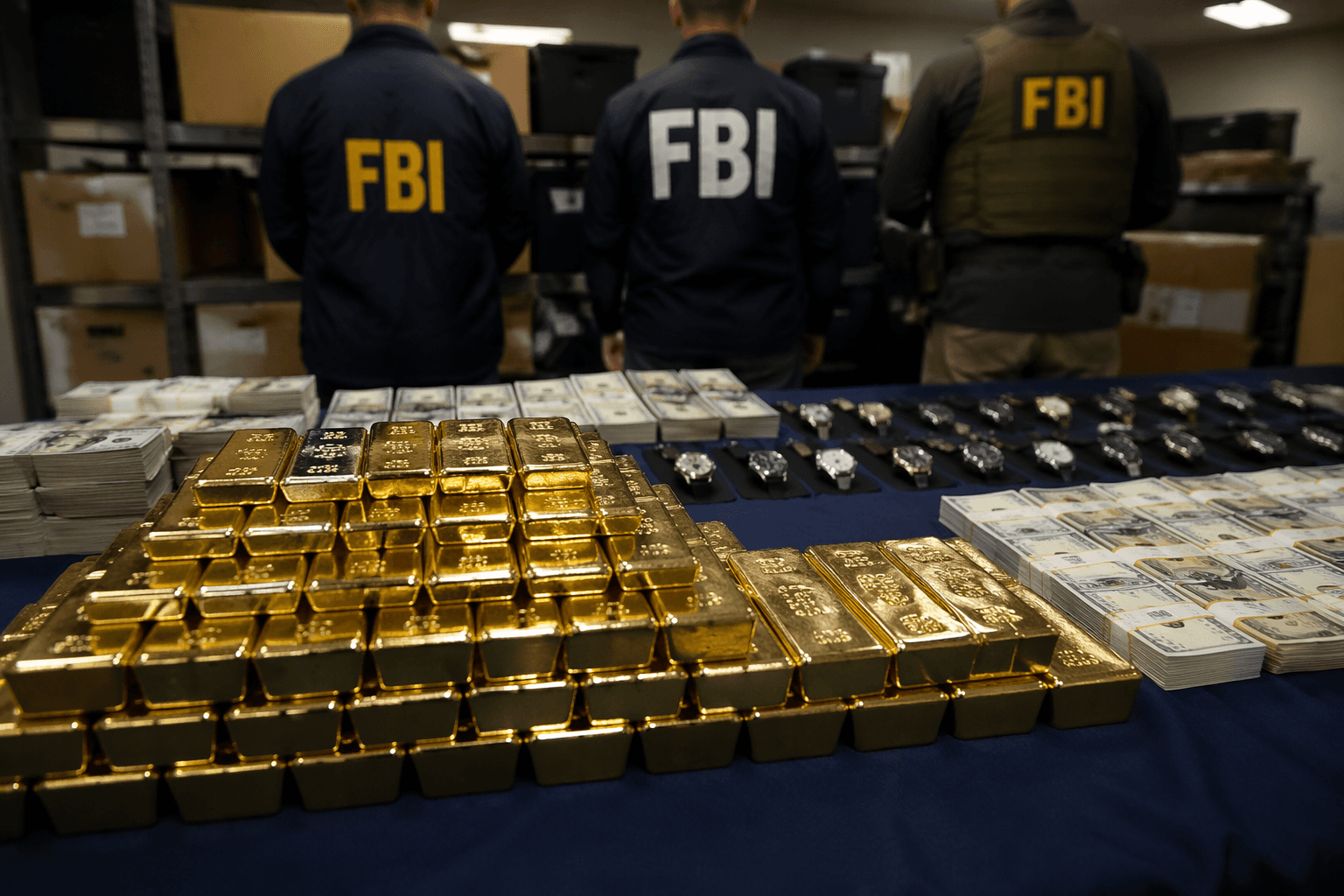
A senior CIA officer who worked closely with Stephen A. Feinberg on a highly classified China spying program is now at the center of a widening national-security inquiry after agents said they found about 303 gold bars, $2 million in cash and more than 30 luxury watches at his Virginia home.
David Rush spent about 17 years at the CIA and rose into some of the agency’s most sensitive assignments. More recently, he served as a liaison to the Defense Department on a sensitive nuclear submarine program, a post that was made at Feinberg’s request. That relationship is now drawing attention because it linked a senior Pentagon official to an intelligence officer later accused of serious misconduct and of hiding what investigators say was a vast cache of gold.
Court papers say Rush requested and received a large amount of foreign currency and gold bars from the CIA for work-related expenses. Between November 2025 and March 2026, he repeatedly sought the assets and acquired them. During an internal review, the agency could not later locate much of the material. Court reporting has placed the value of the missing gold at more than $40 million.
The FBI’s search of Rush’s Virginia home turned up the gold bars, the cash and the luxury watches, intensifying scrutiny of how one officer could move through the system while allegedly concealing his conduct. Rush was also said to have lied about his military history, education and pilot license, failures that have sharpened questions about background checks, trust and the security process inside the intelligence community.
Investigators say the misconduct may have gone beyond false credentials and missing assets. U.S. officials said Rush allegedly created a fake intelligence operation, or special access program, tied to continuity-of-government planning, then used the sham program to persuade a colleague to transfer money to him. That allegation has deepened concerns that a fabricated cover story was able to pass through multiple layers of oversight.
The CIA has already put several senior officials on administrative leave over their handling of Rush’s requests for money and internal warning signs. The FBI is working with the CIA and the Justice Department as the case moves toward a federal court appearance in Alexandria, Virginia, on Friday, after Rush’s arrest on May 19, 2026. For lawmakers and national-security officials, the central question is no longer just what Rush took, but how a man accused of lying his way through the system was able to work so deeply inside it.
This article was produced by Prism’s automated news system from verified source data, official records, and press releases, then run through automated quality and moderation checks before publishing. The system is built and supervised by the people who set the standards it runs under. Read our full AI policy.
Know something we missed? Have a correction or additional information?
Submit a Tip