Class of 2026 boos commencement speakers who urge embracing AI
Graduates booed AI pep talks at UCF, MTSU and Arizona, turning commencement into a protest over jobs and authenticity.

Commencement stages across the country have become an unlikely flashpoint for Gen Z’s unease with artificial intelligence. At the University of Central Florida in Orlando, students booed Gloria Caulfield, president of the Lake Nona Institute and vice president of strategic alliances at Tavistock, after she told graduates the “rise of artificial intelligence is the next industrial revolution.”
The reaction was swift enough that Caulfield, visibly startled, asked, “May I finish?” In Murfreesboro, Tennessee, Middle Tennessee State University students responded the same way when Scott Borchetta, the CEO of Big Machine Records, said AI was “rewriting production as we sit here.” At the University of Arizona in Tucson, former Google CEO Eric Schmidt was booed after saying AI would touch “every profession” and “every classroom,” then acknowledged the crowd’s discomfort: “I can hear you. There is a fear.”
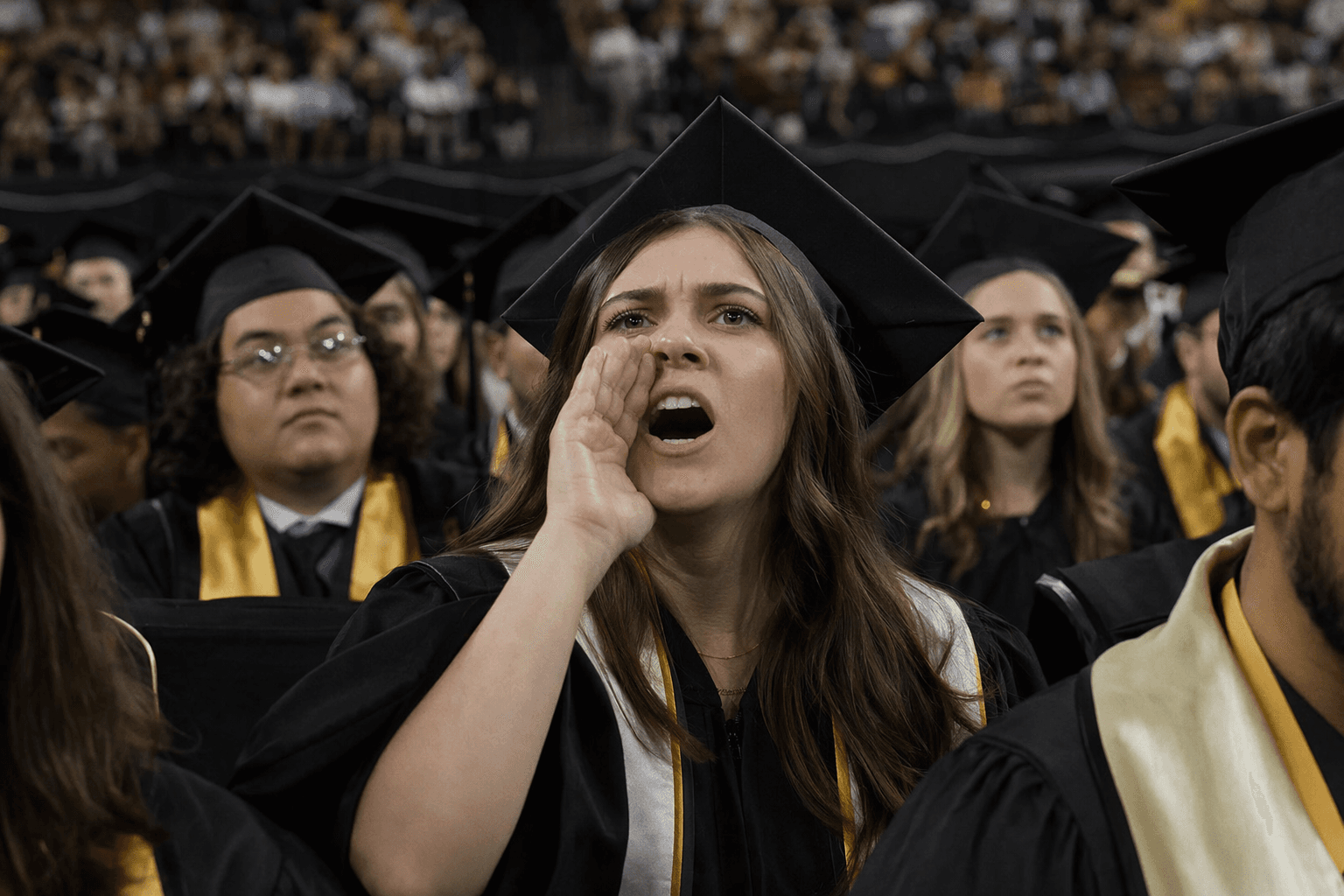
The backlash is not just about ceremony etiquette. It reflects a sharper anxiety among graduates who see AI less as inspiration than as a direct threat to entry-level work and creative careers. At UCF, students in the arts and humanities said they worried the technology could shrink opportunities in the fields they had spent years preparing to enter. One UCF graduate said many students were struggling to admit that AI was taking away job opportunities, a bluntness that fit the mood in the room.
The data supports that skepticism. Gallup said Gen Zers’ excitement and hopefulness about AI have declined over the past year while anger has increased. In an April 2, 2026 item, Gallup found that just over four in 10 bachelor’s degree students said AI had influenced their choice of major. A separate Gallup report on May 13, 2026 found that seven in 10 Americans opposed building an AI data center in their local area, underscoring a broader public resistance to the technology’s rapid expansion.
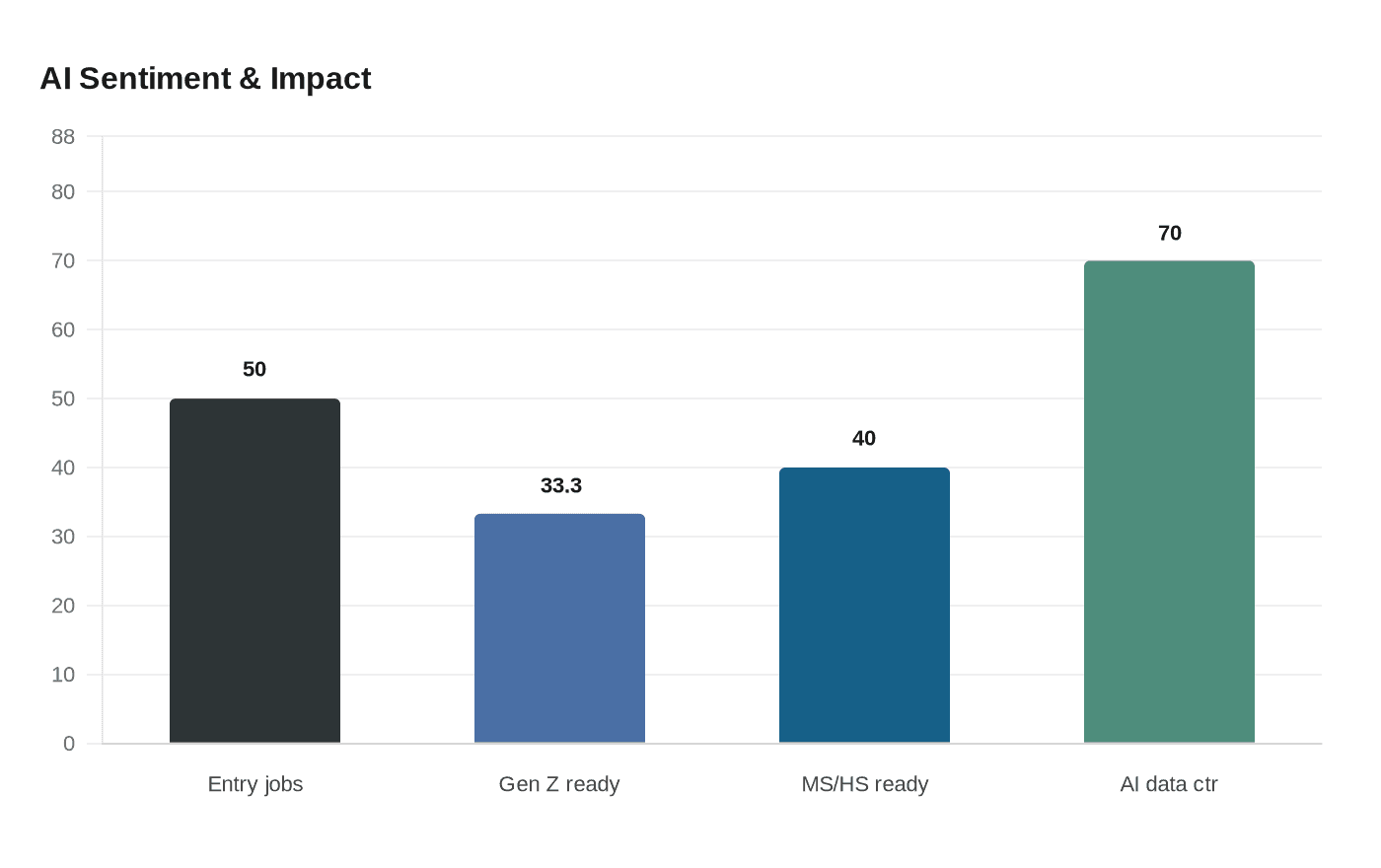
The labor-market fear is especially pronounced for graduates entering the workforce now. A ZipRecruiter poll of 1,500 members of the Class of 2026 found that half believed AI would reduce the number of entry-level roles. In a 2025 Gallup study, about one in three Gen Z adults said they felt at least somewhat prepared to use AI at work, while 40% of middle and high school students expected to be ready after graduation. That gap helps explain why a generation being told to embrace AI is pushing back so loudly: many do not hear optimism, but a warning that the future may be arriving faster than the jobs.
Know something we missed? Have a correction or additional information?
Submit a Tip