Cobra's 2026 3DP Tour and MIM Putters Showcase Additive Manufacturing Benefits
Cobra unveiled 3DP Tour and MIM putters that use additive manufacturing to boost MOI and shift center of gravity for greater stability and forgiveness.
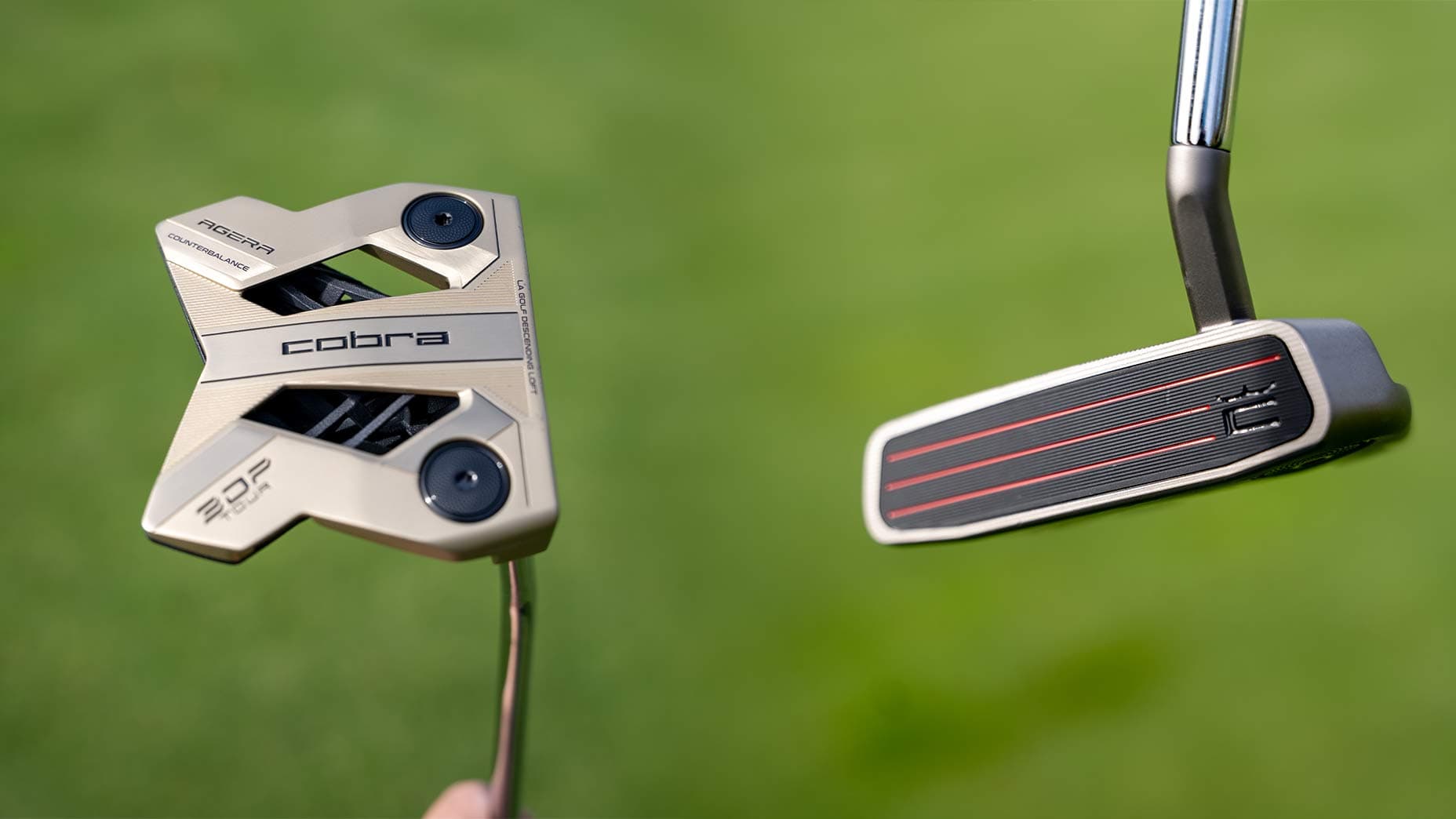
Cobra unveiled its 2026 putter lineup today, introducing the 3DP Tour series alongside a new metal‑injection‑molded (MIM) family that showcase how additive manufacturing and hybrid production are changing club design. The moves underline a shift from prototyping novelty to production-capable techniques that directly affect what golfers feel on the green.
The 3DP Tour models use advanced 3D printing to create internal lattice structures that reallocate mass away from the geometric center, allowing engineers to place the center of gravity precisely for a forward bias that preserves roll while raising moment of inertia (MOI). Higher MOI reduces twist on off-center hits and increases stability through the stroke, and Cobra says the latticed architecture delivers tailored weight placement and a refined feel that matched performance targets. Metal‑injection‑molding is used across the MIM putters to achieve complex shapes and repeatable mass distribution in a more traditional production format, enabling Cobra to scale designs born in additive workflows into higher-volume runs.
Design freedom and rapid iteration were core themes of the announcement. By printing internal features rather than machining cavities or assembling multi-piece heads, Cobra’s engineers could explore unconventional geometries and tune stiffness and density in discrete zones. That capability sped up prototyping cycles and let the company dial in stability, face interaction, and balance without the constraints of cast-then-machine processes. For the 3D-printing community, that’s a practical example of how lattice infill and selective mass placement translate into measurable performance outcomes rather than being mere visual novelty.
The pairing of 3DP and MIM also speaks to manufacturing pragmatism. Additive tools let designers prove concepts quickly and validate performance; MIM then provides a pathway to repeatable parts with established cost profiles for larger runs. That combination lowers the barrier for OEMs to adopt AM in performance-critical sporting goods while preserving economies of scale where needed.

For the local maker and club fitter, Cobra’s rollout points to opportunities in customization and iteration. Understanding how CG and MOI interact with head shape and face weighting will be increasingly important as more brands use internal lattices and targeted mass tuning. Expect to see OEMs and aftermarket modders experimenting with tuned infill patterns, tuned stiffness zones, and mixed-manufacturing supply chains.
Cobra’s 2026 putters make a clear case: additive manufacturing is no longer just a lab trick. It’s a design lever that can deliver stability, feel, and production pathways for golfers and fabricators alike. Watch for on-course testing and availability to see how those engineered gains play out in real rounds—and for broader adoption of these techniques across clubs and accessories in the coming seasons.
Sources:
Know something we missed? Have a correction or additional information?
Submit a Tip