Colombia highway bombing kills at least 19, election security fears rise
A roadside bomb on the Pan-American Highway killed at least 19 in Cauca, exposing a security vacuum on Colombia’s main southbound artery weeks before the presidential vote.
A roadside bomb tore through a bus on Colombia’s Pan-American Highway in Cajibío, leaving at least 19 people dead and turning one of the country’s busiest corridors into a scene of twisted metal, fire and panic. The blast struck on Saturday, April 25, 2026, in Cauca department, where the highway links Popayán and Cali and carries trade, travel and state authority through a region long contested by armed groups.
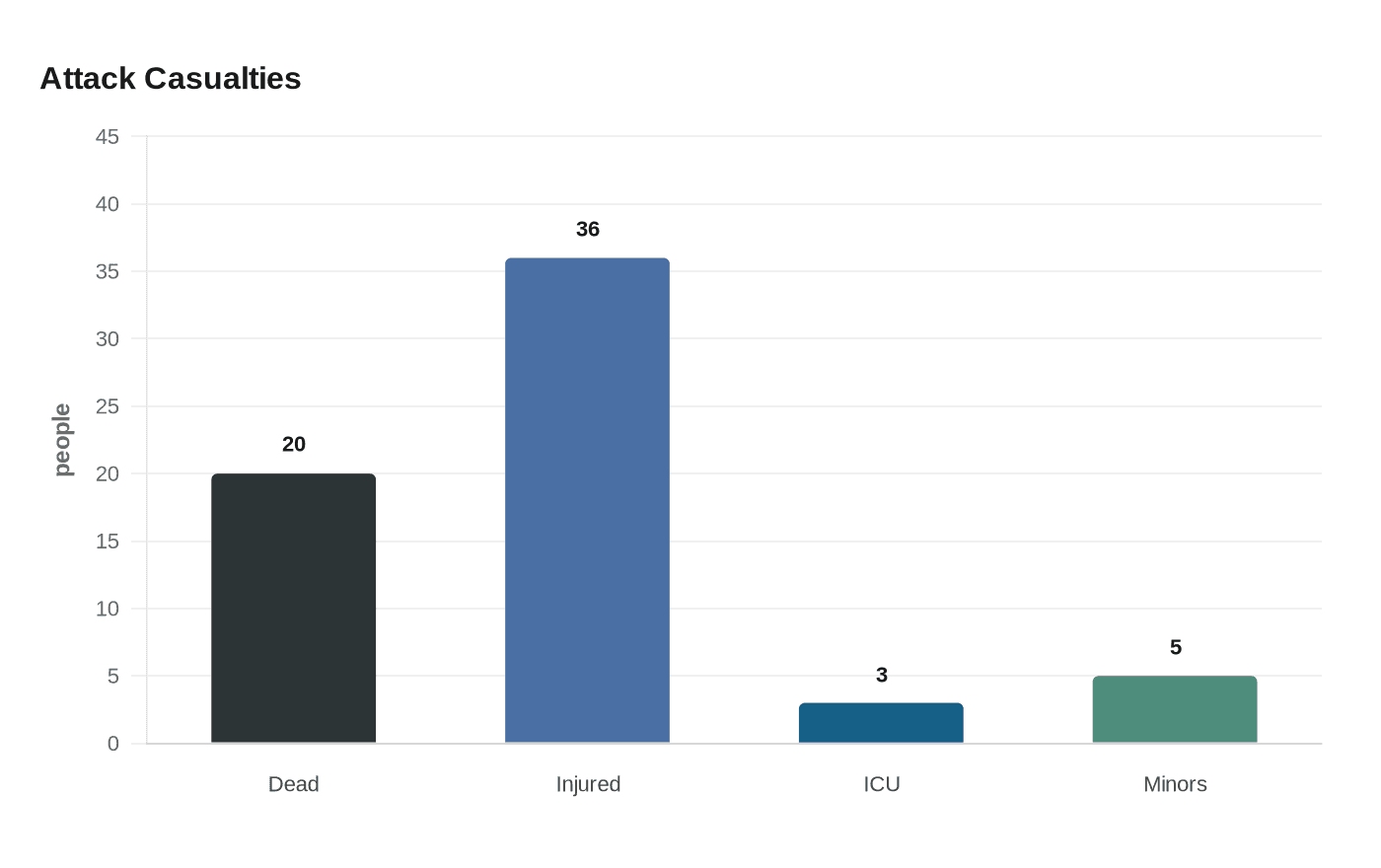
Authorities said the explosive device detonated as a civilian bus passed through the El Tunel sector, badly damaging other vehicles nearby and leaving buses, vans and other traffic overturned or mangled along the road. The death toll rose through the weekend, from initial reports of at least 13 or 14 killed to at least 19, and later to 20 dead with 36 injured. Local officials said 15 women and five men were among the dead, and at least five of the injured were minors. Three wounded people were in intensive care.
The attack landed in a corridor that has become a test of state control in southwestern Colombia. The Pan-American Highway is more than a road: it is a strategic artery for commerce, public transport and government presence in Cauca, a department where armed dissident factions of the former FARC and other criminal structures have remained active. Colombian military officials blamed former FARC dissidents for the bombing, describing it as an indiscriminate terrorist attack.
The violence also sharpened election security fears with Colombia’s presidential vote about a month away. President Gustavo Petro’s government is already under pressure over its peace-and-security strategy in the southwest, where recent attacks and drug-related violence have unsettled communities and strained peace talks. The bombing added urgency to calls from Cauca officials for tougher action in a region that has repeatedly shown how quickly public life can be disrupted when armed groups challenge the state on the road between Popayán and Cali.
Octavio Guzmán Gutiérrez, governor of Cauca, said the dead included 15 women and five men, and declared three days of mourning after the attack. For families traveling the highway and for towns that depend on it, the blast was not only a mass-casualty crime but also a stark sign of how fragile civilian security remains in one of Colombia’s most conflict-ridden corridors.
This article was produced by Prism’s automated news system from verified source data, official records, and press releases, then run through automated quality and moderation checks before publishing. The system is built and supervised by the people who set the standards it runs under. Read our full AI policy.
Did this article answer your question?