Colombia Plans Hippo Culling as Escobar's Legacy Divides Towns
Colombia prepared to kill 80 of Pablo Escobar’s feral hippos, a move that pitted ecosystem protection against tourist income in Doradal.

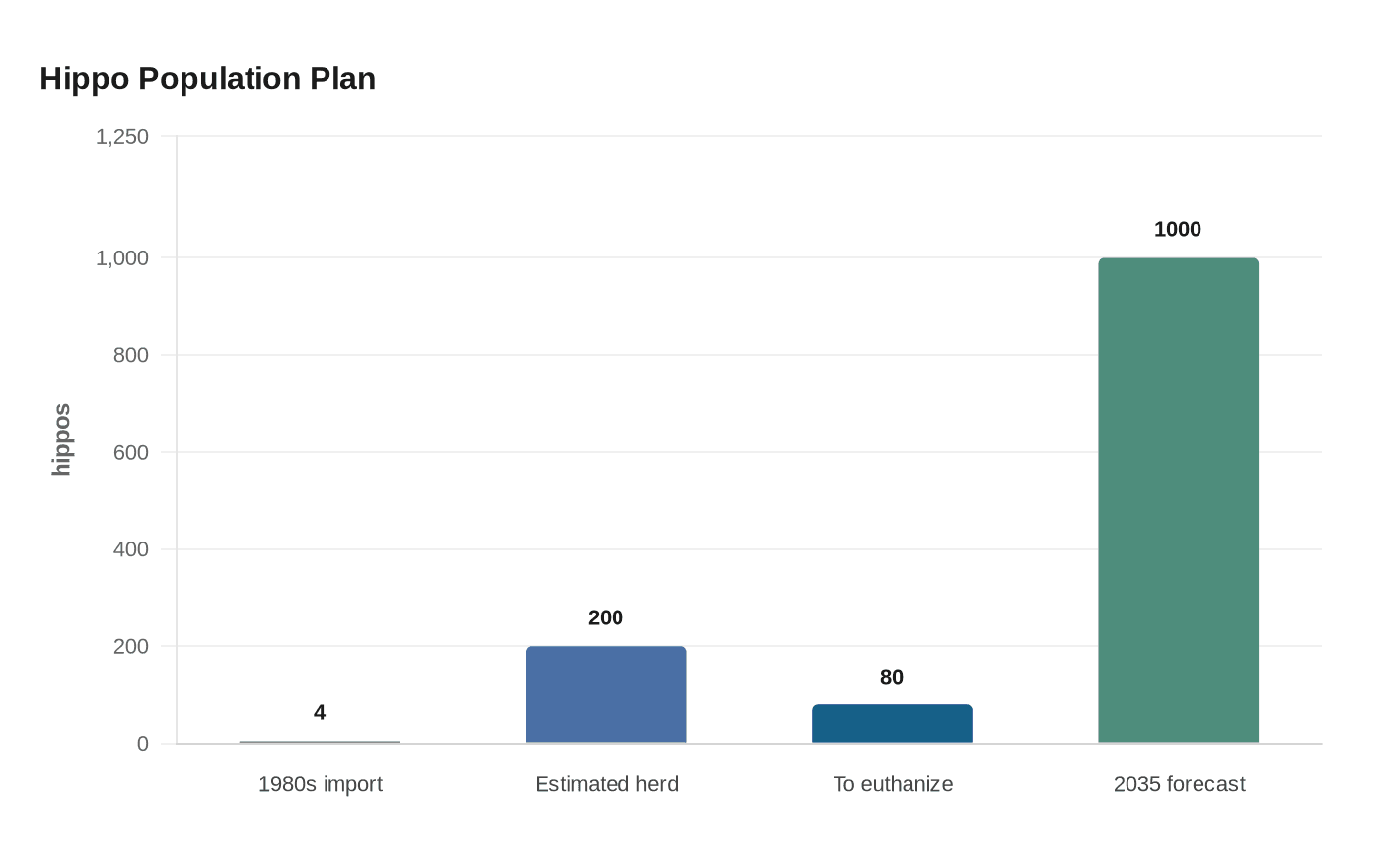
The Colombian government moved toward killing part of the country’s wild hippo population, a force that grew from four animals Pablo Escobar illegally imported in the 1980s into an invasive species now testing both environmental policy and local livelihoods. In April 2026, Environment Minister Irene Vélez said authorities would launch a control plan in the second half of 2026, beginning with euthanizing 80 hippos out of an estimated 200.
Officials warned the population could reach 1,000 by 2035 if left unchecked. The ministry set aside 7.2 billion pesos, about $1.98 million, for a program that also includes confinement and relocation, after earlier efforts such as sterilization and transfers to zoos proved costly and unsuccessful. Colombia says it has spoken with eight governments, including India, Mexico, the Philippines, Ecuador, Peru and South Africa, about moving some of the animals to zoos or sanctuaries, but approvals have not yet been secured.
The dispute has become a governance test in the Magdalena River basin, where officials say the hippos now spread across an estimated 43,342 square kilometers, especially around Napolés and Cocorná and through the Momposina wetlands. The Ministry of Environment and Sustainable Development says the animals threaten villagers, compete with native species such as river manatees and contribute to water pollution. Colombia remains the only country outside Africa with a wild hippo population, a distinction that has made the Escobar legacy into an international wildlife problem.
The government had already set out its framework in Resolution 0774 of June 21, 2024, which adopted a management plan built around translocation, surgical sterilization, confinement and euthanasia as a last resort. That sequence reflects the political difficulty of every option now on the table: capture is expensive, sterilization has not contained the herd, and culling has triggered a backlash.
Senator Andrea Padilla condemned the plan as cruel, arguing that killings and massacres would never be acceptable. In Doradal and around Hacienda Nápoles, however, the hippos are also a commercial draw. Residents sell hippo-themed souvenirs and lead hippo-spotting tours, tying the animals to tourism income even as the state treats them as a growing ecological threat. In Colombia, Escobar’s abandoned spectacle has become a question of how much damage a government can absorb before it acts, and how much symbolism it can afford to kill.
This article was produced by Prism’s automated news system from verified source data, official records, and press releases, then run through automated quality and moderation checks before publishing. The system is built and supervised by the people who set the standards it runs under. Read our full AI policy.
Did this article answer your question?


