Colombia raises reward for rebel leader after deadly highway attack kills 20
After 20 people were killed on the Pan-American Highway, Colombia raised a $1.4 million reward for rebel commander Marlon, deepening pressure on security policy.
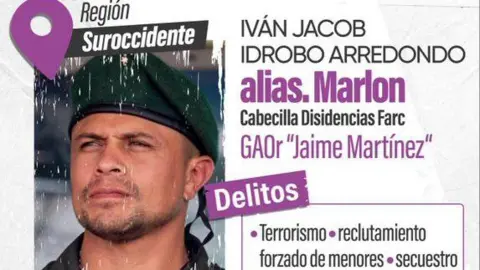
Colombia’s government has doubled down on the hunt for a rebel commander blamed for one of the deadliest attacks in the southwest, raising the reward for information leading to his capture to 5,000 million pesos, about $1.4 million. The move put renewed focus on Iván Jacobo Idrobo Arredondo, known as Marlon, whom authorities identify as the alleged head of the Jaime Martínez column, a FARC dissident structure operating across Cauca, Valle del Cauca, Jamundí and Nariño.
The attack that triggered the bounty unfolded in Cajibío, Cauca, on the Pan-American Highway and left 20 people dead. Governor Octavio Guzmán said the victims were 15 women and five men, all adults. Thirty-six people were injured, and three remained in intensive care, underscoring the scale of the violence in a region where road traffic, rural communities and state authority all collide under constant threat.
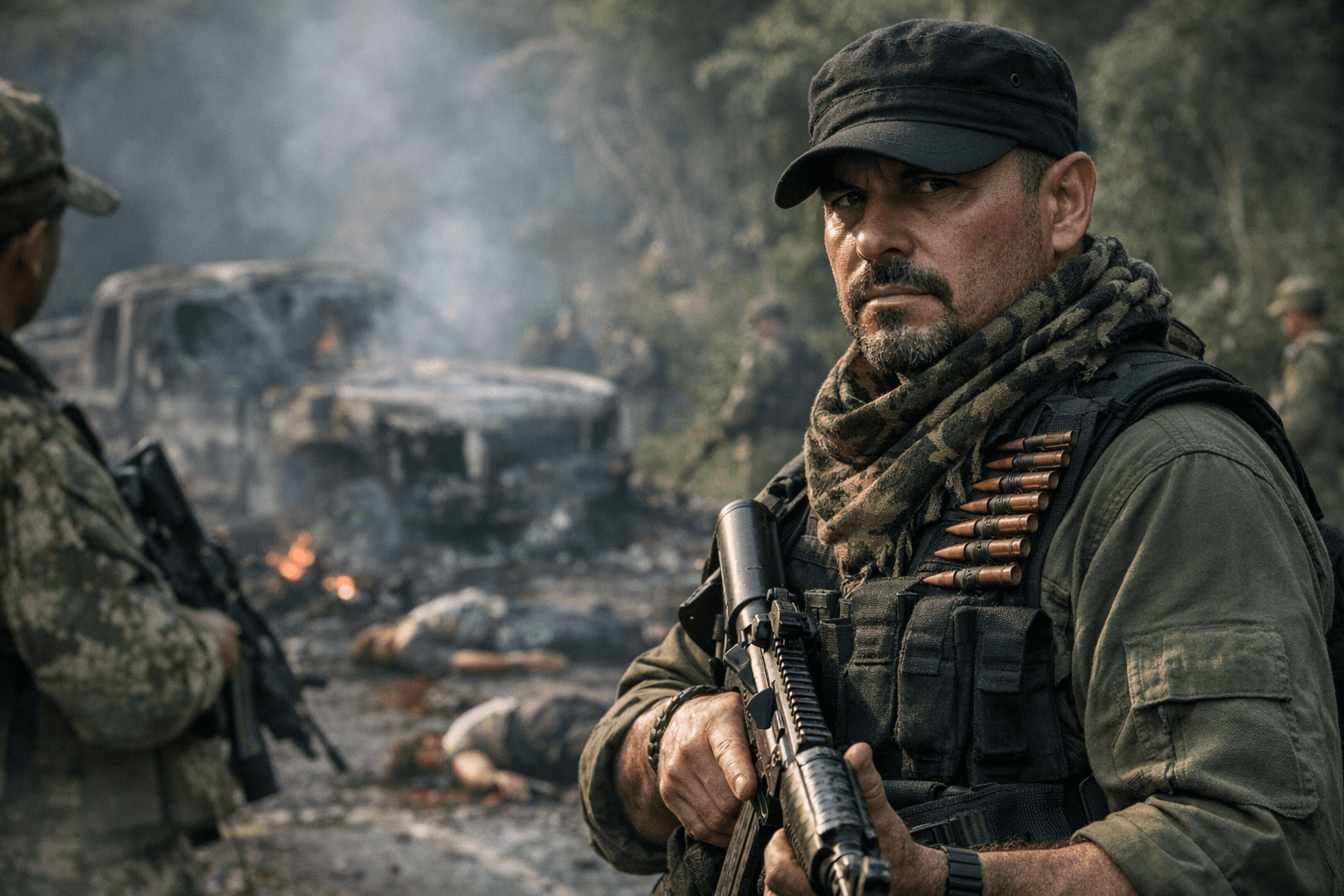
Officials have linked the assault to a wider wave of violence in southwestern Colombia, where dissident armed groups continue to challenge government control over territory, extortion routes and cocaine corridors. Security officials say Marlon has become a central figure in that contest, and one report described him as having the ability to coordinate rural structures, urban networks, explosive operations and narcotrafficking routes. The government’s decision to put such a large bounty on his head reflects both the urgency of the manhunt and the political pressure building around public safety.
The episode also exposes the strain on President Gustavo Petro’s total peace strategy, which has sought to reduce violence through negotiations and parallel security efforts. In practice, the Cajibío attack has reinforced a harsher reading of the moment: that armed groups are not only surviving, but expanding their reach in a coca-prone corridor where civilians keep paying the price. Whether capturing Marlon would change conditions on the ground remains uncertain. One commander’s arrest could disrupt a network, but it would not by itself solve the deeper problem of armed factions that continue to exploit weak state presence across Colombia’s southwest.
This article was produced by Prism’s automated news system from verified source data, official records, and press releases, then run through automated quality and moderation checks before publishing. The system is built and supervised by the people who set the standards it runs under. Read our full AI policy.
Did this article answer your question?