Colombia runoff pits security hardliner against Petro ally
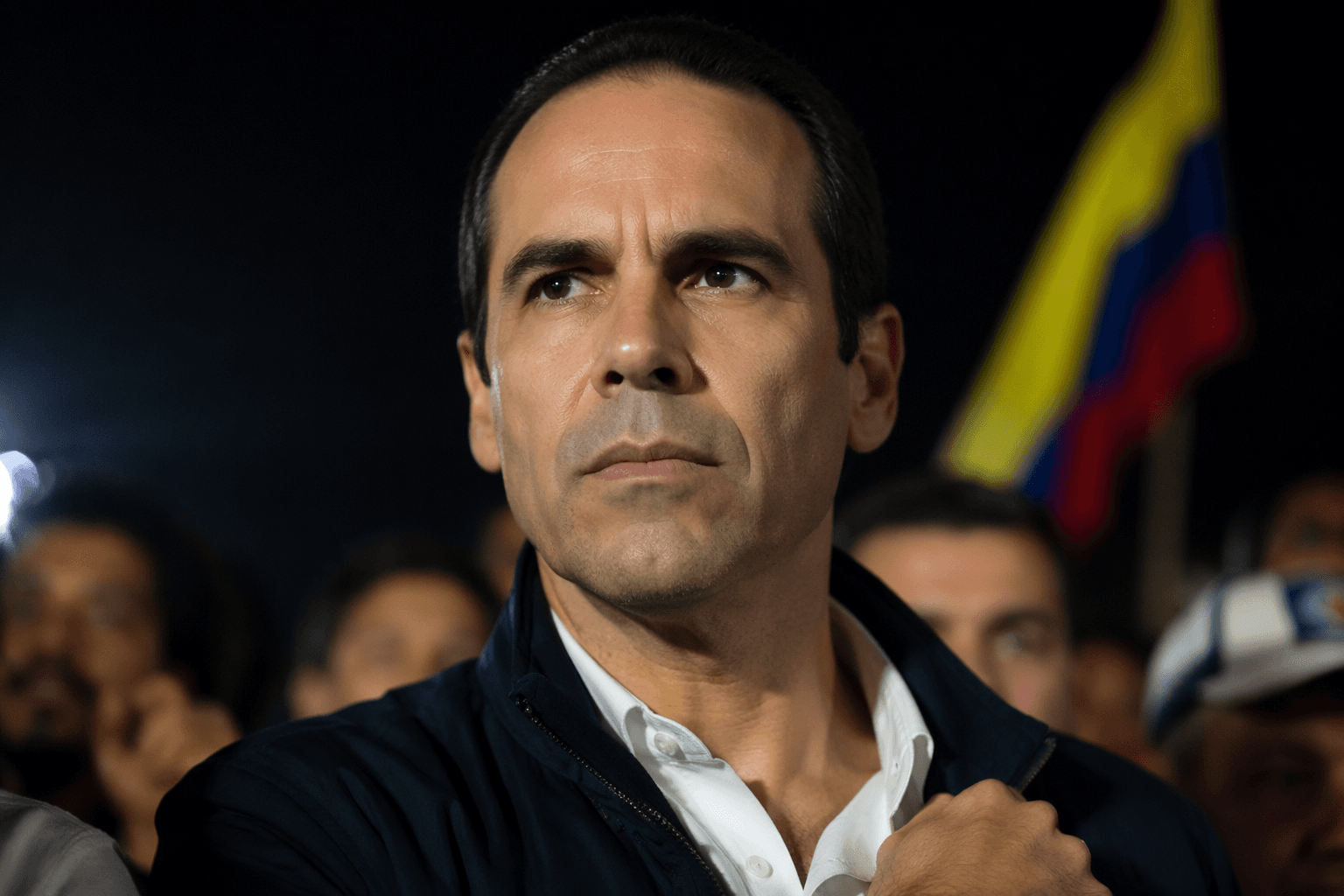
Abelardo de la Espriella, a political outsider nicknamed The Tiger, surged into Colombia’s runoff with 43.7% as voters revolted over violence and distrust.

Colombia’s presidential runoff became a stark verdict on the country’s political establishment, with a security-focused outsider squaring off against a veteran leftist who has tied his campaign to Gustavo Petro’s agenda. Abelardo de la Espriella, a lawyer with no prior political experience, led the first round with 43.7% of the vote, while Iván Cepeda, 63, followed with 40.9%, forcing a June 21 contest that exposed a sharply split electorate.
De la Espriella built his campaign around crime-fighting and a smaller state. He vowed to crack down on violence, end talks with rebels and criminal groups, expand oil and gas production, cut taxes and shrink the government by as much as 40%. His plan also called for 10 megaprisons, a message aimed at voters exhausted by insecurity and skeptical that Colombia’s traditional parties can deliver order.
Cepeda, a senator in Congress since 2010, argued for continuity instead. He promised to preserve Petro’s social programs, union-backed labor reforms, a moratorium on new oil projects and peace talks with armed groups. The choice laid out before voters was less about personalities than competing ideas of how Colombia should confront public safety, state power and economic slowdown.
The race carried the weight of renewed violence in a country that signed a historic peace pact with FARC 10 years ago but has seen conflict flare again. Colombia recorded 14,780 homicides last year, the highest total since at least 2015, underscoring why security dominated the campaign. Turnout in the first round was only about 58%, a sign that many Colombians remained disengaged even as the stakes rose.
Cepeda initially questioned the first-round count, citing alleged discrepancies in the voter registry and more than 800,000 identity cards, though he later said he had no evidence of irregularities. Petro also sowed doubt without presenting evidence, feeding a political climate already marked by distrust. One voter in Bogotá said the country’s polarization was worrying and urged acceptance of the result, a sentiment echoed by a public weary of confrontation.
De la Espriella’s momentum was reinforced by Donald Trump’s endorsement. After the preliminary count, de la Espriella said he had spoken with Trump, who congratulated him. Major business groups, including the Colombo-American Chamber of Commerce, the mining association and the banking association, also congratulated him, signaling confidence in his pro-business message.
The next president will inherit a fragmented Congress. Cepeda’s Historic Pact holds more seats than any other party in both chambers, but no party has a majority, forcing any winner to negotiate. For Washington, the outcome matters well beyond Bogotá: Colombia remains a central U.S. security partner, and the next government will shape anti-narcotics policy, regional stability and the future of bilateral ties after an election many Colombians saw as a referendum on Petro’s first term.
This article was produced by Prism’s automated news system from verified source data, official records, and press releases, then run through automated quality and moderation checks before publishing. The system is built and supervised by the people who set the standards it runs under. Read our full AI policy.
Know something we missed? Have a correction or additional information?
Submit a Tip