Colombia uses birding app Merlin to boost avian tourism
Merlin is turning Colombia’s unmatched bird diversity into bookable tourism. The test is whether guides and reserves capture lasting income or just a fragile niche boom.

Birds are becoming an exportable experience
Colombia’s birdlife has become more than a point of national pride. With more than 1,900 bird species and 79 endemics, the country is using that abundance to build an avian tourism economy around Merlin, a free bird identification app that lowers the barrier for visitors, guides and citizen scientists.
The pitch is straightforward: make birds easier to find, identify and share, then channel that curiosity into local spending. In Colombia, that means turning remote landscapes into destinations for guiding, lodging, transport, meals and handmade souvenirs, while giving communities a stake in protecting the habitats that keep birds coming back.
How Merlin changes the entry point
Merlin, launched in 2014 by the Cornell Lab of Ornithology, had 10 million active users worldwide as of 2025. It is powered by eBird, which Cornell describes as the world’s largest database of bird sightings, sounds and photos, drawing on more than 750 million observations.
The app’s value in Colombia is practical. It can identify birds from five questions, from photos and, in some regions, from sound. Cornell says its sound ID feature recognized 458 species in the United States and Canada in 2022, while its photo ID can identify more than 3,000 species. Cornell also says Merlin now covers birds across six continents and more than 6,000 species, which makes it especially useful in a country where even seasoned travelers can be overwhelmed by sheer diversity.
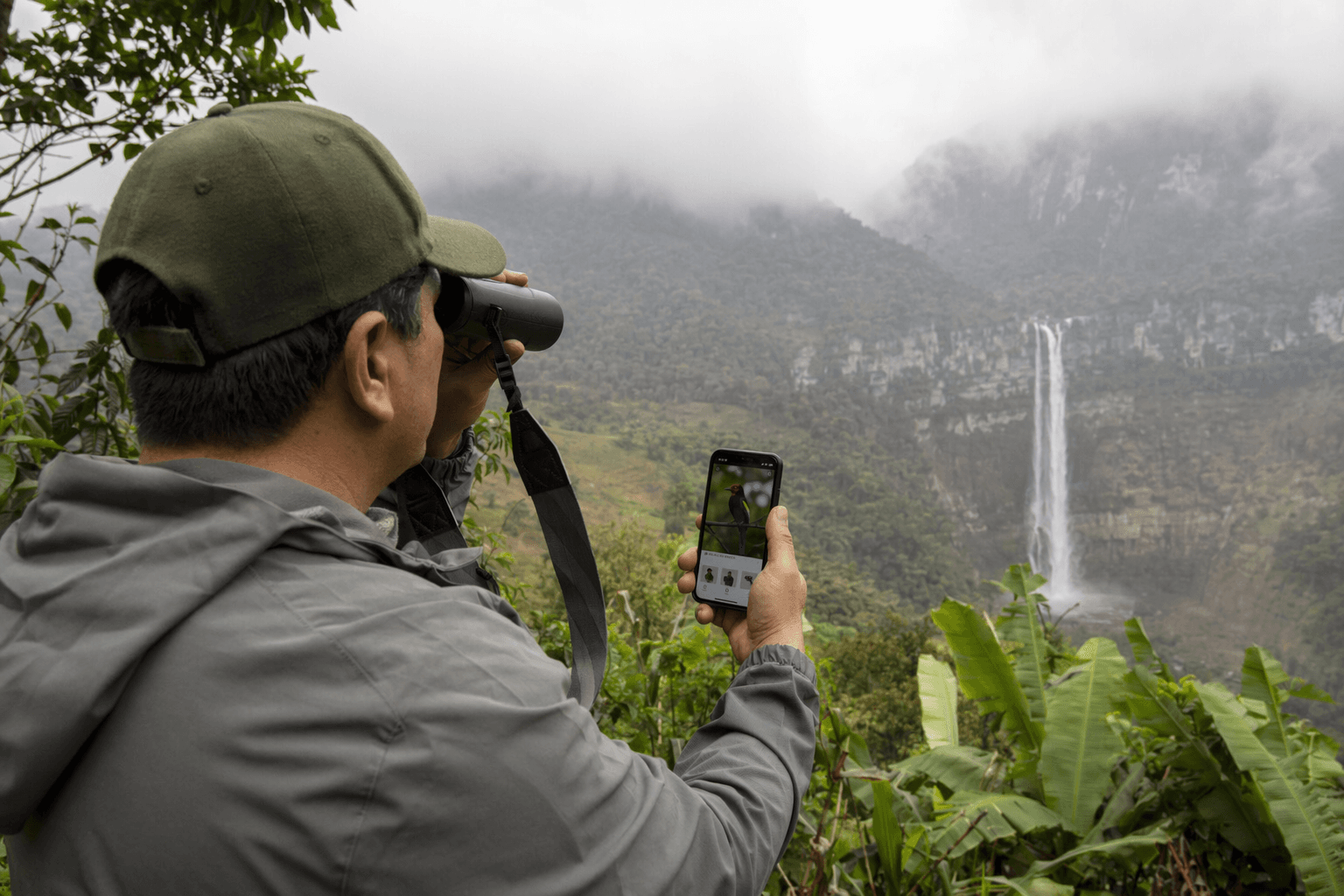
That matters because birding tourism often begins with uncertainty. Merlin turns a field note into an instant answer, and that speed can change behavior: travelers stay longer, search more widely and become more willing to book specialized trips to places they might otherwise overlook.
Why Colombia is positioning itself as a birding destination
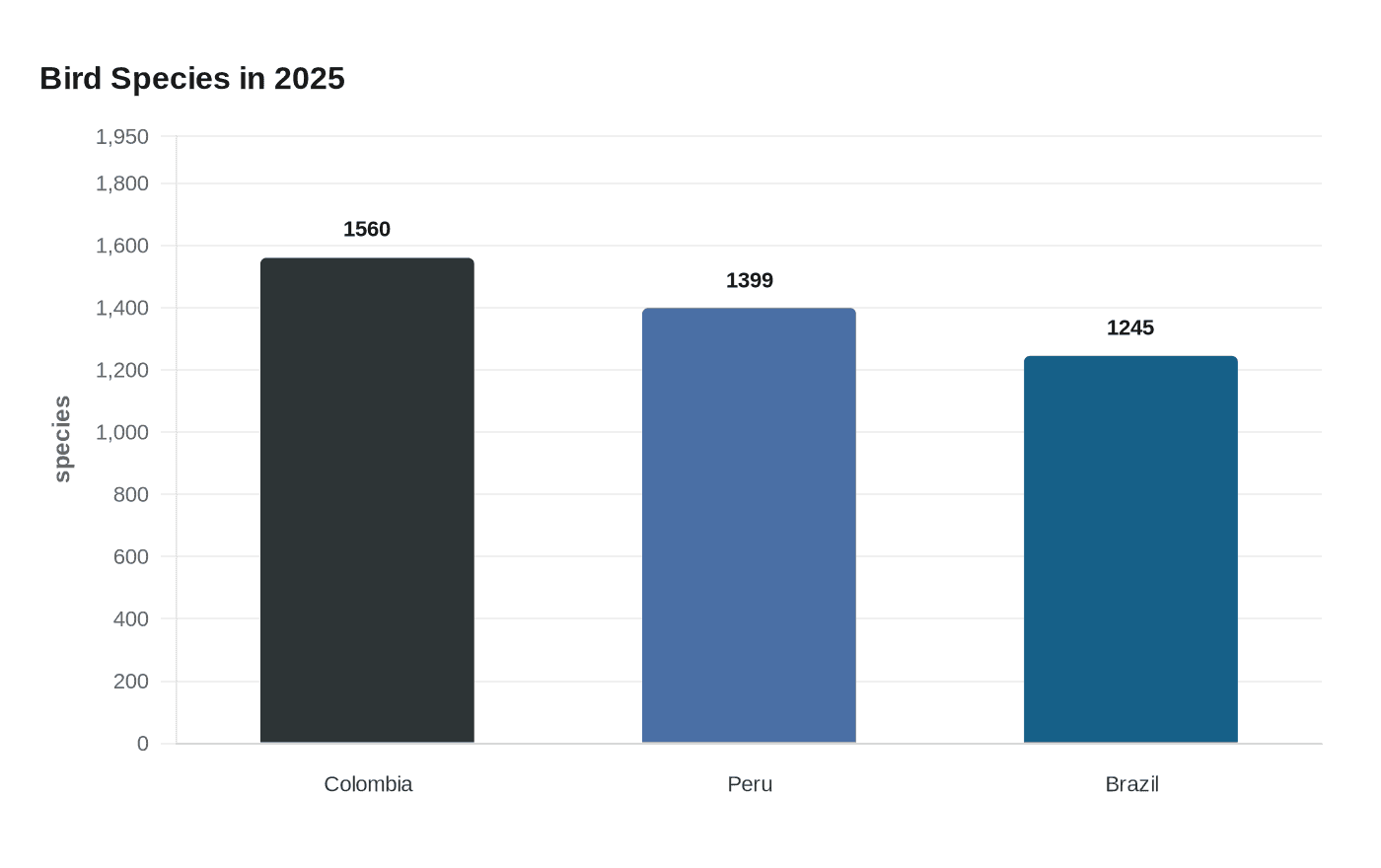
ProColombia says the country recorded 1,560 bird species during Global Big Day 2025, more than Peru’s 1,399 and Brazil’s 1,245. It also said Colombia welcomed more than 6.8 million international visitors in 2024, a record, with the United States as its number one South American source market for travelers.
Those numbers help explain why birding is being treated as a formal economic strategy rather than a niche hobby. ProColombia says birdwatching is now a growing force for sustainable development and a source of income for local communities, especially when it is tied to services that keep money in place: specialized and bilingual guides, eco-lodges, scenic trails, transportation, field meals and locally made souvenirs.
The agency has also been expanding the market itself. It says it has launched specialized birding routes and hosted familiarization trips for U.S. and U.K. tour operators, a signal that the goal is not just domestic enthusiasm but a more structured international visitor pipeline.
The local infrastructure behind the bird lists
Long before the app became a global gateway, conservation groups were building the human network needed to make birding tourism work. Audubon says it worked with Patrimonio Natural, the Asociación Calidris and USAID to develop the Northern Colombia Birding Trail, a network that links trained professional guides, birding sites and support services.
Audubon says the project trained more than 30 local bird guides, including Wayuu community members in the Guajira Peninsula, and later expanded to other regions. That detail matters because the economics of birding are not created by species lists alone. They depend on whether local residents gain the skills and market access to sell guiding, food, transport and knowledge in places that were previously visited mainly by outsiders.
Audubon also points to the Santa Marta Mountains as one of the world’s most important sites for threatened and endemic biodiversity. The range hosts more than 600 bird species, including 19 endemics, giving Colombia a flagship landscape where conservation and tourism are tightly linked.
Where conservation pressure meets tourism demand
The promise of birding tourism is strongest in places where habitat is under threat, because the economic case for protection becomes visible. A 2025 Mongabay report from Sierra Nevada de Santa Marta said birds there face pressure from habitat loss linked to agriculture, livestock ranching and deforestation, along with wildlife trafficking and feral cats.
That report followed Lorenzo Mora, a 41-year-old bird guide and former coffee grower who has worked with the ProAves Foundation since 2010 and now guides birders from Minca. His work shows how conservation livelihoods can replace or supplement older rural incomes. In places like this, birding is not just about sightings; it is about whether a protected landscape can support a family and a local service economy.
Mongabay said ProAves manages El Dorado Nature Reserve, which protects about 800 hectares of critical habitat for more than a dozen endangered bird species. The reserve is also an important stopover on migratory routes for birds breeding in the United States and Canada, which gives the site international ecological value as well as local economic potential.
What a durable model looks like
The strongest version of Colombia’s birding strategy is one where Merlin acts as an on-ramp, not the destination. The app lowers the technical barrier for travelers, but the durable income comes from the people and places that turn a sighting into a guided route, a room night, a meal and a conservation fee.
That is why the policy question is not whether birding can attract visitors. It already can. The real test is whether Colombia can keep more of the value on the ground, especially in places like the Guajira Peninsula, the Santa Marta Mountains, Minca and the Sierra Nevada de Santa Marta, where the species are extraordinary and the threats are real.
If those routes keep training local guides, supporting small operators and strengthening habitat protection, birding can become more than a seasonal niche. It can become a dependable rural income stream with conservation built into the business model.
This article was produced by Prism’s automated news system from verified source data, official records, and press releases, then run through automated quality and moderation checks before publishing. The system is built and supervised by the people who set the standards it runs under. Read our full AI policy.
Did this article answer your question?


