Turkey fertility falls to record low despite pro-birth incentives
Turkey’s fertility rate sank to 1.48 children per woman in 2024 even after new cash grants and subsidized loans. The slide is steepest among university-educated women.

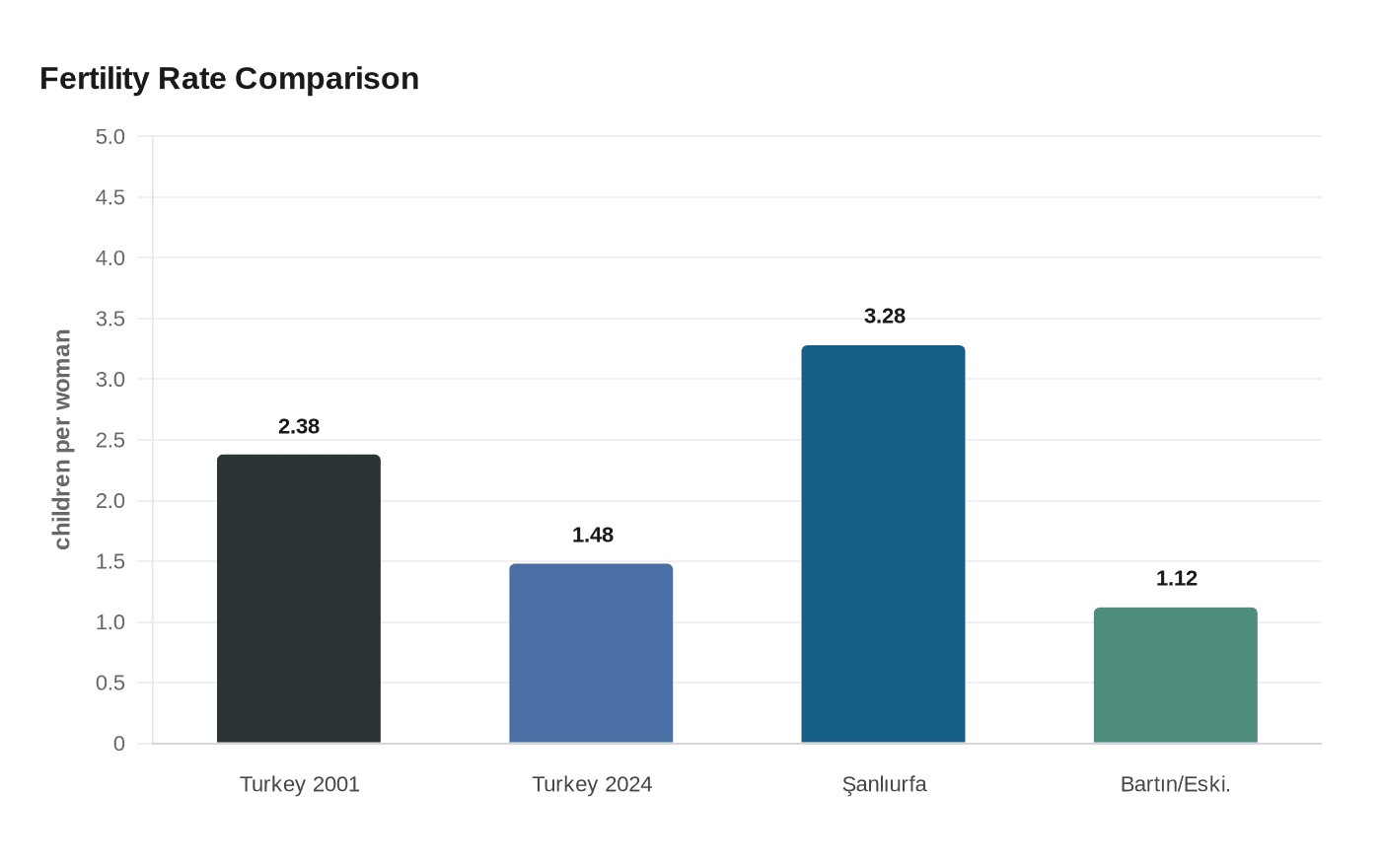
Turkey’s birthrate kept falling even as President Recep Tayyip Erdogan turned family policy into a national campaign. The country’s total fertility rate dropped to a record low of 1.48 children per woman in 2024, down from 2.38 in 2001, while live births totaled 937,559, according to the Turkish Statistical Institute, or TÜİK.
The decline has been long and broad. TÜİK said fertility has stayed below the replacement level of 2.10 for eight straight years. In 2024, 71 provinces were below that threshold, up from 57 in 2017, and 55 provinces had fertility rates below 1.50. Only Şanlıurfa remained above 3 children per woman, at 3.28, while Bartın and Eskişehir posted the lowest rate, 1.12 children per woman.
Erdogan answered with a new pronatalist package unveiled on January 13, 2025, as part of a declared Year of the Family. The plan promised a one-time payment of 5,000 lira for a first child, monthly payments of 1,500 lira for a second child, and 6,500 lira and 11,500 lira for third and fourth children. The benefits apply to children born after January 1, 2025, and continue until age five. He also backed a separate Family and Youth Fund loan of 150,000 lira for newlyweds, with a 48-month repayment term and a two-year grace period.
The incentives have not altered the underlying trend. Fertility has been sliding since 2014, and the drop is especially pronounced among university-educated women, while higher fertility persists in poorer southeastern provinces such as Şanlıurfa, Şırnak and Mardin. Erdogan has cast the issue as more than a social trend, calling the decline a disaster and treating population loss as a matter of national survival. He has argued that culture, not the economy, is driving smaller families.
Critics say the policy response misses the point. Women’s-rights activists argue the government is trying to push women back into traditional roles while leaving housing costs, childcare burdens and economic insecurity unresolved. Women interviewed in İstanbul said rising living costs and shrinking rights made official appeals for larger families ring hollow.
The numbers suggest that cash grants and subsidized loans can soften the cost of a new child, but they do not rewrite the calculations that shape family size. Turkey’s case shows how quickly pronatalist politics runs into the realities of work, housing and personal autonomy.
This article was produced by Prism’s automated news system from verified source data, official records, and press releases, then run through automated quality and moderation checks before publishing. The system is built and supervised by the people who set the standards it runs under. Read our full AI policy.
Did this article answer your question?


