Congress clashes over Trump plan to slash EPA budget by half
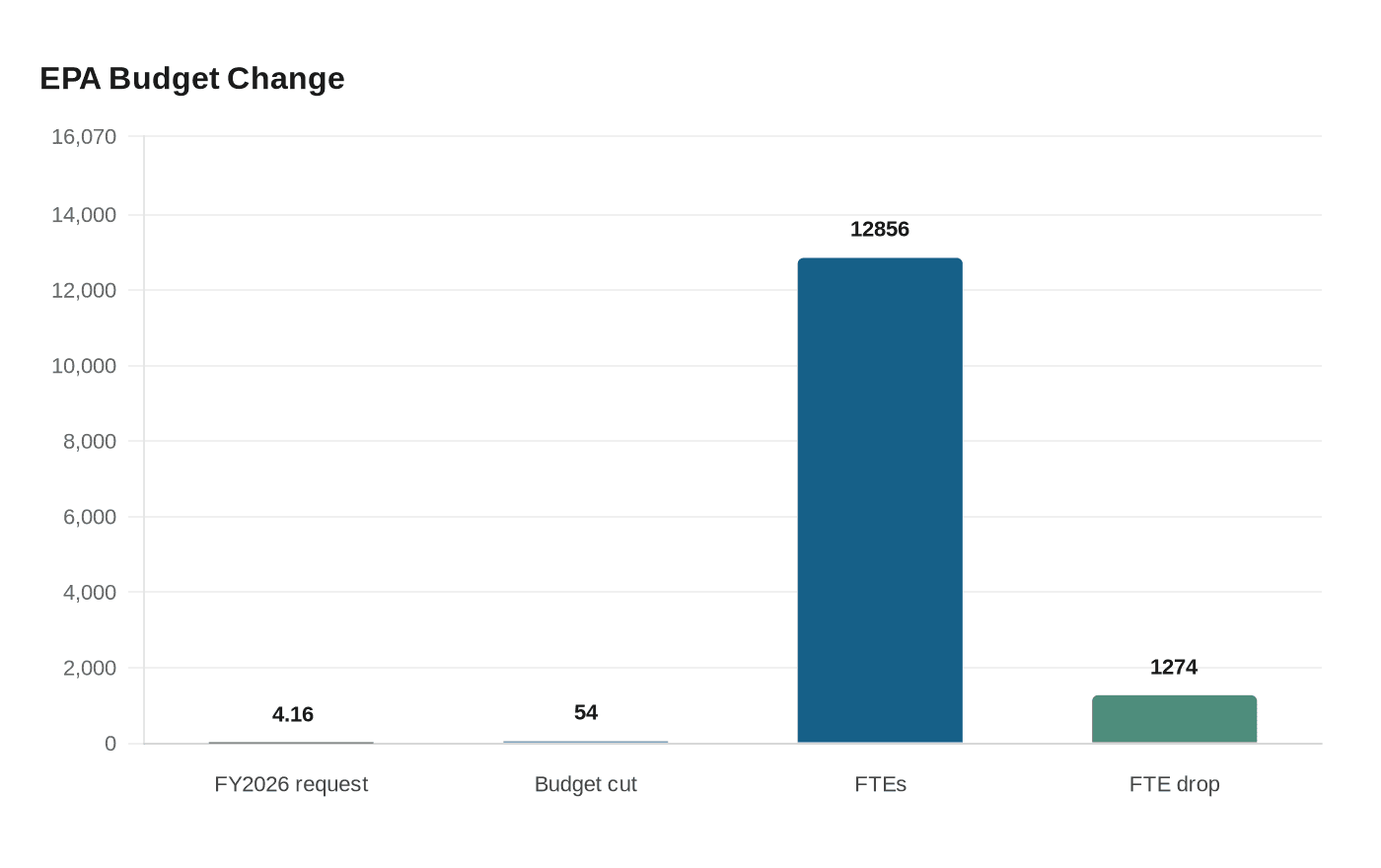
A $4.16 billion EPA request would cut the agency by 54%, erase one air office and trim 1,274 jobs, forcing Congress to decide how much watchdog power remains.
If Congress accepted Donald Trump’s plan, the Environmental Protection Agency would lose the money and staff that underpin enforcement, cleanup oversight, permitting and emergency response, while a key air program would be eliminated and folded into other offices.
The administration’s fiscal 2026 request totaled $4.16 billion, a 54% cut from enacted fiscal 2025 funding, and would support 12,856 full-time equivalents, down by 1,274 from the prior year. At an April 27 House Appropriations Subcommittee on Interior, Environment, and Related Agencies hearing, EPA Administrator Lee Zeldin defended the proposal as lawmakers pressed him on how the agency could sustain its mission with far fewer resources.
The clash also echoed a Senate Environment and Public Works Committee hearing on the proposed budget, where Shelley Moore Capito chaired the session and Sheldon Whitehouse, the ranking Democrat, opposed the cuts. Whitehouse and other Democrats cast the request as evidence that the administration was retreating from the EPA’s core role in policing pollution and protecting public health.
The budget documents show one of the clearest changes: the Atmospheric Protection Program would be eliminated in fiscal 2026, with statutory work shifted into other clean-air programs. The administration says the overhaul is meant to streamline the workforce, improve efficiency and emphasize cooperative federalism, but critics argue those terms describe a thinner federal watchdog with less direct authority.
The practical stakes are broad. A cut of this size would likely shrink the agency’s ability to inspect polluters, pursue enforcement cases, process permits and support cleanup and grant programs. It would also leave the EPA with less room to respond when contamination, air-quality problems or other environmental hazards emerge, especially in communities that rely on federal action when state capacity falls short.
The final decision rests with Congress, not the White House, and these hearings are part of that bargaining. For Zeldin and the administration, the test is whether the government can claim the same protections while cutting the EPA by more than half. For lawmakers in both chambers, it is a choice about how much environmental oversight Washington is willing to give up.
This article was produced by Prism’s automated news system from verified source data, official records, and press releases, then run through automated quality and moderation checks before publishing. The system is built and supervised by the people who set the standards it runs under. Read our full AI policy.
Did this article answer your question?

