Congress faces unusually high turnover as 2026 exits surge
Congress is losing lawmakers faster than usual, with 59 House members already set to exit and committee leaders among the departures.

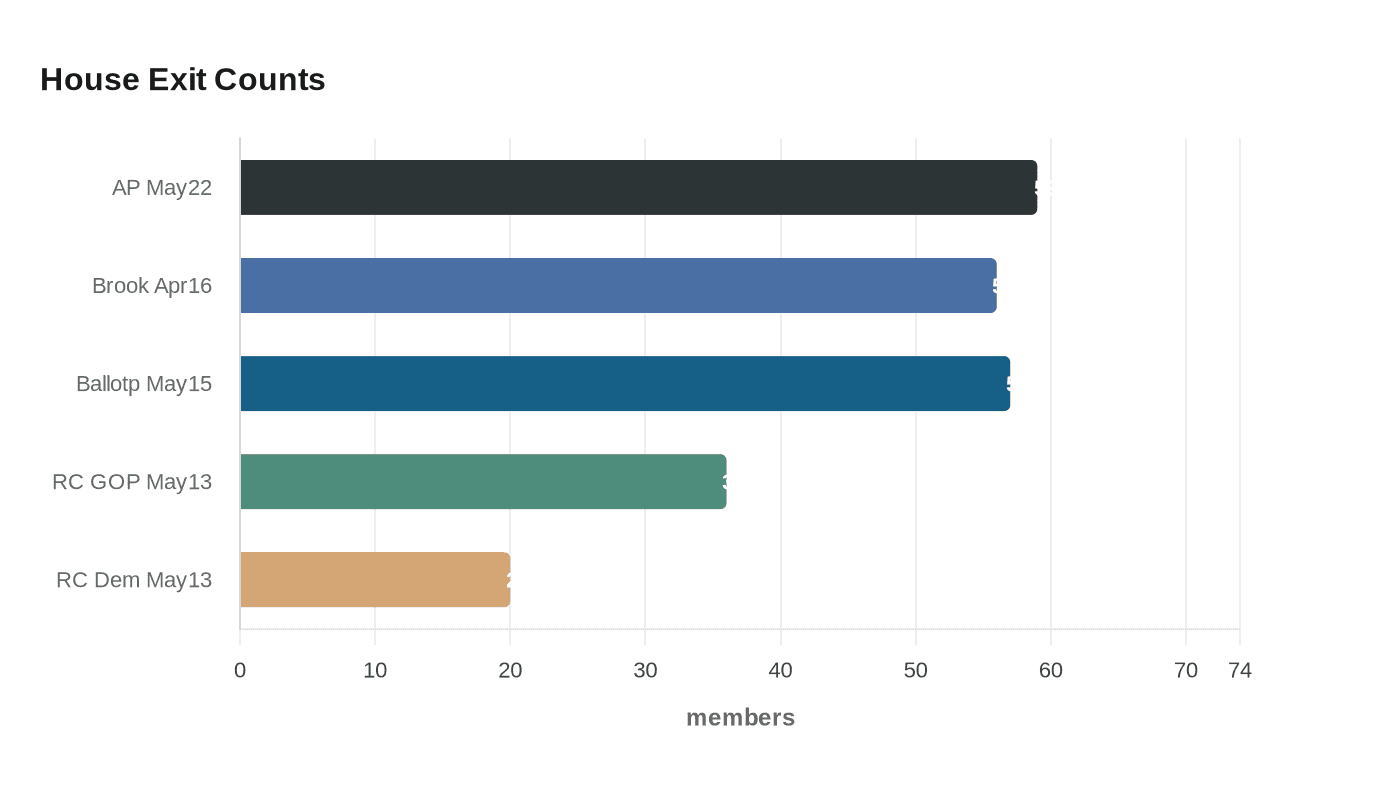
Congress is headed into the 2026 election year with an unusually deep wave of departures that is already stripping away experience, committee clout and hard-earned institutional memory. The Associated Press tracker counted 59 current House members, 21 Democrats and 38 Republicans, as confirmed not to return next term as of May 22, while excluding 13 seats that will be filled before the November election because of resignations or deaths this term.
The exits are not spread evenly across the institution. Brookings said the 119th Congress had seen 56 House retirements as of April 16, the highest total in more than three decades, and that 35 of those retirees were Republicans. Among them were 18 subcommittee chairs and three committee chairs, a concentration that points to real loss at the level where legislation is written, negotiated and quietly shaped. Brookings also said the average tenure of retiring Republicans had fallen to five terms, suggesting that newer members are leaving earlier than past generations did.

The turnover extends beyond routine retirement. Ballotpedia said that as of May 15, 57 House incumbents, 21 Democrats and 36 Republicans, were not seeking reelection, and 68 voting members of Congress overall, including 11 senators, had opted out of another run. Roll Call’s May 13 count put the number of House Republicans not returning at 36 and House Democrats at 20, while noting that its tally excluded members who died, resigned or lost primary fights. The overlap among the counts points to the same pattern: resignation, retirement and primary defeats are combining to produce a cycle of churn that goes well beyond normal turnover.
The departures matter because they are happening inside a system that usually protects incumbents. OpenSecrets says sitting House members benefit from wide name recognition and a major fundraising edge, and Ballotpedia said 98% of congressional incumbents were reelected in 2024. Yet Ballotpedia also found that 57 incumbent members did not file for reelection in the 2024 cycle, and between January 2011 and May 2026, 360 House incumbents announced they would not seek reelection, an average of 23 a year.
The clearest concentration is among Republicans from safe red districts, more than 85% of retiring House Republicans by Roll Call’s count. That leaves open seats more exposed to recruitment battles and less anchored by incumbency. AP says the field of open seats is already broad and likely to grow, raising the stakes for candidate quality, fundraising and local organizing. If the current pace holds, the next Congress could enter with less seniority, weaker committee continuity and a sharper break from the institution that is now leaving Washington in record numbers.
Know something we missed? Have a correction or additional information?
Submit a Tip