Conservatives give Pierre Poilievre 87.4% backing to remain leader
Delegates at the Conservative convention in Calgary overwhelmingly approved Pierre Poilievre in a leadership review, clearing a key internal threshold and shaping the party’s path forward.
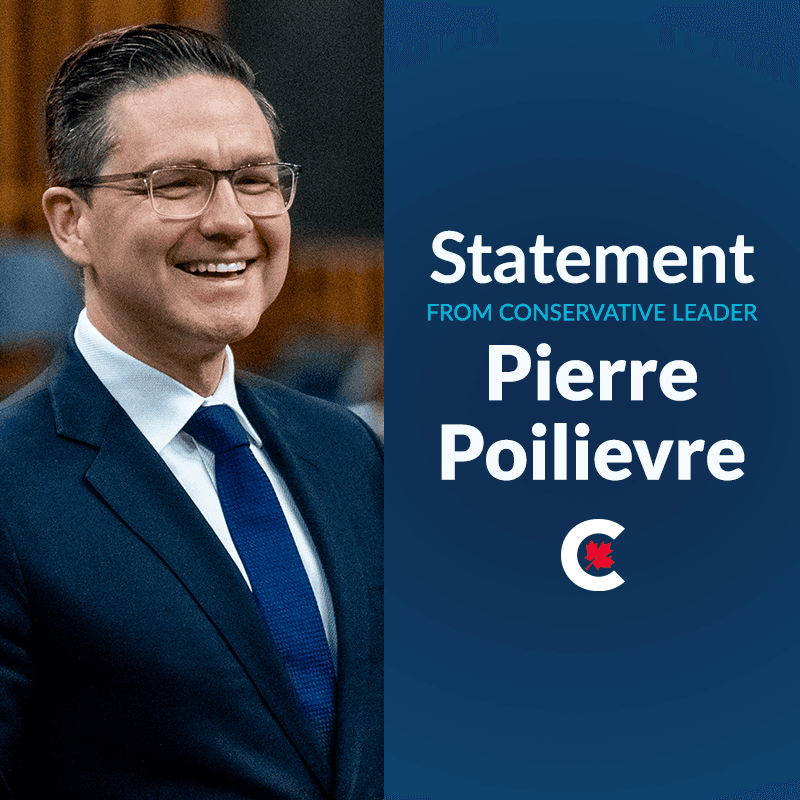
Delegates at the Conservative Party of Canada’s national convention in Calgary voted overwhelmingly to keep Pierre Poilievre as leader, approving him by 87.4 percent in a leadership review held after the party’s defeat in last year’s federal election. Poilievre spoke to the convention on Friday evening, delivering a nearly hour-long, campaign-style address before delegates cast ballots late that night and results were announced in the early hours of Saturday.
The party opted to ask delegates on the convention floor directly whether they supported Poilievre remaining leader rather than putting the question to the wider membership or holding a separate pre-vote on whether a review should be held. The 87.4 percent result cleared an internal benchmark well above the threshold party figures had identified as potentially damaging; party officials described the outcome as decisive and the vote as a clear endorsement by the party grassroots.
Poilievre framed his pitch in defiant, unifying terms. “When you start something, you never give up. I’ll never give up,” he told delegates, and he warned that “A house divided cannot stand.” He emphasized themes that have dominated his leadership: affordability, crime, smaller government and a pledge to represent “people who have felt unseen for too long.” On stage with his wife and two children, he greeted supporters clustered behind signs reading “REAL CHANGE” and “FOR OUR FUTURE.”
The result gives Poilievre a renewed mandate inside the party and places him in the same historical frame as Stephen Harper, who won roughly 84 percent support at his 2005 review. Party insiders noted that a showing under about 80 percent would have intensified questions about his viability; the 87.4 percent figure removes that immediate internal pressure and ensures Poilievre will head into the next period as the uncontested parliamentary leader for the Conservatives.

Still, the endorsement does not erase external challenges. Delegates described the vote as a “resounding yes” for trust in the leader, but some analysts warned the party’s base-first popularity may not translate to wider national appeal. Daniel Béland, a political science professor at McGill University, said Poilievre faces headwinds beyond the convention floor, including questions the campaign has not fully addressed about cross-border political dynamics and how the leader will court moderate voters. Béland said critics view Poilievre as strong with core supporters but “as far as the broader Canadian electorate is concerned, he’s much less popular than Mark Carney, who recently shined on the world stage at Davos and has recentered the Liberal Party of Canada ideologically in ways that even some moderate conservative voters like.” He also noted concerns that Poilievre has not fully confronted what some describe as a looming U.S. political influence on Canadian voter sentiment, calling it “the US presidential elephant in the room.”
Provincial allies moved quickly to reinforce the outcome. Alberta Premier Danielle Smith congratulated Poilievre and pledged her support, saying, “If you work hard, you can get ahead – that is the leadership that Pierre Poilievre brings. That is the vision he has for Canada and is one that he learned right here in Alberta when he was growing up.” She added, “I am proud to work with him to be a member of this party under his leadership and I know that he’ll lead the Conservatives back to victory in the next election.”
For now, Poilievre’s path is clear within the party: consolidate support, translate activist energy into broader electorates, and guard against defections that could undermine parliamentary strength. The leadership review has closed one chapter; the next will test whether the renewed internal mandate can be converted into a winning national strategy.
This article was produced by Prism’s automated news system from verified source data, official records, and press releases, then run through automated quality and moderation checks before publishing. The system is built and supervised by the people who set the standards it runs under. Read our full AI policy.
Did this article answer your question?