Costa Rica’s EV market surges as charging network struggles to keep pace
Costa Rica shows EV adoption can outpace charger buildout when trips are short, policy is steady and geography works in its favor. The model is real, but not easily copied by larger countries.
A market growing faster than its plugs
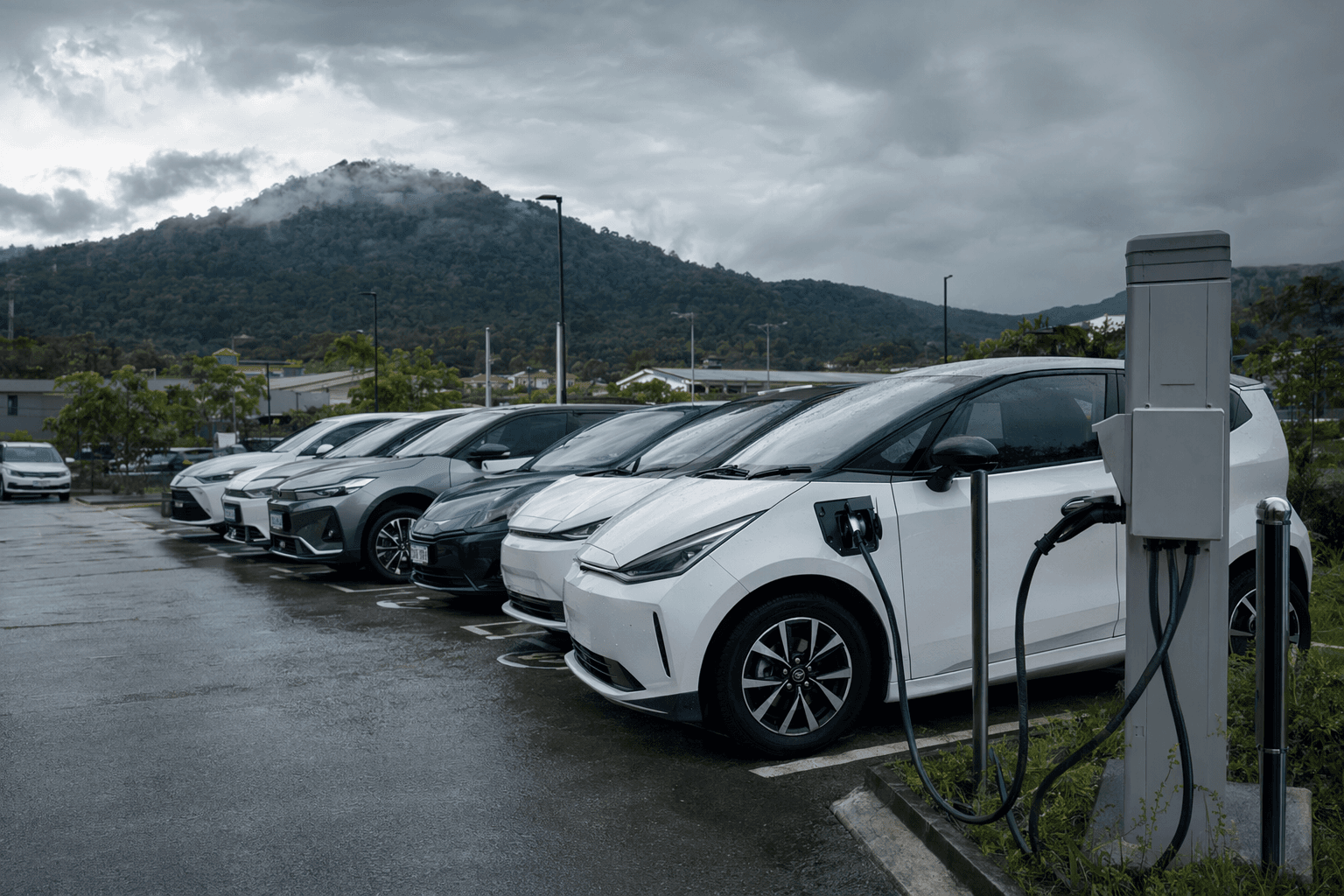
Costa Rica’s electric-vehicle market has moved beyond novelty and into scale. By 2024, the country had more than 29,000 electric vehicles on the road, and official data from the Ministry of Environment and Energy is updated monthly to track purchases and imports, a sign that the market is no longer niche.
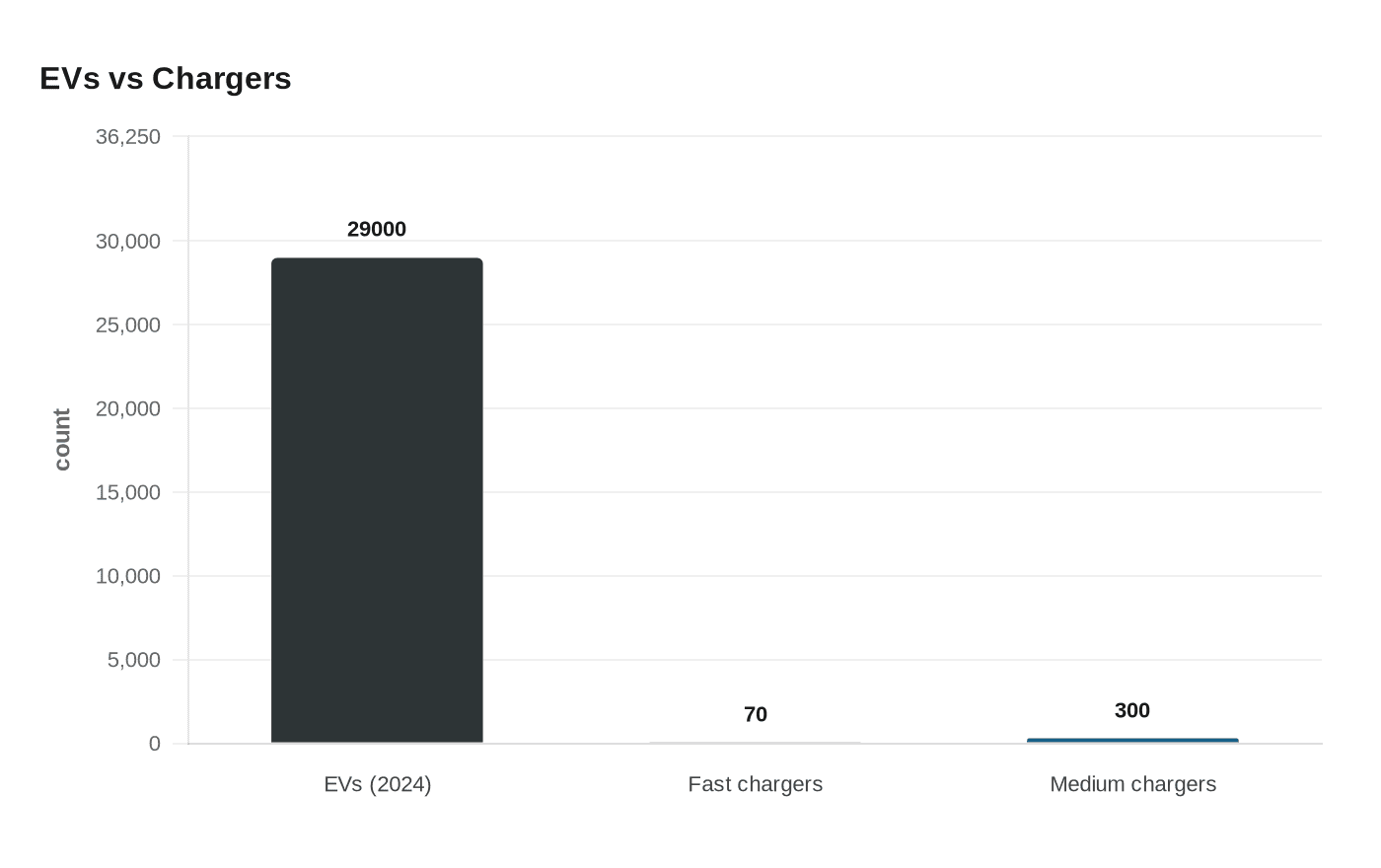
The tension is obvious: the fleet is rising faster than the charging network. OLADE says Costa Rica has more than 70 fast chargers and 300 medium chargers nationwide, but local reporting and industry sources continue to describe bottlenecks and queues at busy stations, especially outside the Greater Metropolitan Area and around San José. The result is a market that works, but only just, and only because the country is small enough for many drivers to live within the practical reach of the existing network.
Why the system works anyway
Costa Rica’s scale is the first reason adoption has been possible despite the gaps. A compact country changes the math for electric driving, because the number of long-distance trips that demand a fast, dense charging grid is smaller than in larger markets. That does not erase the problem of uneven infrastructure, but it does make the problem manageable for more drivers.
The pattern is visible in how people use the system. Public chargers matter, but they are not the entire story. In a country where many routine trips are relatively short and predictable, home charging, workplace charging and a limited number of reliable fast chargers can carry a surprising amount of demand. That is the lesson Costa Rica offers the rest of the region: geography can buy time, but only if policy and infrastructure keep moving.
The pressure points are real
Even with more than 29,000 EVs, Costa Rica still ranks poorly when charger counts are measured against vehicles in circulation. OLADE has said that countries with significant electric fleets, including Costa Rica, remain near the bottom in relative charging-station availability. That mismatch is the core weakness in the current model.
The strain is most visible outside the main urban belt. Drivers can find chargers on third-party maps, and there are hundreds of charging points listed across the country, but availability does not always mean usability. Busy stations can mean wait times, and fast-charging bottlenecks can turn a short top-up into a planning problem. In practice, the network is enough for many trips, but not yet enough to make long-distance charging feel seamless.
Policy has done the heavy lifting
Costa Rica’s EV growth did not happen in a vacuum. The National Decarbonization Plan sets a clear transport target, with 30% of the light vehicle fleet electric by 2035 and 95% zero-emission by 2050. That matters because it gives agencies, utilities and investors a long horizon to work toward instead of forcing the market to guess what comes next.
The regulator ARESEP has also been active on the pricing side. In 2025, it opened a public tariff process for fast-charging centers under the T-VE framework, part of an effort to standardize the economics of charging. In November 2025, it approved a 20.7% reduction in the promotional tariff for electric bus depot charging, bringing the rate to ¢41.95 per kWh. Those moves may sound technical, but they are central to adoption: if charging is uncertain or overpriced, the vehicle market slows down.
Costa Rica’s regional role is bigger than its size
The country’s influence now reaches beyond its borders. MINAE highlighted Costa Rica as host of a regional presentation of the latest Latin America and Caribbean electromobility figures, underscoring its status as a reference point for zero-emissions transport in the region. That role matters because the region is moving quickly, even if unevenly.
At the end of 2024, Latin America and the Caribbean had 444,071 light electric vehicles, nearly triple the prior year. Costa Rica is part of that acceleration, and OLADE notes that it accounts for about 16% of new vehicle registrations in the country. The message is clear: the market is no longer waiting for perfect infrastructure before expanding. It is growing first, and forcing the system to catch up.
What larger countries can learn, and what they cannot
Costa Rica’s experience carries two different lessons. One is transferable: policy clarity, tariff reform and regular data collection can make a market feel navigable even while infrastructure is still incomplete. The monthly registry from MINAE and the tariff actions from ARESEP are examples of institutions trying to reduce uncertainty as the fleet expands.
The other lesson is unique to Costa Rica’s small scale. Compact geography makes imperfect charging survivable in a way that would be far harder in a larger country with longer intercity distances and more fragmented travel corridors. Bigger countries can borrow the policy discipline, but they cannot borrow the geography. They need denser networks, more fast chargers and better coverage far beyond capital-city corridors.
That is why Costa Rica is such a useful test case. It shows that electric adoption does not require perfection, but it does require alignment between geography, policy and infrastructure. The market can surge ahead of the plugs, but only for so long.
This article was produced by Prism’s automated news system from verified source data, official records, and press releases, then run through automated quality and moderation checks before publishing. The system is built and supervised by the people who set the standards it runs under. Read our full AI policy.
Did this article answer your question?


