Cuba’s ration book endures as shortages deepen and shelves empty
A Havana bodega serving 5,000 people went nearly two weeks without a customer, a stark sign of how Cuba’s ration book has shrunk to a symbol of scarcity.

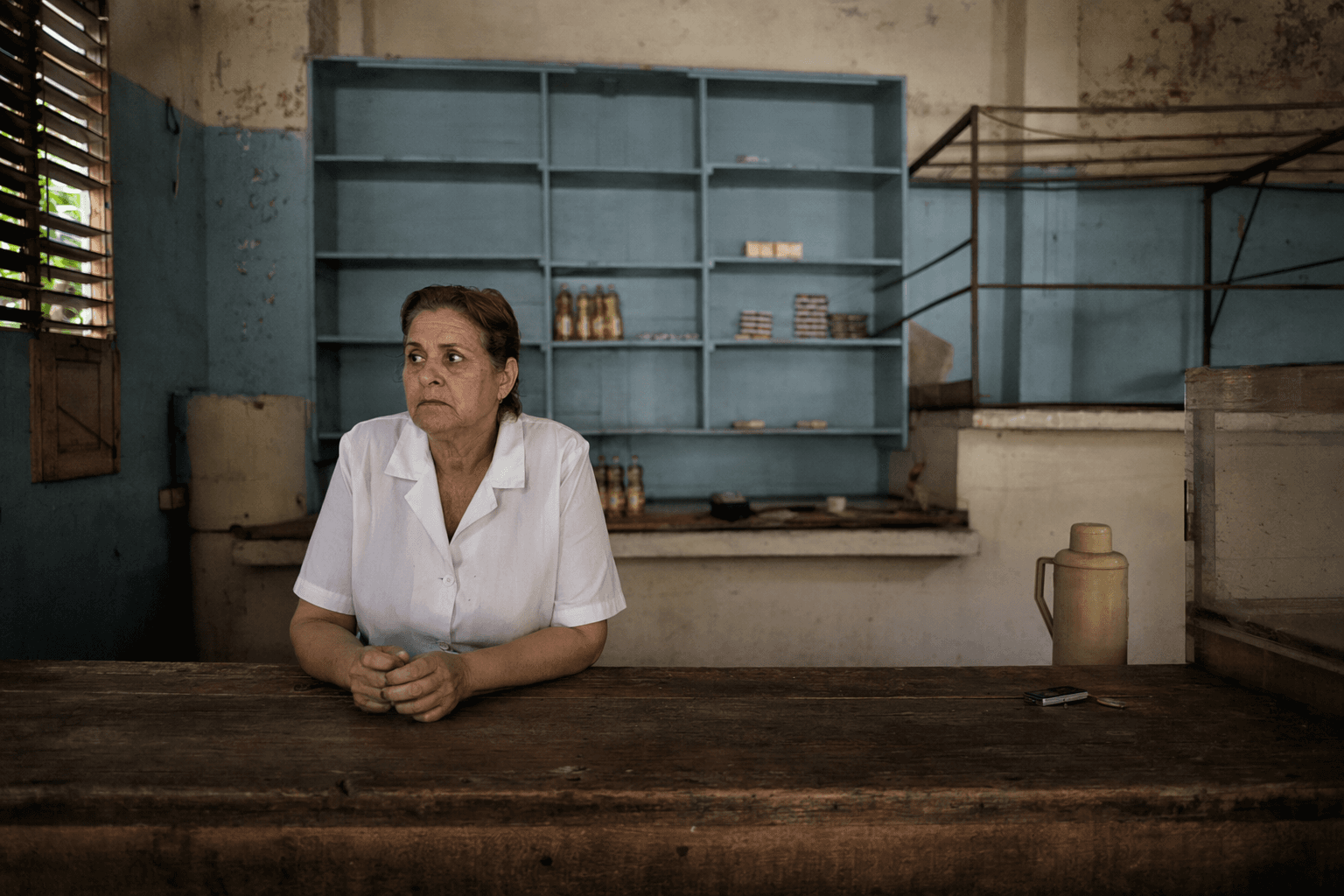
In central Havana, José Luis Amate López has watched a state-run bodega nearly go silent. The shop, which serves about 5,000 people, went almost two weeks without a customer, except for a kitten that wandered in, while the shelves that once held far more food in his childhood stood nearly bare. In April, the only items available were rice, sugar and split chickpeas. “No Cuban can truly survive on the products from the ration book anymore,” Amate López said.
The pocket-size libreta was created under Fidel Castro in the early 1960s to guarantee families a baseline of food at controlled prices. The ration law was passed in 1962, and ration stores opened on July 12, 1963. What once included milk, fish and cigarettes has been pared back in many places to a thin monthly allotment that no longer meets daily needs. Even special birthday rations have been reduced to symbolic gestures: teenagers turning 15 now receive 3 kilograms of ground beef instead of cake and beer, while those turning 65 are supposed to get sardines, soap and toilet paper, goods that were unavailable at Amate López’s store.
The deterioration of the ration book mirrors a broader economic collapse. The World Food Programme says Cuba contracted by 1.1% in 2024 and continues to face persistent inflation, declining fiscal resources, fuel shortages and limited access to foreign currency. Its monthly food basket is almost entirely imported, and shortages and distribution delays have made even that basic supply unreliable. Cuba ranks 97th out of 193 countries in the 2025 Human Development Report, and the World Food Programme supported 1.3 million people on the island in 2024.
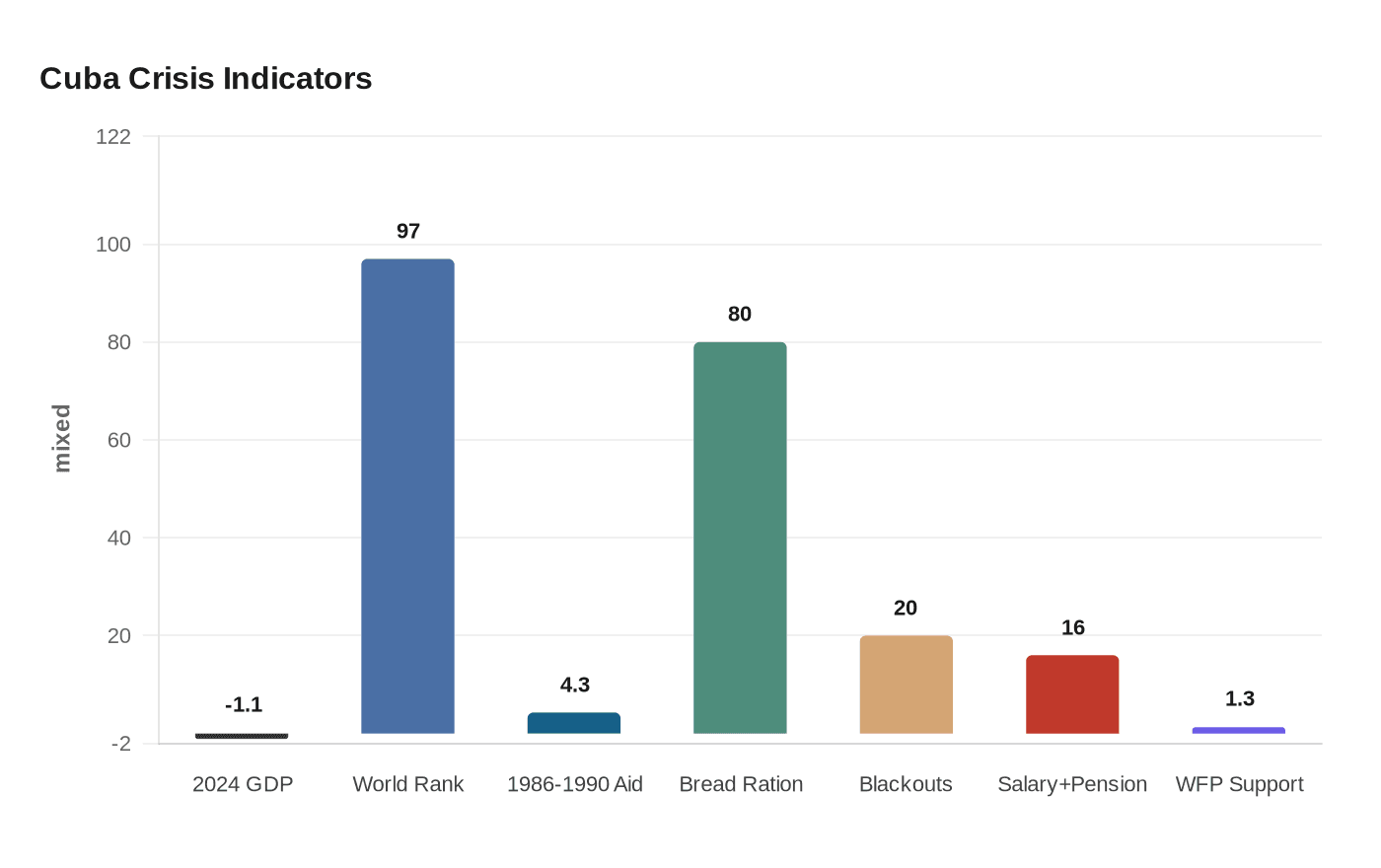
The comparison with the 1990s Special Period is sobering. After the Soviet Union collapsed in 1991, Cuba lost subsidies that had averaged $4.3 billion a year from 1986 to 1990, equal to 21.2% of Cuban GNP. Rationing tightened sharply, blackouts lasted up to 20 hours a day and bread allocations fell to 80 grams per person per day. Many Cubans now say today’s shortages feel worse.
For older Cubans, the gap between official promises and daily reality is increasingly impossible to bridge. Havana resident Ana Enamorado, 68, said her salary and pension total about 8,000 Cuban pesos, or roughly $16 a month, forcing her to buy the rest of her food in small private shops known as mipymes. Human Rights Watch says Cuba requested assistance from the United Nations World Food Programme for the first time in February 2025, seeking powdered milk for children under seven, a sign of how far the country has moved from the revolution’s promise of universal provision.
This article was produced by Prism’s automated news system from verified source data, official records, and press releases, then run through automated quality and moderation checks before publishing. The system is built and supervised by the people who set the standards it runs under. Read our full AI policy.
Did this article answer your question?