Cotton Warns Emerging Drones Threaten Grids, Wastewater Plants, Critical Sites
Power grids and wastewater plants remain exposed because current law lets only a narrow set of agencies stop hostile drones, even as Congress widens authority.
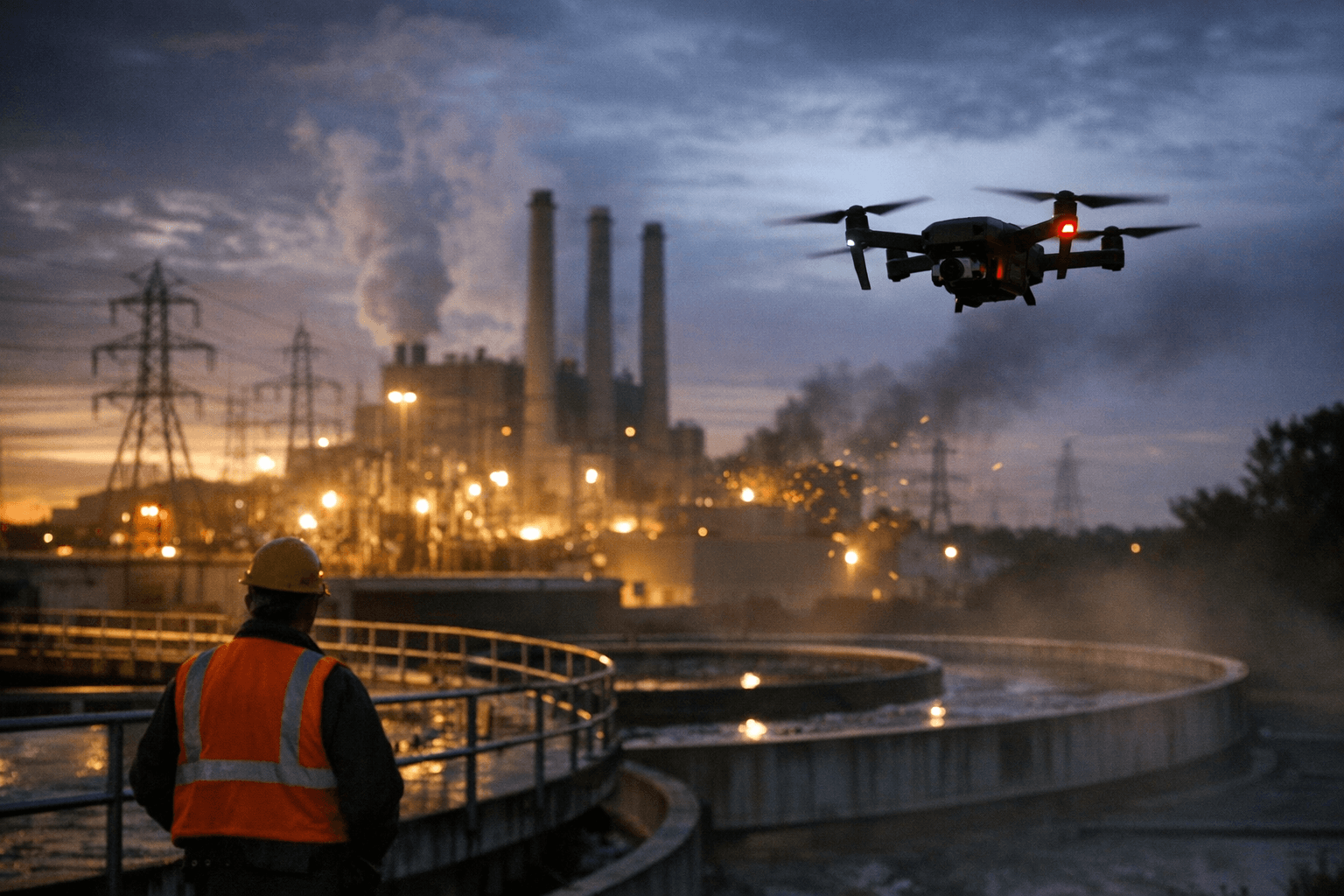
Tom Cotton is pressing a gap in federal law that leaves power grids, wastewater plants and other critical sites exposed to drones that can be bought easily and flown with little warning. The Arkansas senator’s warning lands as Congress weighs a broader counter-drone expansion, but the central question is whether that push would change what operators can actually do when a hostile aircraft appears overhead.
A Congressional Research Service overview on FY2025 NDAA counter-UAS policy says Congress has long worried about drones threatening U.S. military personnel and defense installations. It also says the Department of Defense, the Department of Homeland Security, the Department of Justice and the Department of Energy already have authority to mitigate drone threats at certain covered facilities and assets. That leaves many civilian infrastructure operators outside the perimeter, including the kinds of grid, water and industrial sites Cotton says are now in the crosshairs.
Lawmakers from both parties have argued that the threat has outgrown the current patchwork. In December 2025, Senate Homeland Security Committee Democrats said a bipartisan bill would extend drone authorities through 2031 and, for the first time, allow state and local law enforcement to counter dangerous drones at certain critical events. The measure was framed as important for airports, stadiums and large gatherings, including the 2026 FIFA World Cup and the 2028 Los Angeles Olympics.
Sen. Gary Peters has said drone technology is becoming more advanced and more readily available, and that law enforcement needs authority to respond to threats near sporting events, large gatherings and critical infrastructure. That concern is not abstract. Between 2022 and 2024, the National Nuclear Security Administration reported six unauthorized drone sightings at the Nevada National Security Site, one suspicious drone overflight at the Pantex Plant and five suspicious drone overflights of Los Alamos National Labs restricted airspace. In May 2025, Peters and Sen. Marsha Blackburn introduced the Nuclear Ecosystem Drone Defense Act to expand Energy Department authority around facilities that store or transport nuclear material and sites used to research, design or manufacture nuclear weapons components.
The scale of the problem is growing fast. In December 2024, Sen. Jack Reed said the Federal Aviation Administration counted about 792,000 registered drones operating in the United States, split evenly between commercial and recreational use. A CRS product on FY2025 NDAA counter-UAS issues says DOD is developing, acquiring and fielding defensive systems that can locate, identify, track and intercept adversary drones. But for most civilian operators, the legal problem remains the same: authority is still narrow, and the ability to stop a drone before it reaches a vulnerable site still depends on who is allowed to act, where the threat appears and whether the law covers the target at all.
This article was produced by Prism’s automated news system from verified source data, official records, and press releases, then run through automated quality and moderation checks before publishing. The system is built and supervised by the people who set the standards it runs under. Read our full AI policy.
Did this article answer your question?

