Crusoe Energy Buys 12 GWh of Form Energy Batteries for Data Centers
Form Energy's CEO says data centers need "firm, fast capacity" — Crusoe just ordered 12 GWh of iron-air batteries, a bet that rust-based chemistry can power the AI boom.

Form Energy and Crusoe announced a strategic capacity agreement on March 24, 2026 to deliver 12 gigawatt-hours of multi-day energy storage systems to support the rapidly growing power needs of AI data centers, with deliveries starting in 2027. The deal, announced at the CERAWeek energy conference in Houston, places Crusoe among the first data center operators to bet serious capacity on long-duration iron-air batteries rather than the conventional grid.
All battery systems will be manufactured at Form Energy's Form Factory 1 in Weirton, West Virginia. The 550,000-square-foot facility employs over 300 people and was built on the site of the former Weirton Steel mill. Form did not disclose the value of the sale, with deliveries beginning in 2027; Crusoe's purchase is expected to bring Form hundreds of millions in new revenue as the battery company embarks on a $500 million funding round.
Form's batteries store energy for up to 100 hours. The iron-air batteries discharge when oxygen from the air flows over iron pebbles inside the battery. The oxidation process produces rust and electricity; to charge, electricity essentially de-rusts the iron and releases oxygen back into the air. In contrast to lithium-ion, which can only deliver energy for a few hours due to its high relative cost, iron-air batteries can sustain energy delivery for multiple days.
"This really reaffirms the direction of a lot of the market, which is data centers need that firm, fast capacity," Form CEO Mateo Jaramillo said of the Crusoe deal. Form's batteries will help ensure capacity for Crusoe's data centers during peak grid constraint moments throughout the year.
The Crusoe agreement is the second large sale made by Form, which last month said it would build a 30 gigawatt-hour battery for a Google data center in Minnesota through utility Xcel Energy, a deal worth about $1 billion according to The Information. Form has over 65 GWh of commercial projects under agreement, including multiple large-scale deployments that rank among the largest energy storage projects by energy capacity announced globally.
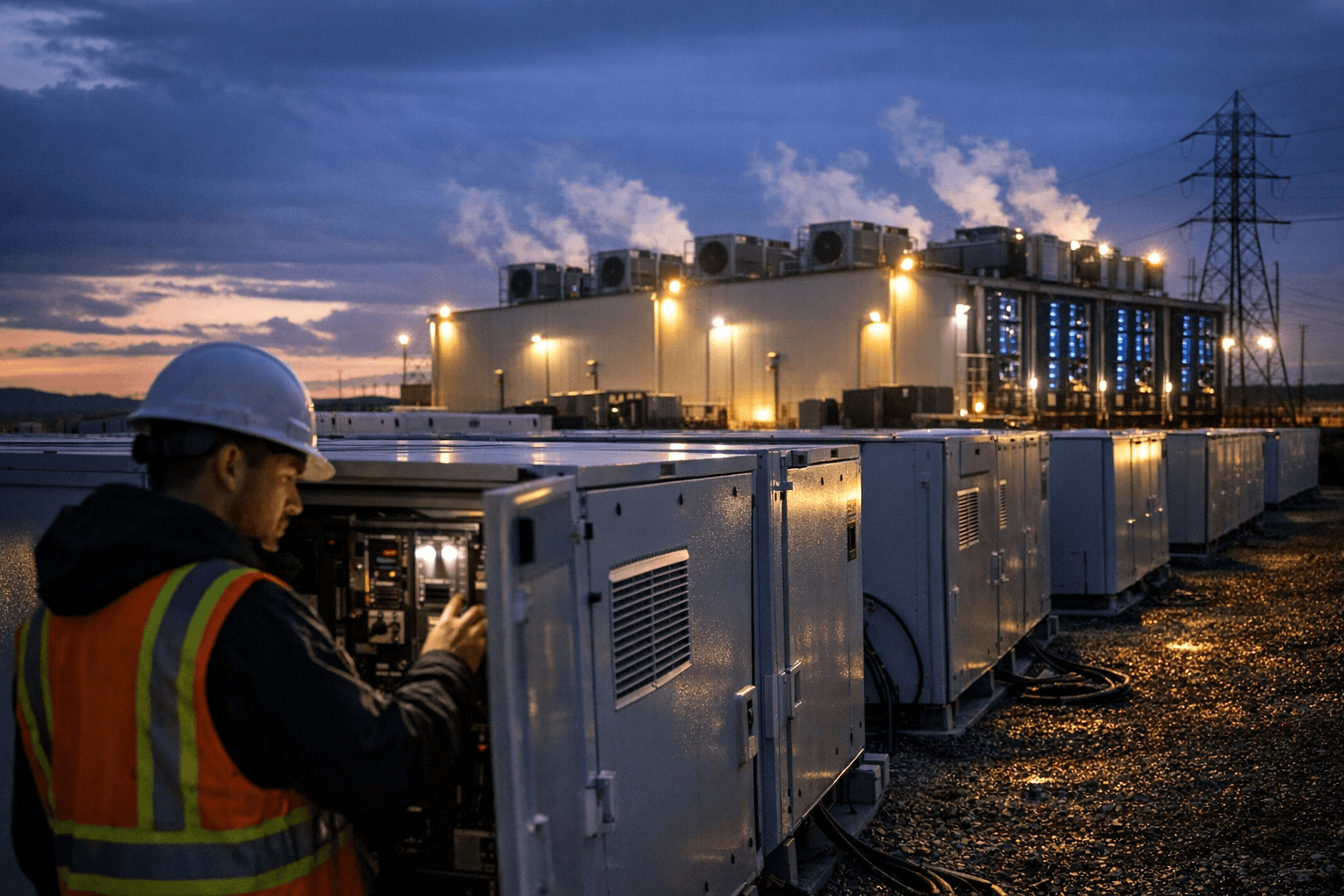
The Crusoe deal is part of a broader energy storage push by the company. Crusoe and Redwood Materials announced a significant expansion of their existing partnership on the same day, scaling up the Sparks, Nevada campus deployment from 4 to 24 Crusoe Spark modular data centers. The existing 12 MW / 63 MWh microgrid at the Nevada campus has maintained 99.2% operational availability since its June 2025 launch. Redwood will deliver an additional 8 megawatts of power using repurposed EV batteries. Crusoe has described the Nevada installation as the world's largest second-life battery deployment, pairing repurposed EV battery packs with on-site solar and using the grid only for backup.
Both deals will support Crusoe's "bring your own power" approach to its U.S. data center pipeline, which spans more than 45 GW, co-founder and chief strategy officer Cully Cavness said onstage at CERAWeek. Crusoe also holds a separate framework agreement with Energy Vault to deploy Spark modular data centers at Energy Vault's technology center in Snyder, Texas, scalable up to 25 MW with deployments beginning in 2026.
Form has raised $1.4 billion to date, according to PitchBook. Form's manufacturing capacity is scaling up to 500 megawatts a year out of its newly expanded factory in West Virginia and is fully allocated for the next several years. If Form goes public as rumored, it would likely be the first long-duration energy storage company to do so via IPO, and would serve as a test for how public markets value multi-day storage.
Know something we missed? Have a correction or additional information?
Submit a Tip

