Cyclone Dithwa Batters Sri Lanka, Dozens Dead, Hundreds Displaced
Cyclone Dithwa is sweeping across Sri Lanka today, triggering widespread flooding and landslides that have killed dozens and displaced hundreds as emergency teams race to evacuate affected communities. The disaster deepens economic strains for a country still recovering from recent fiscal crises, with infrastructure damage threatening agriculture, tourism, and public finances.

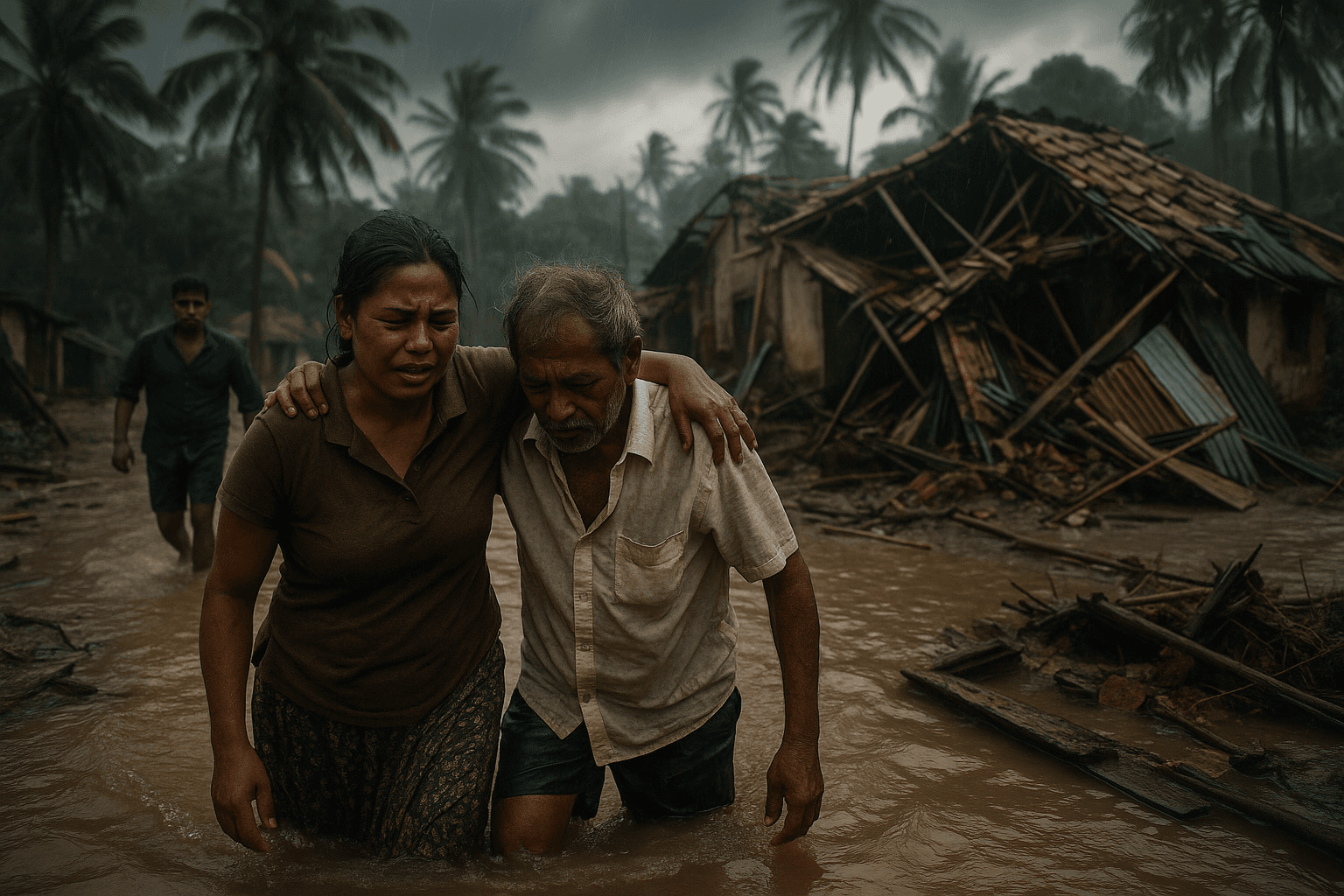
Cyclone Dithwa is producing torrential rain and flash flooding across central and southern Sri Lanka on November 28, causing multiple landslides, widespread road closures, and sinking homes in low lying areas. Local emergency services are conducting round the clock rescue operations as authorities confirm at least dozens of fatalities and hundreds of people injured or displaced. Reports from regional officials describe collapsed hillside settlements and swollen rivers overtopping embankments, while several districts remain cut off by damaged bridges and blocked highways.
The government has mobilized evacuation orders and emergency relief measures, deploying military and civil defense teams to support rescue efforts and to deliver food, water, and temporary shelter. Shelters have been set up in schools and public buildings, and officials are coordinating with local nongovernmental organizations to register displaced families and to triage medical needs. International partners have offered assistance, and the humanitarian situation continues to evolve as authorities search for missing residents in remote communities.
Infrastructure damage is significant in affected provinces, with preliminary local reports citing widespread road and power line disruptions. Flooding and landslides have damaged smallholder farms and tea plantations in hill districts that are economically important for exports and rural employment. Disruptions to local transport and logistics are already complicating relief deliveries and are likely to impede the movement of agricultural produce to ports and domestic markets in the near term.
The economic implications are immediate and potentially long lasting. Sri Lanka entered the cyclone with an economy still recovering from the 2022 debt crisis and constrained fiscal space. A natural disaster of this scale can put acute pressure on public finances by increasing emergency spending needs while reducing tax receipts if commerce and tourism slow. Key sectors such as agriculture and tourism are particularly vulnerable. Damage to crops will affect smallholder incomes and export volumes, while infrastructure losses can deter tourist arrivals in the crucial high season, compounding revenue shortfalls for local businesses and government.
Private sector and financial market responses will likely focus on liquidity and insurance exposures. Insurance penetration in Sri Lanka is limited, meaning many households and small businesses will rely on public assistance for rebuilding. Damage to roads and ports could create short term supply chain interruptions that raise costs for firms reliant on timely imports and exports. Currency and sovereign risk could face renewed volatility if the scale of reconstruction funding becomes clear and external support is slow to materialize.
Long term, the event underscores Sri Lanka’s climate vulnerability. Scientific assessments indicate that extreme rainfall and coastal storm impacts are intensifying in the region, which raises questions about the adequacy of land use planning, hillside settlement regulation, and investment in resilient infrastructure. Reconstruction choices made in the weeks ahead will determine whether the country hardens its exposure to future events or rebuilds in ways that reduce chronic risk.
Rescue operations and damage assessments are continuing through the day. Authorities say the priority is saving lives and stabilizing communications and transport corridors to enable a coordinated relief and recovery effort.
This article was produced by Prism’s automated news system from verified source data, official records, and press releases, then run through automated quality and moderation checks before publishing. The system is built and supervised by the people who set the standards it runs under. Read our full AI policy.
Did this article answer your question?


