Czech crowdfunding raises $6 million for Ukrainian winter power relief
A Czech grassroots fundraiser raised over $6 million in five days to buy generators, heaters and batteries for Ukrainians hit by attacks on energy infrastructure.
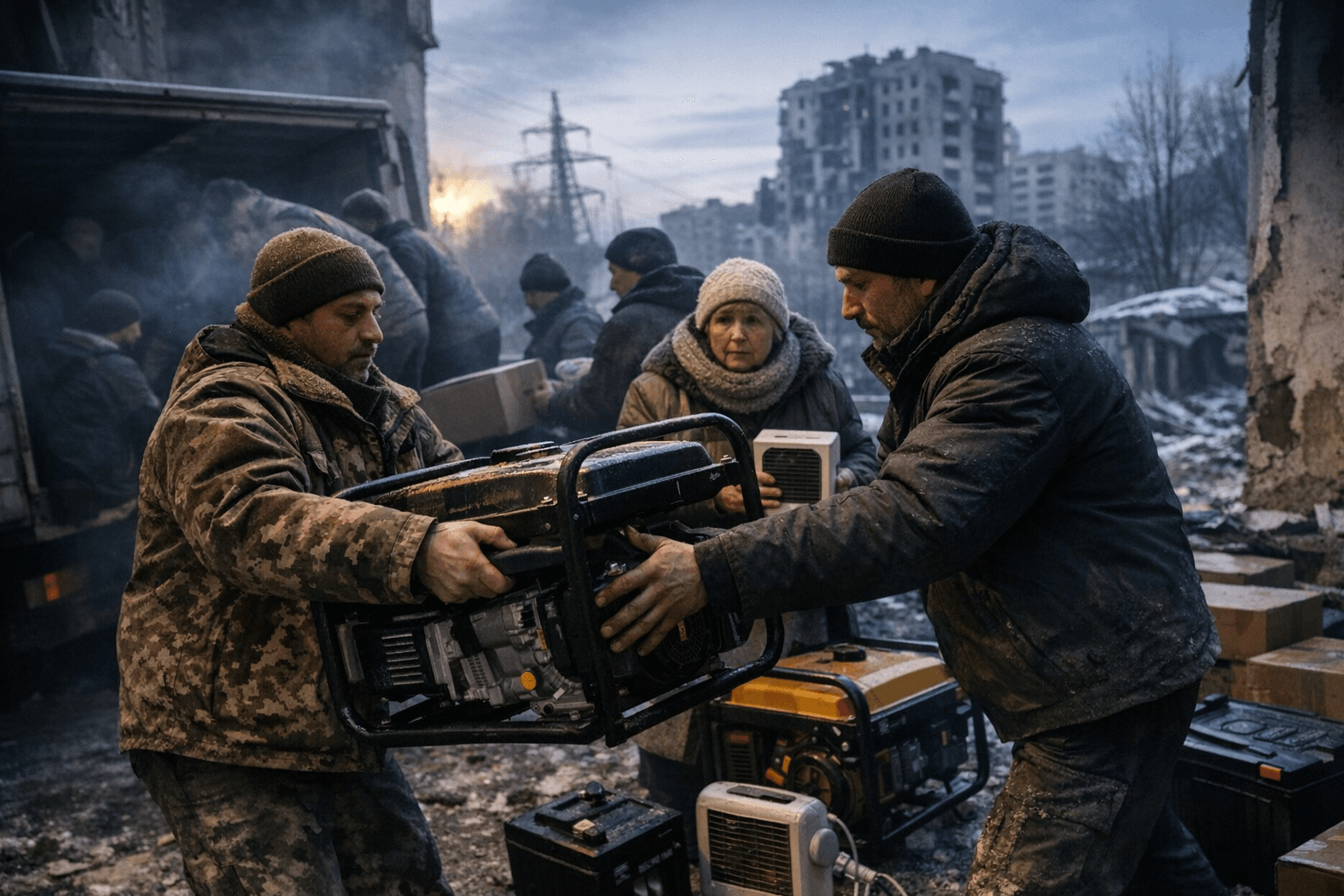
A Czech private initiative has mobilized more than $6 million in five days to procure emergency generators, heaters and batteries for people in Ukraine left without power after attacks on energy infrastructure amid a severe cold snap. The campaign, known by the online handle (darekproputin), has become a rapid expression of civilian solidarity from the Czech Republic to Ukraine at a moment of acute humanitarian need.
Organizers framed the drive as a direct response to the blackout crisis that followed repeated strikes on power plants, transmission lines and other parts of the grid. The funds are earmarked for portable generators, heating units and battery systems intended to keep homes, medical facilities and community centers functioning during prolonged outages. Because the campaign is privately led, it has drawn volunteers and local civic groups into logistics and fundraising work, turning social media momentum into large-scale purchasing power in a matter of days.
The mass mobilization highlights how modern conflicts increasingly target civilian infrastructure and how diasporas and neighboring publics can act as frontline responders. For many Czechs, the contribution reflects long-standing cultural and political sympathy for Ukraine across Central Europe, rooted in shared history, geographic proximity and recent waves of refugee flows. The campaign has also underscored the gap between emergency civilian needs and the longer-term task of rebuilding resilient energy systems.
Delivering equipment into Ukraine will require significant coordination. Humanitarian transfers of fuel and heavy electrical equipment face logistical challenges including transport in winter conditions, customs clearance, and ensuring safe distribution to frontline or hard-hit communities. Civil society groups and humanitarian organizations typically work with national authorities and international NGOs to navigate these hurdles; private initiatives must establish similar channels to convert funds into life-saving deliveries without delay.
The targeting of energy infrastructure during winter raises serious legal and moral questions under international humanitarian law. Attacks that disproportionately affect civilians by depriving them of heating, electricity and medical services risk violating the laws of armed conflict, which require belligerents to distinguish between military objectives and civilian objects and to avoid actions that cause excessive civilian harm. The current emergency has prompted renewed attention from legal scholars and human rights advocates to the protections afforded to essential services during hostilities.
Beyond immediate relief, the Czech campaign spotlights broader conversations about energy security in Europe. Reliance on centralized grids and vulnerable infrastructure has been exposed as a strategic weakness in wartime, prompting governments and communities to reassess contingency planning, decentralized power options, and stockpiles of critical equipment. The donations provide immediate respite, but they are not a substitute for systematic measures to harden infrastructure and expand civilian preparedness.
The effort also carries diplomatic resonance. Grassroots transfers of aid between neighboring countries can bolster bilateral ties while placing pressure on international institutions to address the humanitarian fallout of energy-targeted attacks. As the winter emergency continues, this Czech initiative may be a model for rapid cross-border civic assistance, even as it highlights the limits of charity when state-level protection and reconstruction are required.
The campaign's quick success demonstrates the power of civic networks in a crisis. Converting the funds into safe, effective relief will test the agility of volunteers, the responsiveness of humanitarian channels, and the international community's capacity to protect civilians from the human consequences of energy warfare.
This article was produced by Prism’s automated news system from verified source data, official records, and press releases, then run through automated quality and moderation checks before publishing. The system is built and supervised by the people who set the standards it runs under. Read our full AI policy.
Did this article answer your question?