Damascus-backed Sharaa forces seize Kurdish-held areas in northeast Syria
Damascus-backed forces pushed into former SDF territory as Washington declined to intervene, reshaping control of oil, dams and detention sites.
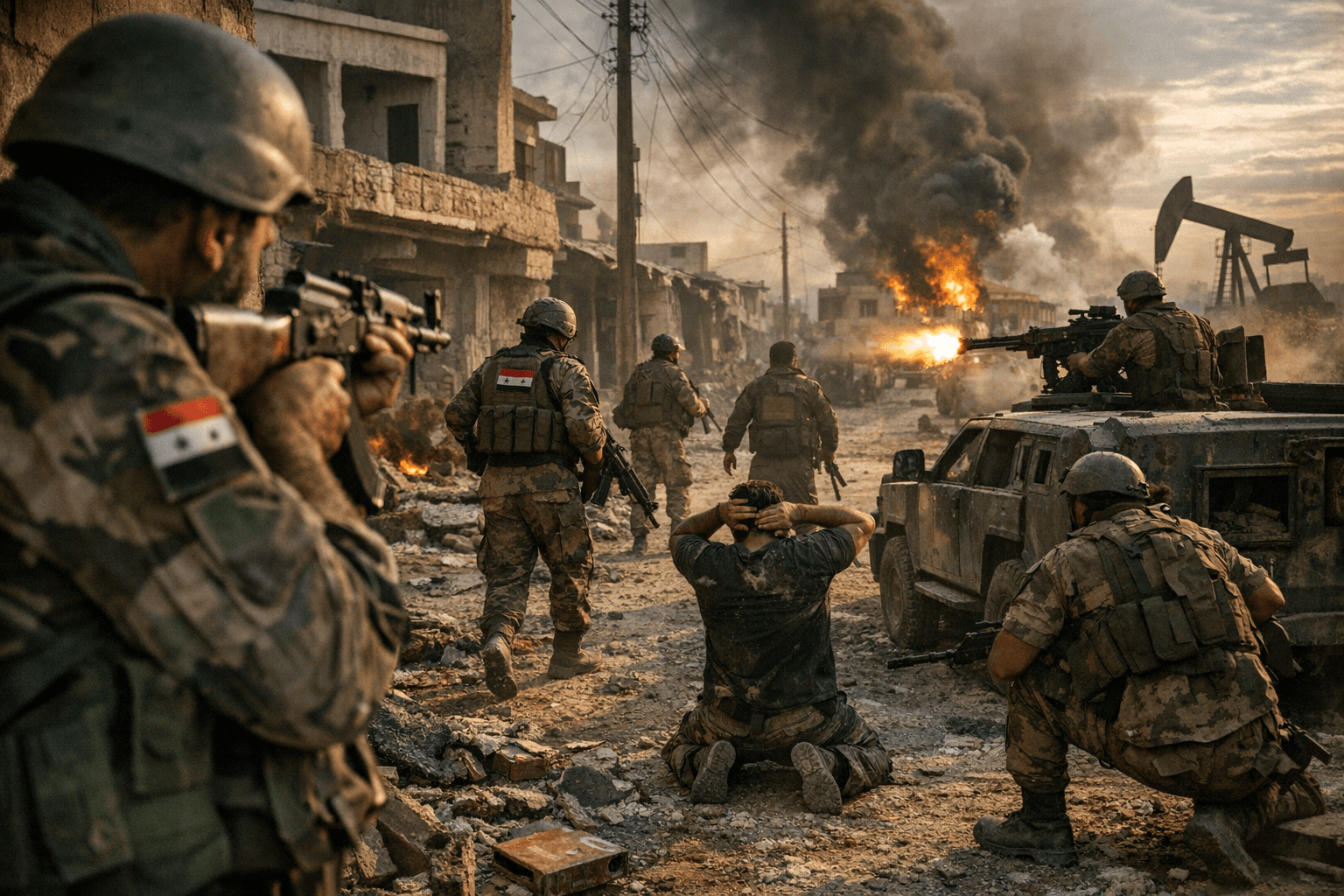
Damascus-backed forces loyal to interim president Ahmed al-Sharaa have pushed deep into northeastern Syria, seizing Arab-majority provinces, key cities and infrastructure formerly held by the Kurdish-led Syrian Democratic Forces and surrounding the last Kurdish-held towns in Hasakah province. The advance follows weeks of clashes, closed-door diplomacy and a clear U.S. signal that Washington would not militarily interpose.
Government troops have taken control of parts of Deir el-Zour and Raqqa provinces, including towns along the Euphrates and strategic river dams, and have advanced on al-Tabqa and surrounding oil and gas fields and border crossings that were under SDF authority. Clashes were also reported near Aleppo as forces consolidated their gains and encircled remaining SDF-held pockets by January 19–21. The moves came after stalled integration talks and a missed year-end 2025 deadline for folding SDF elements into state forces, setting the stage for both negotiating pressure and military action earlier this month.
A string of closed meetings in Damascus, Paris and Iraq in early January, combined with an abrupt shutdown of talks on January 4 and follow-up diplomacy on January 5, helped create the conditions for the government push. U.S. engagement during those sessions was calibrated toward a transition rather than direct defense of the SDF. U.S. envoy Tom Barrack urged the SDF to accept integration, saying the SDF’s “original purpose … has largely expired,” and that the United States was “actively facilitating this transition, rather than prolonging a separate SDF role.”
Under terms being implemented, SDF fighters are to enter the Syrian army and police as individuals rather than as intact units, a significant departure from earlier plans to preserve SDF command structures. The SDF leadership signaled acceptance of limits to the fighting, with Mazloum Abdi acknowledging an agreement to “withdraw the Deir Ezzor and Raqqa forces to the Hasakah region in order to stop this war,” while also indicating that many leaders view concessions as inadequate.
Security and humanitarian risks have spiked amid the rapid transfer of control. Authorities report that 120 Islamic State inmates escaped from Shaddadeh prison during clashes, with 81 recaptured, and SDF officials have accused Damascus-affiliated factions of cutting water to the al-Aqtan detention center near Raqqa, calling the move a humanitarian violation. Civilian displacement and rising tensions between Arab communities and Kurdish administrations helped accelerate the government advance in areas where local grievances had accumulated.
The immediate economic implications turn on control of energy and water infrastructure. Seizure of oil and gas fields, dams on the Euphrates and border crossings restores revenue and logistical leverage to Damascus, though international sanctions and fragile security will constrain any rapid economic normalization. For U.S. policy, the decision not to intervene militarily marks a recalibration of priorities: protecting counter-ISIS detention and preventing an Islamic State resurgence remain urgent, but Washington’s practical withdrawal of force protection removes a critical deterrent for allied local actors.
Longer term, the campaign signals a rollback of the territorial autonomy the SDF accumulated during the anti-ISIS fight, narrowing Kurdish political space and consolidating central state control after more than a decade of fragmentation. The coming weeks will test whether integration of fighters, management of detention facilities and restoration of services can prevent renewed insurgency and stabilize a region that remains a tinderbox for broader regional competition.
This article was produced by Prism’s automated news system from verified source data, official records, and press releases, then run through automated quality and moderation checks before publishing. The system is built and supervised by the people who set the standards it runs under. Read our full AI policy.
Did this article answer your question?