Danish officials to examine whale found dead after controversial rescue
A tracking device confirmed a dead humpback off Anholt was the same whale that had stranded four times in Germany after a costly rescue.
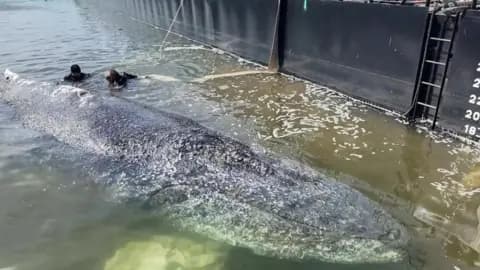
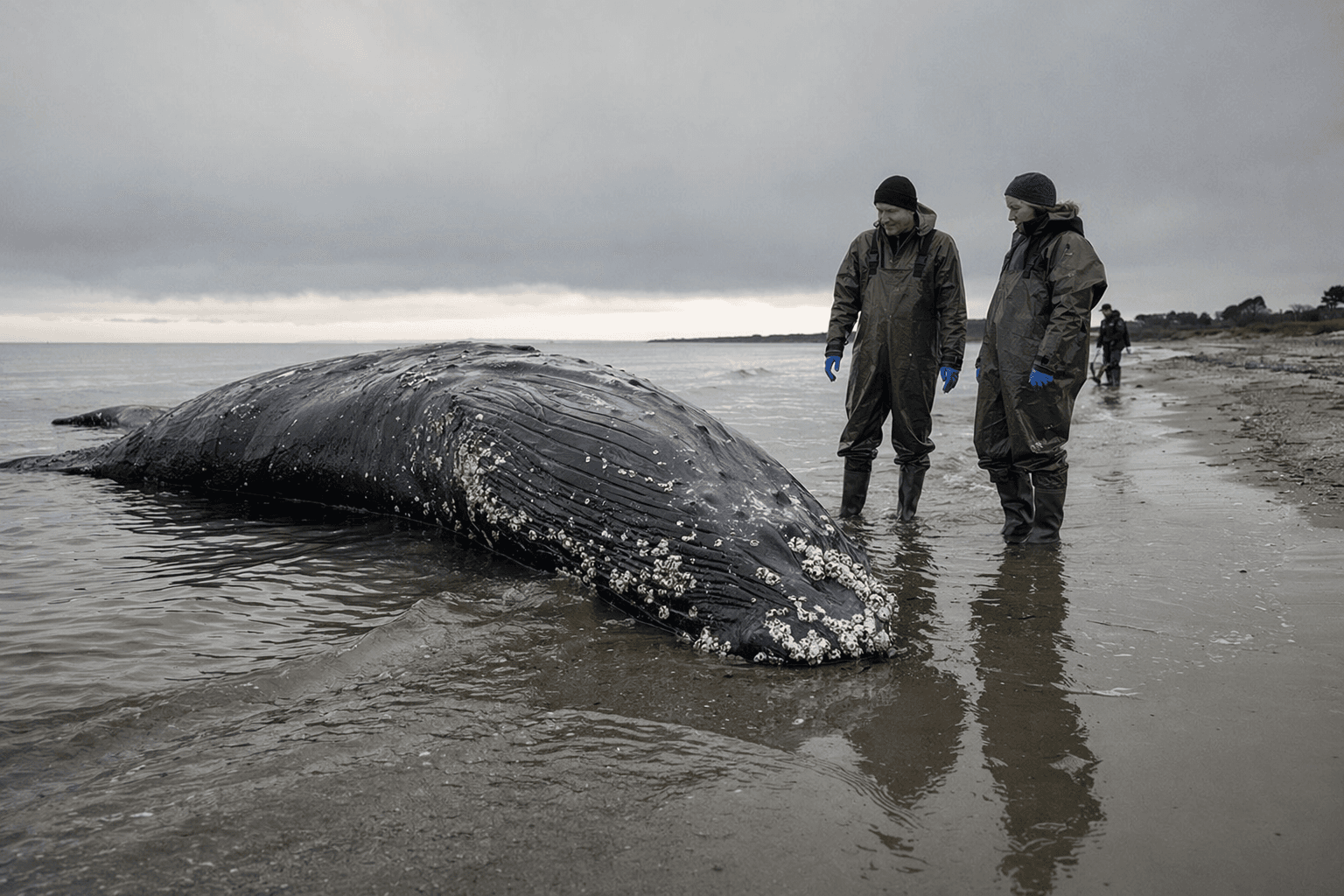
Danish officials were arranging a post mortem examination after a dead humpback whale washed up off the island of Anholt in the Kattegat, the narrow waters between Denmark and Sweden that connect the Baltic Sea to the North Sea. A Danish Nature Agency worker retrieved a tracking device still attached to the animal’s back, confirming it was the same whale that had repeatedly stranded on Germany’s Baltic coast.
The whale had been released into the North Sea on May 2 from a barge about 70 kilometres north of Skagen, after a prolonged and increasingly fraught rescue effort. It was first spotted on March 23 on a sandbank near Poel Island and Timmendorfer Strand, and expert sources said it stranded four times over roughly two weeks. Those repeated strandings left the animal weakened, and some critics said it may also have been entangled in fishing gear.
The case became a public test of where intervention ends and suffering begins. Marine scientists and the International Whaling Commission’s strandings experts warned that further attempts to move the whale could make matters worse, arguing that repeated intervention had not produced a sustained recovery or a safe return to open water. Private backers nonetheless financed a rescue operation that was estimated to cost about 1.5 million euros, or $1.7 million, underscoring how much influence private money can have in animal rescue decisions that would otherwise fall to public agencies and scientific caution.
The whale drew attention in Germany, where it was nicknamed “Timmy” and also called “Hope.” Sea Shepherd Deutschland held a press conference on April 15 describing a renewed attempt to save the humpback, including private initiative and the use of air cushions. But the final outcome now points to the limits of trying to intervene when a wild marine mammal is already deteriorating far from its normal Atlantic range.
Danish environmental authorities have warned people to stay away from the carcass because decomposing whales can carry infection risks and because gases produced during decay can cause the body to explode. Officials said there were no immediate concrete plans to remove the animal or perform a necropsy when the whale was first confirmed near Anholt, though removal was later being arranged. The dead whale’s drift into Danish waters has turned a single rescue into a broader reminder of how hard, costly and uncertain these cases can be for authorities on both sides of the Baltic.
Know something we missed? Have a correction or additional information?
Submit a Tip