Davide Ancelotti discusses Brazil role, coaching philosophy and father-son partnership
Davide Ancelotti’s Brazil appointment is also a study in modern coaching, where family legacy, tactical fluency and global experience now meet at elite level.
A coaching partnership built for the world stage
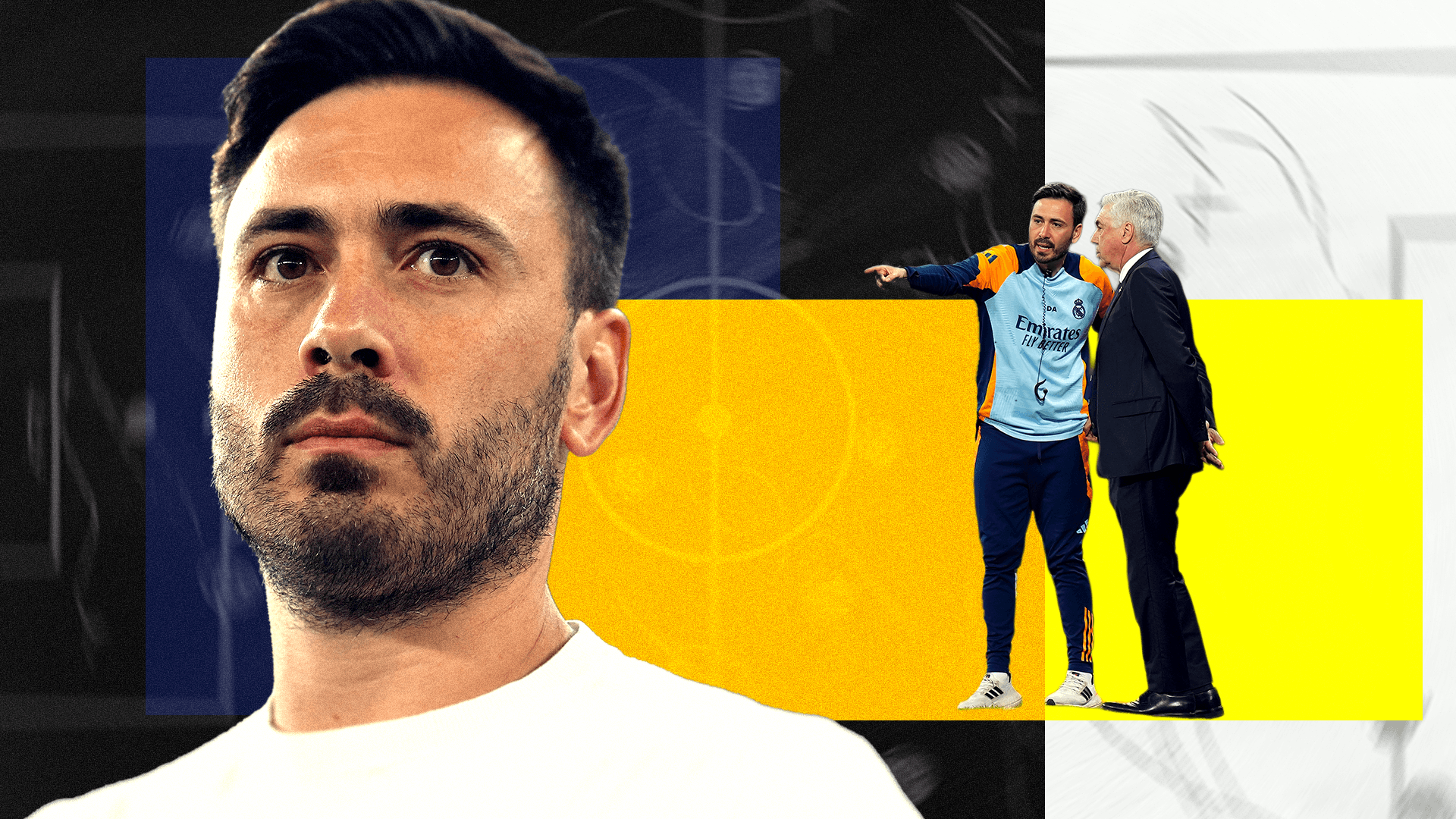
Davide Ancelotti’s move into Brazil’s setup is more than a family footnote. It places a 36-year-old assistant, born in Parma and already shaped by top clubs across Europe, inside one of football’s most demanding national-team projects under Carlo Ancelotti.
The Brazilian Football Confederation confirmed Davide’s place on Brazil’s coaching staff in June 2025, after Carlo Ancelotti was appointed Brazil head coach in May 2025. Transfer records later listed Davide as Brazil assistant manager from 2 March 2026, formalising a role that had already been understood as part of the new World Cup backroom structure.
Why this matters beyond the Ancelotti name
There is obvious symbolism in a father and son working together at international level, but the real significance lies in what the arrangement says about elite coaching now. Modern national teams are no longer built on one coach’s instincts alone. They rely on technical staff who can translate ideas quickly, manage detail and adapt across different football cultures.
Davide’s career history places him squarely in that model. He has worked alongside Carlo at Bayern Munich, Napoli, Everton and Real Madrid, with the partnership dating back to Bayern in 2016-17. That is not a short apprenticeship in one setting; it is a long education across Germany, Italy, England and Spain, each with different tactical demands, dressing-room expectations and competitive rhythms.
What his path says about the next generation of elite coaches
Davide Ancelotti represents a new kind of assistant, one shaped by inheritance but not limited by it. His route through four major clubs suggests a coach who has learned to operate inside different tactical languages, rather than repeating one fixed method.
That matters in a Brazil job where the staff must prepare for a World Cup with speed, precision and flexibility. A modern assistant is expected to understand not only shape and pressing, but also match preparation, opponent analysis, training load and communication. Davide’s UEFA Pro Licence confirms the formal coaching education behind that profile, while his years alongside Carlo suggest he has absorbed the day-to-day habits of one of football’s most decorated managers.
His career also reflects how elite football has become globalized. A coach born in Italy, trained through clubs in Germany, Italy, England and Spain, and now working with Brazil, is operating in a system where ideas travel faster than ever. The best staffs are often those that can import concepts without losing local identity, and Brazil’s backroom revamp seems designed around that balance.
The father-son dynamic, and the challenge of stepping out of shadow
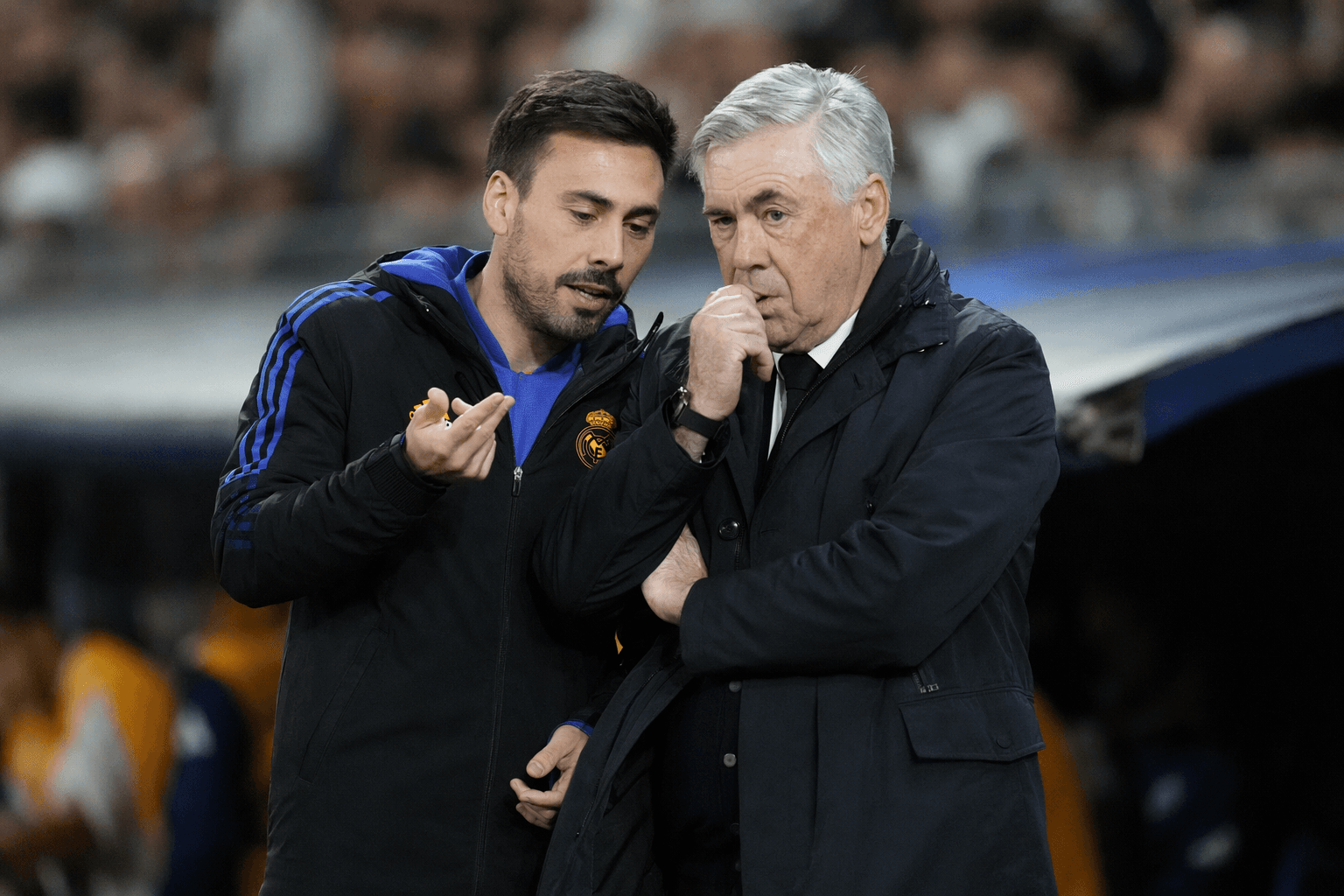
The relationship with Carlo Ancelotti is unavoidable, but it should not be reduced to surname alone. The fact that Davide has remained on the staff from Bayern to Real Madrid, and now Brazil, suggests trust earned over time rather than a ceremonial role handed down by family.
Still, the shadow is real. Working under one of the sport’s most successful coaches can make it harder to be seen as an independent thinker, especially when the public instinct is to credit the father for every idea in the room. Davide’s challenge is to make his own contribution visible, whether through opponent preparation, in-game adjustments or the sharpness of the tactical discussion around him.
That is why his Brazil move is so interesting. National-team jobs are high-profile, time-sensitive and ruthlessly scrutinized. If Davide proves influential in that environment, he will no longer be viewed only as Carlo’s son or longtime aide. He will be seen as part of the emerging class of elite coaches who have grown up inside top-level systems and are ready to shape them.
Brazil’s staff as a test of modern football thinking
Brazil are assembling their World Cup backroom staff around a coach with vast experience and a reputation for calm authority. Adding Davide Ancelotti strengthens that picture, because it signals continuity, technical depth and a willingness to trust a coach whose career has been built in Europe’s most demanding club settings.
The appointment also shows how international football is changing. The old image of a national-team staff as a narrow, homegrown circle is giving way to something more layered, with specialists bringing club knowledge, tactical flexibility and a broader football vocabulary. In that sense, Davide’s role is not just about family continuity. It is part of a wider shift toward coaching staffs that look more like high-performance laboratories than traditional dugouts.
That is the real story behind the Brazil move. Davide Ancelotti is not simply following Carlo Ancelotti into another job. He is helping define what the next generation of elite coaching looks like: collaborative, data-aware, internationally fluent and still grounded in the discipline of the old apprenticeship model. If he succeeds, the Ancelotti partnership will be remembered not only as a rare father-son link, but as a template for how modern football authority is built.
This article was produced by Prism’s automated news system from verified source data, official records, and press releases, then run through automated quality and moderation checks before publishing. The system is built and supervised by the people who set the standards it runs under. Read our full AI policy.
Did this article answer your question?