De Zerbi revives Tottenham’s survival bid with attacking overhaul
Spurs have climbed out of danger because De Zerbi has changed how they build, press and occupy space, not just how they finish matches.
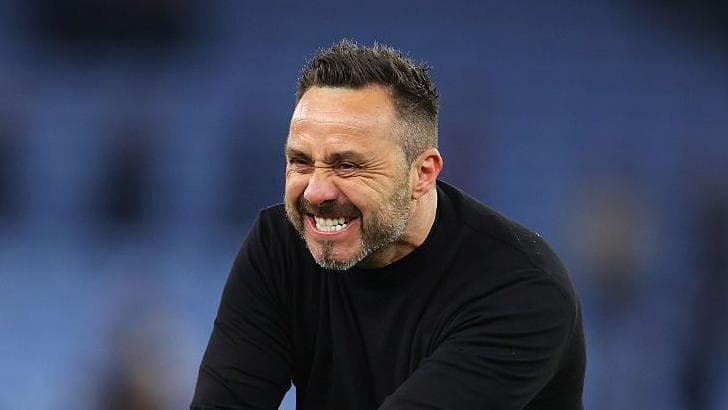
Tottenham's survival bid changed shape the moment Roberto De Zerbi walked in. Within days of his 31 March 2026 appointment, the club had a clearer football identity and, crucially, a route out of the relegation zone after back-to-back wins over Wolverhampton Wanderers and Aston Villa.
Why Tottenham turned to De Zerbi
Tottenham made De Zerbi their new men's head coach on a long-term deal, subject to a work permit, and described him as their number one target for the summer. That matters because this was not a short-term rescue hire dressed up as a project. Spurs wanted a coach who could solve an immediate table problem while also giving the club a more ambitious attacking model for the future.
The urgency was obvious. When his appointment was reported, Spurs were just one point above the bottom three with seven matchdays left. By 3 May 2026, after a 1-0 win at Wolves and a 2-1 victory at Aston Villa, they had moved above West Ham United and out of the relegation zone for the first time in almost a month. That is the practical test of any tactical change in a survival fight: can it stop the slide quickly enough to matter?
De Zerbi's public message matched that need. He said his immediate priority was to help Spurs climb the Premier League table before the final game of the season. Johan Lange, Tottenham's sporting director, framed the appointment in longer-term terms, calling him one of the most creative and forward-thinking coaches in world football.
The tactical reset: three changes that explain the turnaround
The clearest reason De Zerbi changes teams so quickly is that he does not just ask them to attack more. He changes how they create advantages in possession, how they protect the ball under pressure, and how they defend the moments immediately after losing it.
1. Build-up now starts from a 3-2 base, not a flat back line
De Zerbi's teams are built around a 3-2-5 attacking structure, which means they often look like three defenders behind two central midfielders, with five players pushed high to stretch the pitch. That shape is more than a diagram. It gives Spurs extra passing lanes in the first phase of build-up and puts more players in positions to receive the ball facing forward.
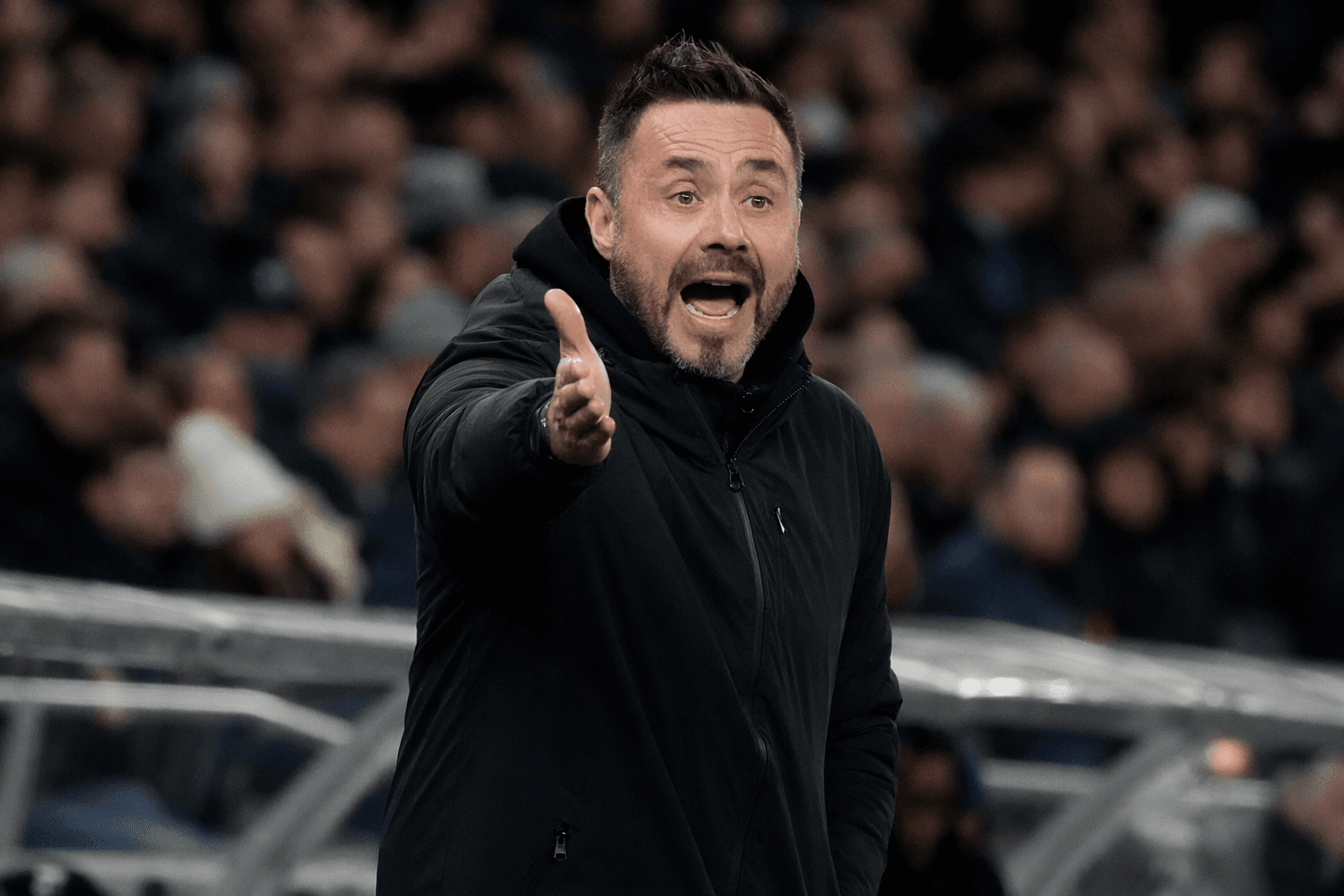
For a side fighting relegation, that can be decisive. Instead of clearing the ball and chasing second balls, Spurs now have a structure that invites controlled progression. The goalkeeper and centre-backs can connect with the two midfielders, while the wide attackers and full-backs hold high positions to pin opponents back. The result is less panic, more territory and more time spent in the opponent's half.
2. Possession is used to bait pressure, then escape it
De Zerbi's football is often described as press-baiting, and that idea is central to how his teams move through midfield. The purpose is to tempt opponents into pressing too high or too aggressively, then use the free man to play through the trap. It is a risky method, but when it works, it turns pressure into space.
That approach helps explain why his football has produced consistent results at a high level. At Brighton & Hove Albion, his attacking style helped the club finish sixth in 2022/23, their highest-ever Premier League finish, and qualify for Europe for the first time in their history. Brighton also reached the FA Cup semi-finals that season and later went to the last 16 of the 2023/24 Europa League before he left at the end of that campaign.
For Tottenham, the value is not only aesthetic. Press-baiting possession gives a struggling team a way to control matches instead of merely surviving them. If the ball can be moved cleanly through the first and second lines, Spurs spend less time defending deep and more time forcing opponents to retreat.
3. Out of possession, the press is man-to-man and aggressive
The other half of the overhaul is how Spurs defend without the ball. De Zerbi's system is not passive, and it is not built around dropping everyone behind the ball. It relies on man-to-man pressing, where players pick up direct opponents and try to deny easy passes early in the phase.
That helps in two ways. First, it can disrupt the opponent's build-up before attacks become dangerous. Second, it allows Spurs to recover the ball higher up the pitch, closer to the area where a quick chance can be created. In a relegation battle, that matters because one goal can change the emotional and tactical balance of a match.

The risk, of course, is exposure if the press is bypassed. But De Zerbi's wider structure is designed to reduce that danger by keeping the team compact enough to re-engage quickly. That balance between pressure and coverage is what makes his style unusually expansive without being chaotic.
Why his Brighton record convinced Tottenham
Tottenham's faith in De Zerbi comes from the same evidence that made him stand out at Brighton. In September 2022, Brighton said he had signed a four-year contract after replacing Graham Potter. Over the next two seasons, he proved that his ideas could work in the Premier League, not just in theory but against the league's best-organised sides.
The numbers are difficult for Spurs to ignore. Brighton's sixth-place finish in 2022/23 was their best ever in the top flight, and it brought European qualification for the first time. That kind of overachievement is exactly what clubs want when appointing a coach under pressure: a model that can lift performance without requiring a wholesale squad rebuild.
There is also a cultural fit. De Zerbi has said he wants to play football that excites and inspires supporters, a useful ambition for a club that has often looked caught between pragmatism and identity. Former Tottenham player and coach Sandro added another layer of endorsement, saying he had hoped De Zerbi would one day take charge at Spurs after working with him at Benevento and Brighton.
What the early survival swing really means
The immediate turnaround does not prove the job is finished. Tottenham were still in a relegation fight when De Zerbi arrived, and the margin for error remains thin. But the shift in method is already visible in the results and, more important, in the logic of how Spurs now try to control matches.
That is the real story here. De Zerbi has not revived Tottenham by promising grit alone. He has changed the mechanics of the team, from the first pass out of defence to the way it hunts the ball and fills attacking space. In a survival battle, that kind of structural clarity can be worth more than any short burst of form, because it gives Spurs something repeatable rather than merely fortunate.
This article was produced by Prism’s automated news system from verified source data, official records, and press releases, then run through automated quality and moderation checks before publishing. The system is built and supervised by the people who set the standards it runs under. Read our full AI policy.
Did this article answer your question?
.jpg&w=1920&q=75)