FIFA Scrambles for World Cup Broadcast Deals in India and China
FIFA faced a clock in India and China, where weak broadcast deals threatened ad sales, reach and the pricing power of future World Cup rights.
FIFA ran out of time in two of soccer’s biggest media markets, with India and China still unresolved less than five weeks before the June 11 kickoff of the 2026 World Cup. The lag mattered far beyond paperwork: without firm broadcast agreements, distributors could not build out transmission plans, advertisers could not buy inventory with confidence, and FIFA’s global rights strategy looked more vulnerable than in past cycles.
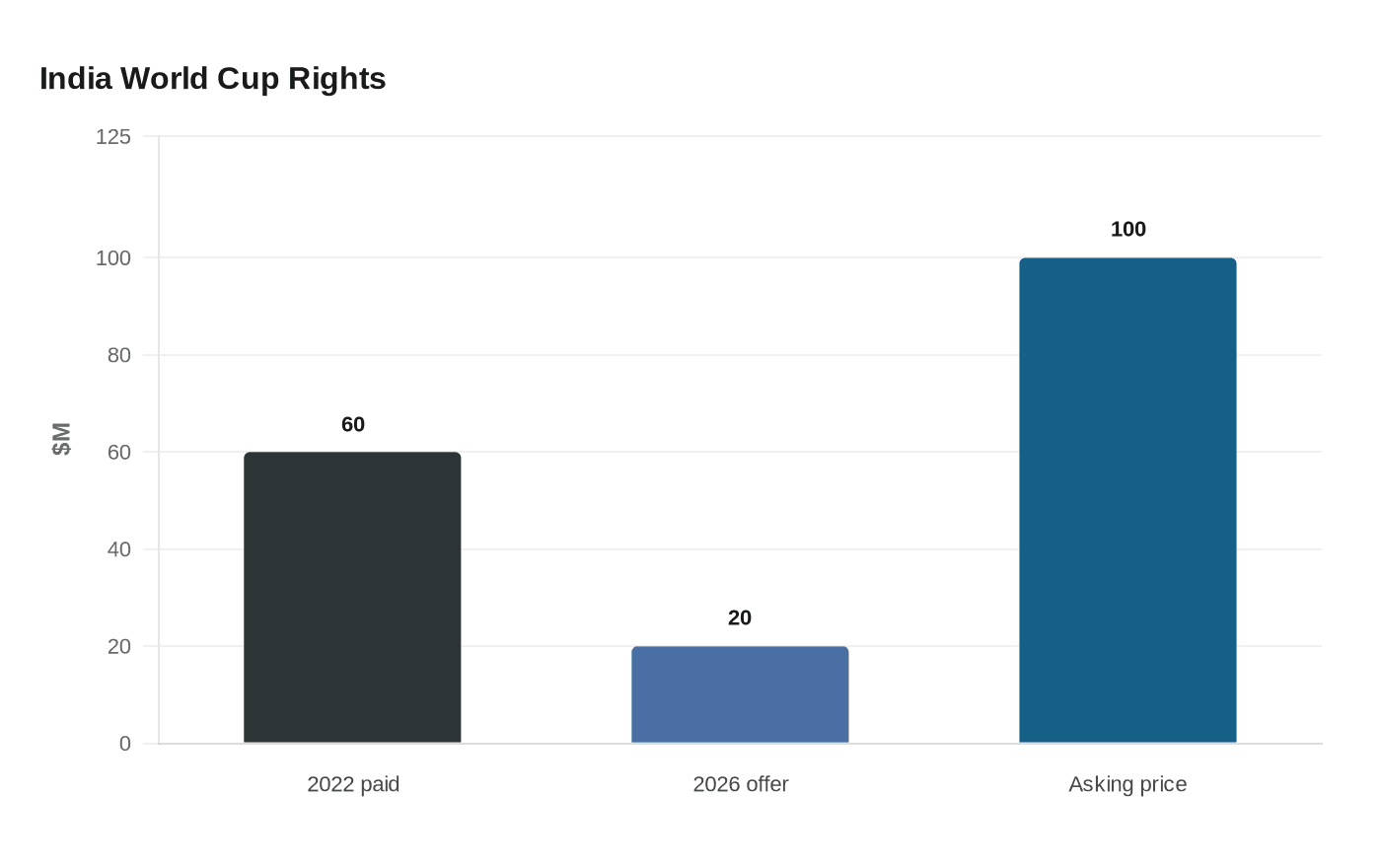
In India, a Reliance-Disney joint venture offered about $20 million for the 2026 World Cup rights, far below FIFA’s asking price of $100 million for the 2026 and 2030 tournaments. The gap reflected a harsher view of the event’s commercial pull in India, where the combined venture believed late-night match times would dampen demand. That was a sharp reversal from 2022, when Reliance’s then-standalone media arm paid about $60 million well ahead of the tournament.

China presented an even more striking absence: no deal had been announced. That stood out because CCTV had secured World Cup rights early for earlier tournaments and used them to line up sponsor promotion before the opening whistle. In both markets, the delay suggested that FIFA’s brand strength alone no longer guaranteed premium pricing, even for one of the world’s most watched sporting events.
The stakes were amplified by geography and timing. The 2026 World Cup was being staged across the United States, Canada and Mexico, a three-country tournament that depended on a broad international audience to meet commercial expectations. India and China together accounted for 22.6% of the global digital streaming reach of the 2022 World Cup, making them central to FIFA’s revenue model, not peripheral add-ons.

The standoff also showed how much leverage major media groups now held in global sports rights negotiations. Reliance and Disney had invested heavily to dominate Indian sports and entertainment streaming, and their reluctance to meet FIFA’s price signaled a market where buyers were increasingly willing to push back. If FIFA could not close the gap quickly, the consequence would reach beyond two countries: weaker access for fans, thinner ad sales for broadcasters, and a future where FIFA may have to recalibrate what its biggest event is actually worth.
This article was produced by Prism’s automated news system from verified source data, official records, and press releases, then run through automated quality and moderation checks before publishing. The system is built and supervised by the people who set the standards it runs under. Read our full AI policy.
Did this article answer your question?