Democratic Senators Urge Trump to Block Chinese Automakers from U.S. Market
Three Democratic senators pushed Trump to block Chinese automakers from U.S. factories and cross-border imports, warning of a national security crisis that "could never be reversed."
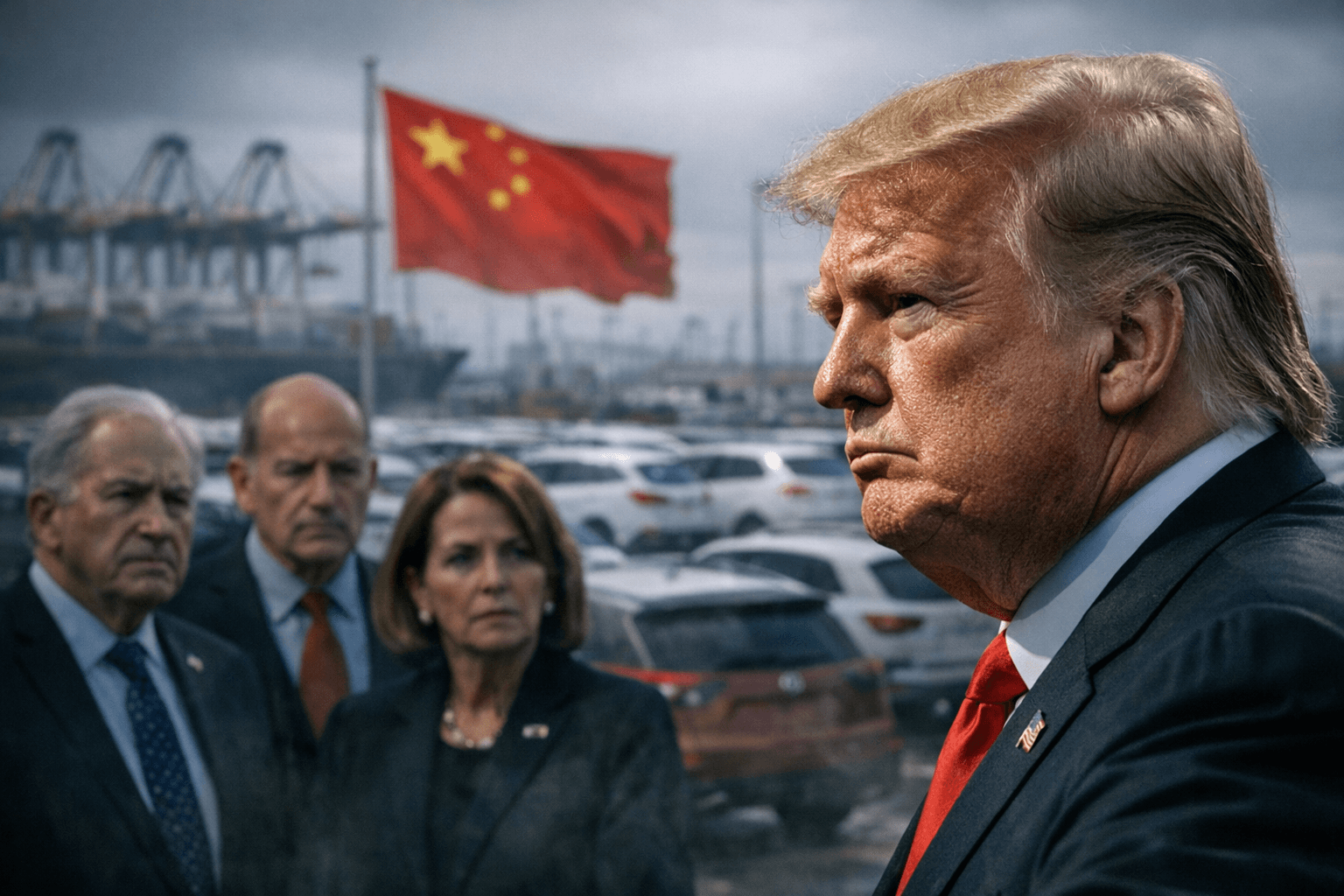
Three Senate Democrats broke from their party's typical posture on foreign investment Thursday, sending President Donald Trump a letter urging him to shut Chinese automakers out of the U.S. market entirely, both through direct factory investment and through vehicles assembled in Mexico or Canada and shipped across the border.
Chuck Schumer of New York, Tammy Baldwin of Wisconsin, and Elissa Slotkin of Michigan addressed the letter directly to Trump, warning that allowing Chinese manufacturers to "set up shop in the United States would confer an insurmountable economic advantage impossible for American automakers to overcome" and would trigger a national security crisis that "could never be reversed."
At a January 2026 event in Detroit, Trump indicated Chinese automakers' presence in the U.S. is conditional on their willingness to produce vehicles locally, a statement that set off alarms among lawmakers and industry groups who argue that any production foothold, no matter how structured, hands state-backed Chinese firms access to the world's last major market effectively closed to them.
The letter arrives amid a months-long lobbying campaign by the domestic auto industry pressing the same case. Five groups representing automakers, car dealers, and parts manufacturers called for maintaining a 2025 Commerce Department cybersecurity regulation that effectively keeps nearly all Chinese vehicles out of the U.S. market, and urged the administration to reject any attempt by Chinese manufacturers to circumvent those restrictions by establishing production facilities in the U.S. That coalition included the Alliance for Automotive Innovation, which represents General Motors, Ford, Toyota, Volkswagen, Hyundai, and Stellantis, along with the National Automobile Dealers Association, Autos Drive America, the American Automotive Policy Council, and MEMA, the Vehicle Suppliers Association.
The economic stakes are concrete. Chinese automakers now selling vehicles for roughly $20,000 in Europe and Mexico have battery and software supply chains integrated at a scale U.S. manufacturers cannot yet match. Were those firms to establish domestic production, they could potentially qualify for IRA-era incentives designed to support American-made EVs, giving them subsidized entry at the precise moment U.S. automakers are burning capital on the EV transition.
The tools the White House has to act are substantial but require deliberate deployment. CFIUS can block or unwind Chinese ownership stakes in U.S. manufacturing assets. The Commerce Department cybersecurity rules finalized in 2025, which the senators specifically asked Trump to preserve, function as a de facto import ban on connected vehicles with Chinese hardware or software. Tariffs imposed during Trump's first term remain in place at elevated rates. What the senators are demanding, in effect, is that all three layers hold simultaneously, with no carve-outs for factory investment that might appear to offer American jobs as a trade-off.
Democratic senators Gary Peters, Elissa Slotkin, Amy Klobuchar, Tina Smith, and Tammy Baldwin had already pressed the administration in February to use USMCA renegotiations to crack down on Chinese EVs in Canada and Mexico, warning that Chinese automakers and parts companies are "rapidly investing in Mexico-based manufacturing and vehicle production." The April letter from Schumer, Baldwin, and Slotkin sharpens that demand into a direct presidential request to foreclose every entry point.
The political geometry here matters as much as the policy. Democrats urging a Republican president to harden trade barriers against China would have been inconceivable a decade ago. That it now reads as an obvious strategic move, with Schumer leading the charge, reflects how thoroughly economic nationalism and national security anxiety have rewritten the rules of the U.S.-China debate. If Trump signals any openness to a negotiated arrangement that allows Chinese production on American soil, the senators have made clear they intend to make that a sustained legislative fight.
This article was produced by Prism’s automated news system from verified source data, official records, and press releases, then run through automated quality and moderation checks before publishing. The system is built and supervised by the people who set the standards it runs under. Read our full AI policy.
Did this article answer your question?

