Virginia Voters Narrowly Back Democratic Map Advantage, But Opponents More Motivated
A new Post-Schar School poll finds 51% of Virginia voters back the April 21 redistricting referendum, but opponents are more energized, with early voting running higher in Republican-held districts.
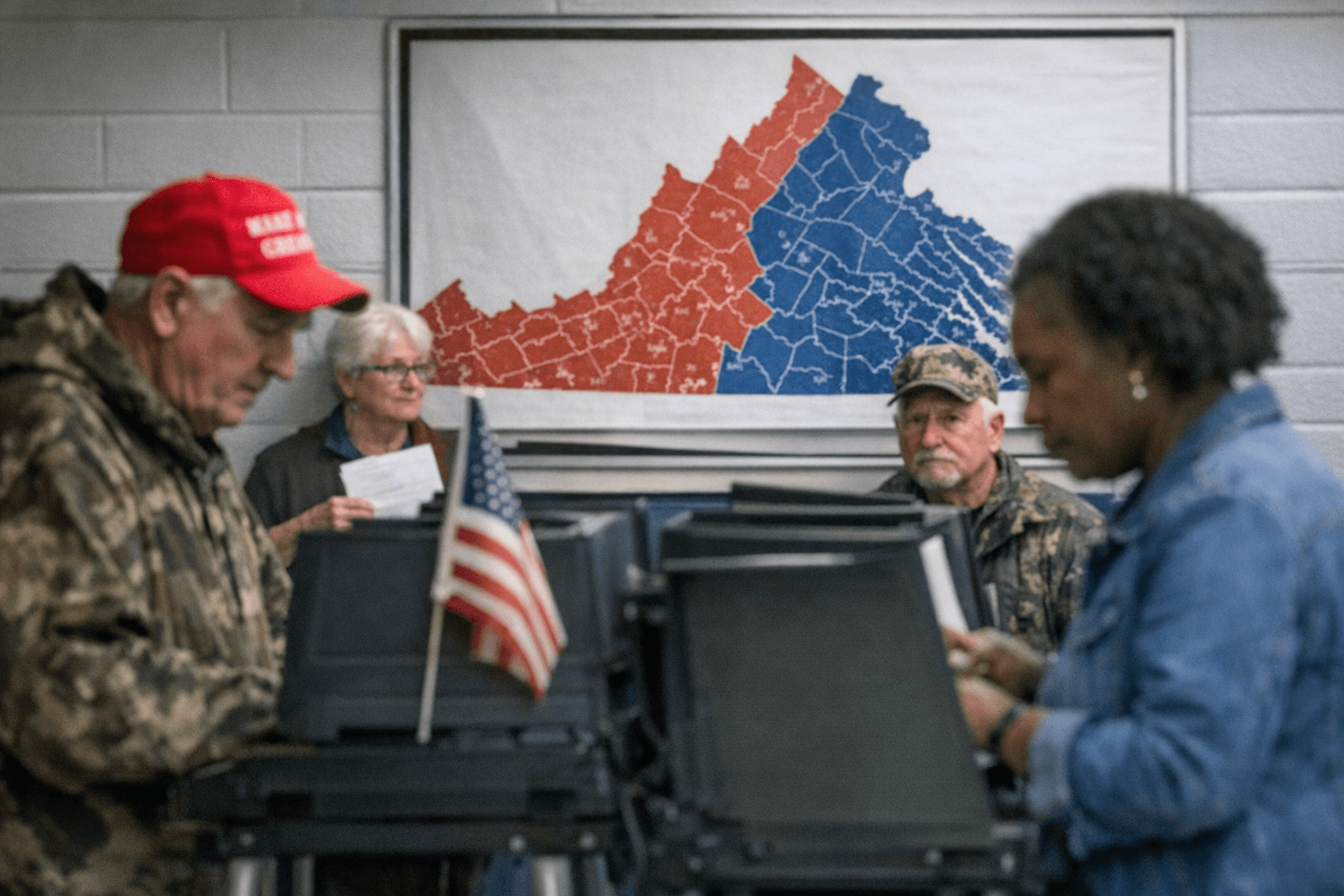
A slim majority of Virginia voters supported a constitutional amendment that would hand the Democratic-controlled General Assembly the power to redraw the state's congressional maps, but the new Washington Post-Schar School poll found that those opposing the measure were more motivated, casting an uncertain shadow over the April 21 special election.
With 51% backing the amendment and 43% opposed, the narrow margin underscored the Democratic Party's growing anxiety about a referendum it had expected to win handily. Early turnout data compounded those concerns: ballots cast in Republican-held congressional districts were running well ahead of those in Democratic-held ones.
If approved, the amendment would temporarily strip the state's bipartisan redistricting commission of its map-drawing authority, returning that power to the legislature. After the 2030 census, the commission would resume control. The stakes are substantial: the proposed map would produce a projected partisan split of 10-1, with Democrats potentially gaining four additional seats in the U.S. House. Virginia's current congressional delegation stands at six Democrats and five Republicans.
Democrats entered the spring riding momentum from last fall's elections, having flipped the governorship and expanded their state House majority. They also held significant fundraising and advertising advantages heading into the referendum. But the motivation gap exposed by the poll echoed the dynamics visible in early voting returns.
Republican activist Scott Presler, speaking to roughly 90 people at a rally in Virginia Beach, pointed to the early turnout gap as evidence the referendum was still within reach for opponents. "The fact that a lot of y'all in the middle have not voted yet shows me there's a lot of votes on the table," Presler said.
Democrats backing the referendum faced an awkward political challenge: many, including Gov. Abigail Spanberger and former President Barack Obama, had previously championed the state's nonpartisan redistricting commission and now had to ask voters to approve dismantling it temporarily in favor of a map drawn entirely by one party.
Democratic legislative leaders framed the effort as a necessary countermeasure. Senate President Pro Tempore Louise Lucas of Portsmouth argued the proposal was essential to counter what Democrats described as a coordinated national strategy driven by President Donald Trump. House Speaker Don Scott of Portsmouth echoed that framing after the General Assembly passed the enabling legislation.
Virginia Attorney General Jason Miyares, a Republican, criticized the process, noting that voters approved the existing redistricting commission by roughly two-thirds in 2020 during a high-turnout presidential election, while the April referendum was set for a month when voter participation would be far lower.
Virginia voters are also not accustomed to going to the polls in April, making turnout particularly unpredictable in a contest where the enthusiasm gap between supporters and opponents could prove decisive. Early voting runs through April 18.
Sources:
Know something we missed? Have a correction or additional information?
Submit a Tip