Hegseth Forces Out Army Chief of Staff George in Surprise Leadership Shake-Up
Hegseth phoned Gen. Randy George at 4 p.m. Thursday to demand his immediate retirement, cutting the Army chief's four-year term 18 months short as U.S. troops deploy to fight Iran.
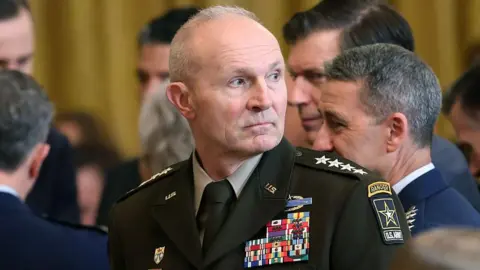
Defense Secretary Pete Hegseth forced out Gen. Randy George as the Army's top uniformed officer Thursday afternoon, phoning the four-star general at approximately 4 p.m. to tell him "it was time for a leadership change" and demanding his immediate retirement. The ouster, confirmed by Pentagon Chief Spokesperson Sean Parnell in a post on X, came with no formal public explanation and stunned senior military circles already rattled by more than a year of executive-branch intervention in the upper ranks.
Hegseth asked George to step down and take immediate retirement, with sources telling CBS News that Hegseth wants someone in the role who will implement President Trump's and his own vision for the Army. In Parnell's brief statement, the Pentagon acknowledged George's 44 years of service but offered no policy rationale: "General Randy A. George will be retiring from his position as the 41st Chief of Staff of the Army effective immediately."
George assumed the role in September 2023 after being confirmed by the Senate in a 96-1 vote; he had been expected to hold the position until fall 2027. That four-year tenure is now cut 18 months short. George, 61, had survived the administration's initial wave of military firings in February 2025, but there was speculation among military and Pentagon officials when Hegseth nominated his senior military assistant, Gen. Chris LaNeve, to be the Army vice chief of staff, that LaNeve would ultimately take over for George.
Reports link the firing directly to a prolonged dispute over officer promotions. George's ouster is the latest clash between the Pentagon chief and the service's senior leadership, and comes during the war with Iran. Hegseth had blocked the promotions of four Army officers from a list of 29 personnel; two of those blocked are Black and two are women, prompting senior officers to question whether racial or gender bias was driving the decisions. When George sought a meeting with Hegseth to discuss the matter roughly two weeks before his removal, Hegseth refused.
George was not the only casualty Thursday. Hegseth also fired two other Army generals: the chief of chaplains, Maj. Gen. William Green Jr., and the commander of Army Transformation and Training Command, Gen. David Hodne. The chaplain corps, which provides confidential spiritual care and counseling to soldiers and their families across all faith backgrounds, now faces its own leadership void.
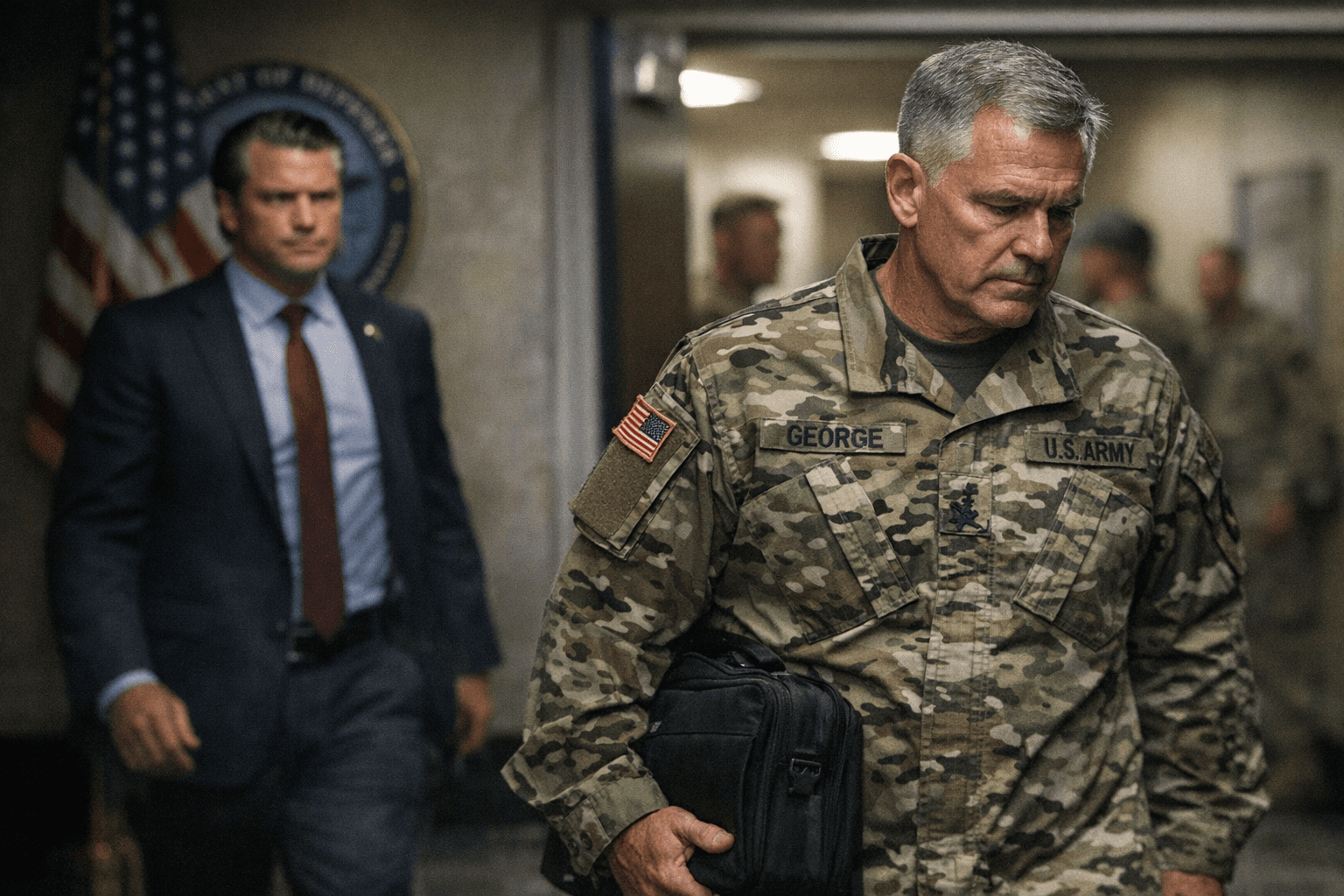
Gen. Christopher LaNeve, the Army's vice chief of staff, will serve as acting chief. The move underscores growing tensions between Hegseth and Army Secretary Dan Driscoll. Parnell described LaNeve as "completely trusted by Secretary Hegseth to carry out the vision of this administration without fault." Before Hegseth nominated him as vice chief last October, LaNeve served as Hegseth's own top military aide, a lineage that makes the succession feel less like routine continuity than a deliberate consolidation of loyalists at the top of the service.
The timing compounds the operational stakes. The U.S. is now five weeks into an active war with Iran, and thousands of troops from the Army's elite 82nd Airborne Division are currently deploying to the Middle East. Cycling out the service's chief uniformed officer, its chaplain corps leader, and its training command chief simultaneously, during an active combat deployment, represents the kind of leadership turbulence that historically degrades institutional coherence and erodes trust among allied partners watching American command stability.
Since taking office, Hegseth has fired over a dozen generals and admirals, including Chairman of the Joint Chiefs of Staff Gen. C.Q. Brown and Chief of Naval Operations Adm. Lisa Franchetti. Others removed include Gen. Timothy Haugh, who led both the National Security Agency and U.S. Cyber Command; Coast Guard Adm. Linda Fagan; Gen. Jim Slife, the Air Force's second-ranking officer; and Navy Vice Adm. Shoshana Chatfield, the U.S. military's representative to NATO's military committee.
That last removal carries particular weight. Chatfield's firing sent a visible signal to alliance partners about the durability of American military engagement; George's removal, coming mid-war, sends a different one about the chain of command itself. For the rank-and-file, watching a 96-1 Senate-confirmed officer removed by phone call, with no stated cause, two years before his term was to end, the message is unambiguous: loyalty to the civilian leadership's political vision now outranks length of service, combat record, or congressional mandate.
This article was produced by Prism’s automated news system from verified source data, official records, and press releases, then run through automated quality and moderation checks before publishing. The system is built and supervised by the people who set the standards it runs under. Read our full AI policy.
Did this article answer your question?

