Desmond Morris, author of The Naked Ape, dies at 98
Desmond Morris, whose The Naked Ape turned evolutionary thinking into a bestseller, died at 98. His blend of zoology, television and art made him a household name.
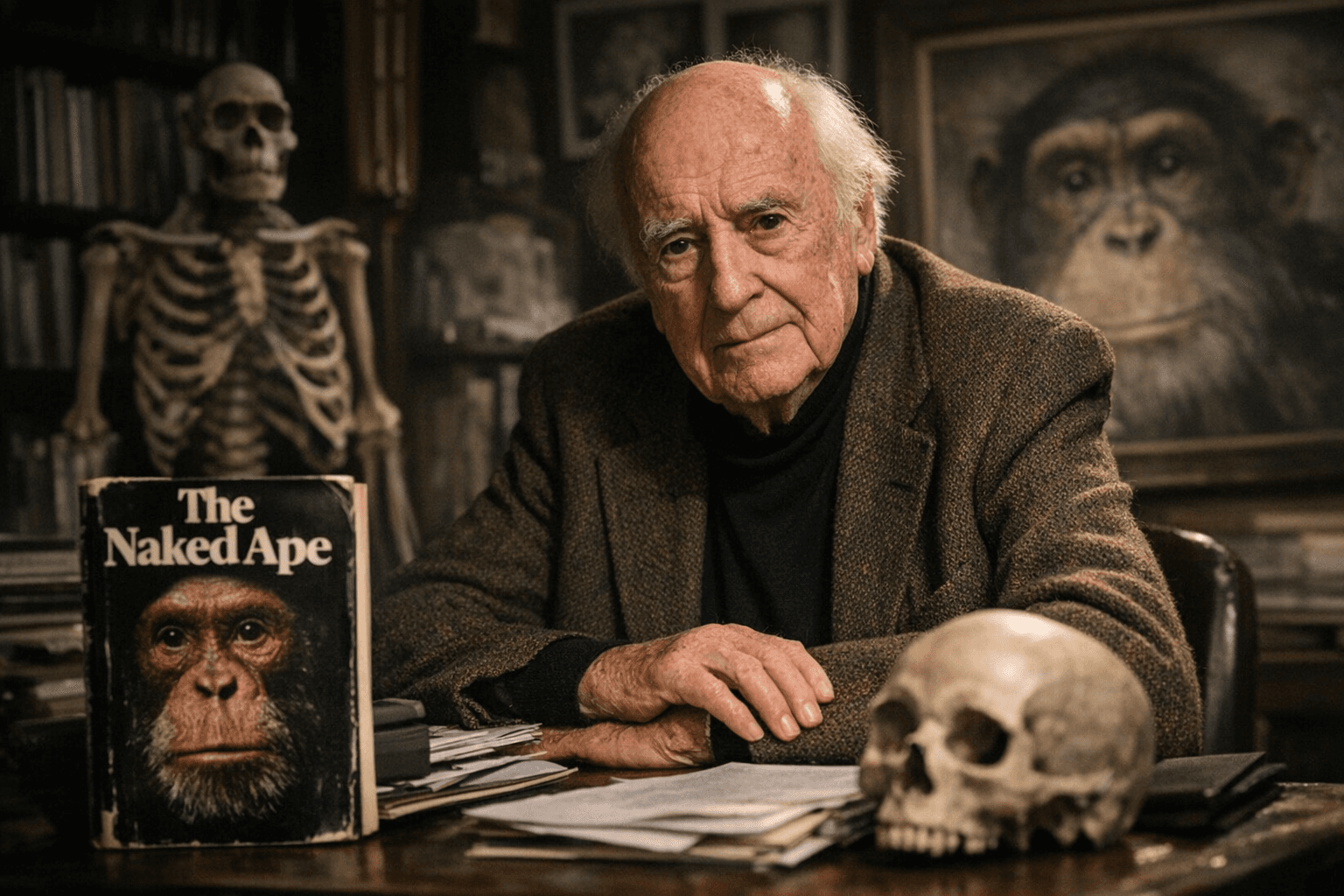
Desmond Morris, the British zoologist, writer, surrealist painter and television presenter whose The Naked Ape became a landmark of popular science, died at 98, ending a public life that made evolutionary thinking familiar to mass audiences and stirred decades of debate over human behavior. BBC confirmation came through his son Jason, with reports noting a Monday death that was then publicized on Tuesday.
Morris built his reputation at the point where scholarship met broadcast fame. Born in Wiltshire in 1928 and trained in zoology at Oxford, where he earned a PhD, he studied under Nikolaas Tinbergen, one of the founders of modern ethology. The Zoological Society of London said Morris was part of the first generation of animal behavior scientists shaped by Tinbergen and described him as a curator who became a household name.
That public profile took hold at London Zoo, where Morris became curator of mammals in 1959 and combined the job with presenting Zoo Time for Granada. The weekly program, which Sky News said ran from 1956 to 1967, helped place animal behavior on British television at a time when natural history programming was still finding its form. Morris later scripted 100 episodes of Life in the Animal World for BBC2, extending that reach well beyond the zoo. The Zoological Society of London said his work helped shape a golden age of wildlife television.

The Naked Ape, published in 1967 shortly after he left the zoo, made Morris an international name by arguing that human beings should be studied as animals as well as cultural creatures. That idea made the book widely read and widely argued over. It was influential because it gave ordinary readers a bold, accessible way to think about instinct, sex, aggression and social behavior. It was controversial for the same reason: critics saw in it a reductionist view of human life, one that flattened culture and politics into biology. That tension made the book emblematic of its era, when evolutionary ideas were increasingly entering the mainstream and provoking unease about what they might explain.
Morris remained active almost to the end. Jason Morris said his father’s life had been a lifetime of exploration, curiosity and creativity, and reports said he was still writing and painting right up until his death. That mix of science, art and broadcasting defined a career that reached far beyond one famous book, even as The Naked Ape remained its most enduring title.
This article was produced by Prism’s automated news system from verified source data, official records, and press releases, then run through automated quality and moderation checks before publishing. The system is built and supervised by the people who set the standards it runs under. Read our full AI policy.
Did this article answer your question?