Weinstein rape retrial begins, opening statements end in New York court
Weinstein’s third New York rape trial revived the Jessica Mann allegation after a 2024 reversal and a split 2025 verdict, testing how far #MeToo-era gains still reach.
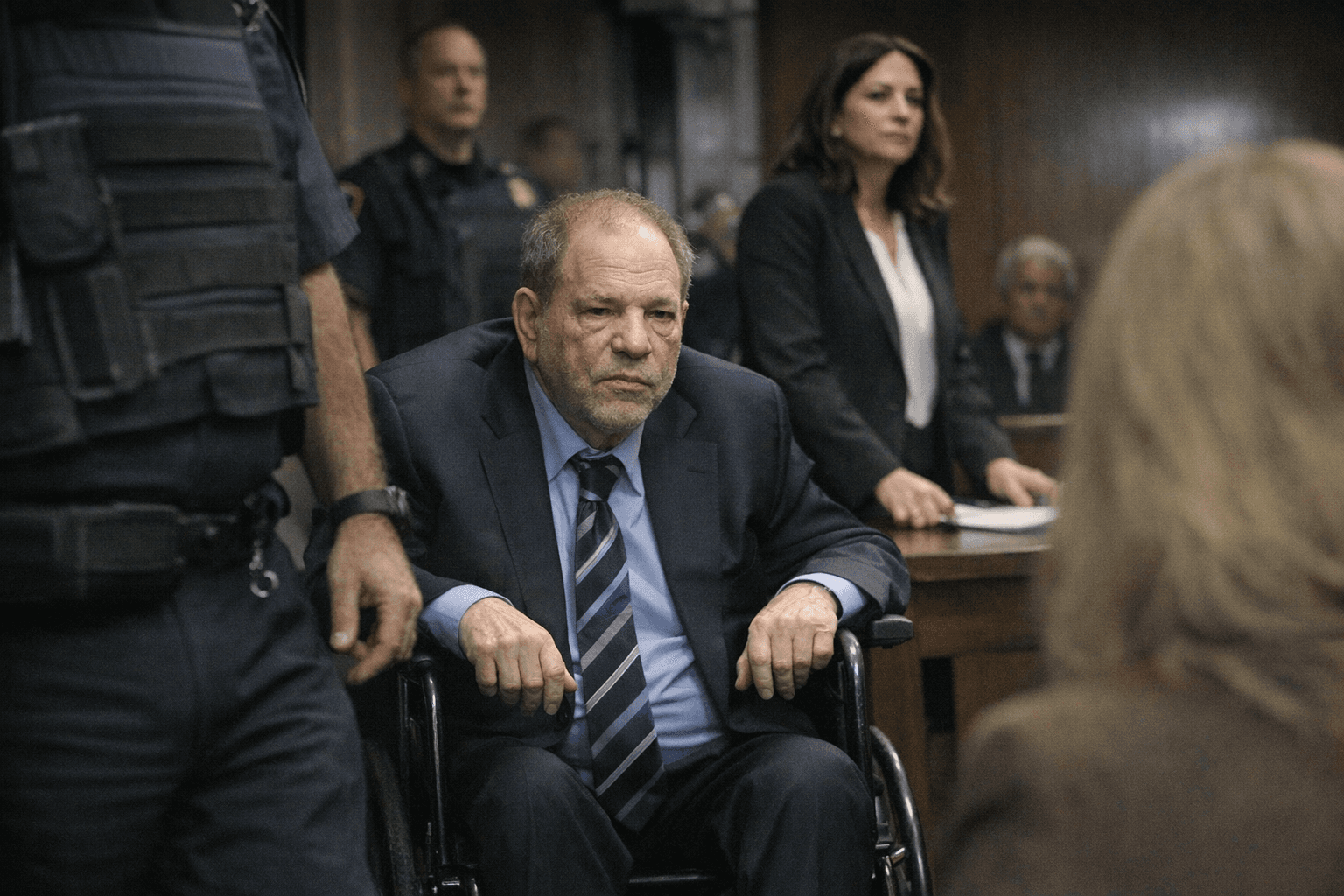
Harvey Weinstein’s third New York rape trial reopened a case that has already been convicted, reversed and retried, forcing jurors to weigh the same 2013 hotel-room rape allegation against a legal record that has changed sharply since his first Manhattan verdict. Prosecutors again placed Jessica Mann at the center of the case, while the defense argued that Weinstein’s accusers were not enough to prove a crime beyond doubt.
The retrial grew out of the New York Court of Appeals’ decision in April 2024 to overturn Weinstein’s 2020 conviction, ruling in a 4-3 vote that the trial judge improperly allowed testimony about uncharged alleged sexual acts involving women other than the complainants. That ruling erased a major #MeToo-era conviction and created a new test for prosecutors handling high-profile sexual assault cases: how to present pattern evidence without inviting reversal.
The current case also follows Weinstein’s 2025 retrial, which ended in a split result. Jurors convicted him of sexually assaulting Miriam Haley, acquitted him of assaulting Kaja Sokola, and deadlocked on the Jessica Mann rape count, producing a mistrial after the jury foreperson refused to keep deliberating. Sokola was publicly identified for the first time when prosecutors laid out her account, broadening the case to three accusers and making the retrial even more consequential.
Weinstein, 73, has pleaded not guilty and said he “never assaulted anyone.” He is already serving a 16-year sentence from a separate California conviction, so the New York proceedings will not determine whether he remains behind bars, but they do shape the legal legacy of the broader reckoning that followed his arrest nearly eight years ago.
Inside the courtroom, prosecutors have tried to frame Weinstein as a Hollywood power broker who used career promises as leverage, describing him as a “kingmaker” who “held unfettered power for over 30 years.” The defense has countered with a starkly different narrative, insisting that the “casting couch was not a crime scene.” That clash goes to the heart of the retrial: whether the jury sees coercion backed by status, or competing accounts that still leave reasonable doubt.
Seven men and five women were seated on the jury after selection began last week, and the panel now carries the burden of deciding whether the earlier reversals and partial verdicts were a legal reset or a warning sign. For prosecutors, the case is no longer just about Weinstein. It is about whether the rules built after #MeToo can still hold when a defendant’s power, notoriety and courtroom history all collide in one trial.
This article was produced by Prism’s automated news system from verified source data, official records, and press releases, then run through automated quality and moderation checks before publishing. The system is built and supervised by the people who set the standards it runs under. Read our full AI policy.
Did this article answer your question?