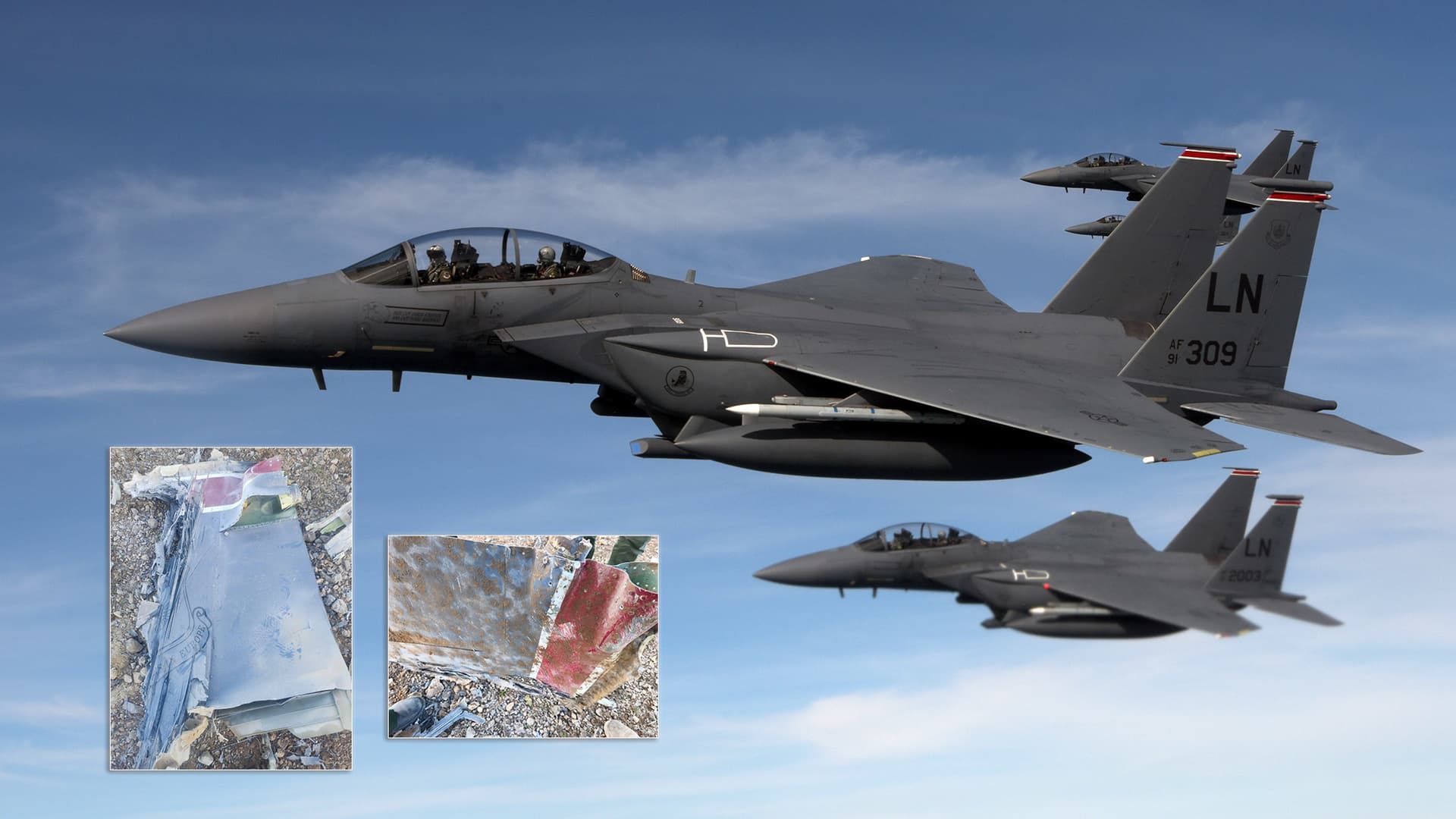
Developing Story Brings New Details to Light Across the Nation
The F-15E Strike Eagle, receiving a $17.355M-per-jet electronics overhaul, is actively deploying from Europe into ISIS and Iran deterrence missions no other U.S. jet can match on payload.
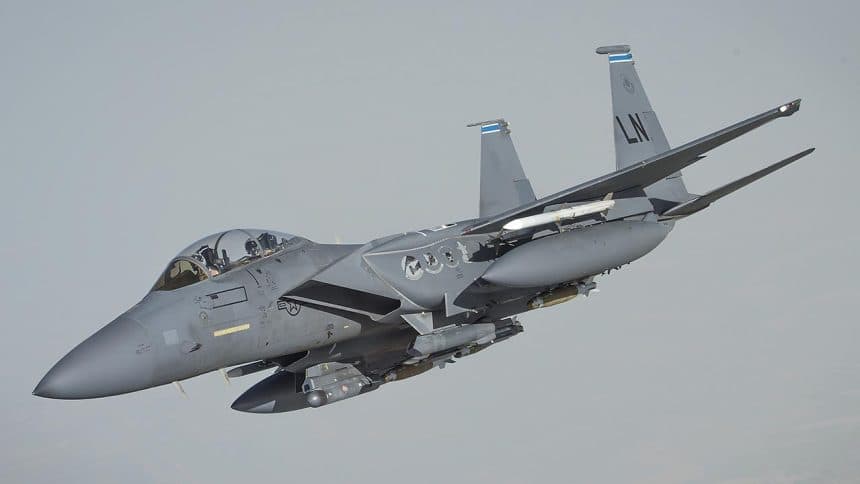
The U.S. Air Force's F-15E Strike Eagle has spent four decades defying retirement, and in 2026 it is doing so again with a ferocity that commands attention. The two most consequential numbers in its current modernization are 99 F-15Es receiving the Eagle Passive/Active Warning Survivability System (EPAWSS) at $17.355 million per system, with the first two fully upgraded jets delivered to RAF Lakenheath's 48th Fighter Wing on January 15, 2025.
That upgrade is not cosmetic. The aircraft is undergoing the most significant modernization of its operational life, a campaign centered on the new AN/APG-82(V)1 Active Electronically Scanned Array radar and the AN/ALQ-250 EPAWSS, which replaced a 1970s-era analog electronic warfare suite. At the same time, the F-15E's direct successor, the Boeing F-15EX Eagle II, is entering the fleet with a planned buy of 104 aircraft at approximately $94 million per unit.
The timing of this investment is not accidental. U.S. Central Command has confirmed that F-15E Strike Eagles are now operating in the region, where the deployment intersects with two overlapping challenges: sustained pressure on ISIS networks in Syria under Operation Hawkeye Strike, and deterrence against Iran and affiliated militias. The jets involved are tied to the 494th Expeditionary Fighter Squadron, a Strike Eagle unit forward-deployed from RAF Lakenheath, with a package consistent with a standard 12-aircraft expeditionary fighter squadron supported by KC-135 aerial refueling.
What makes the Strike Eagle irreplaceable in this role is the precise combination of capabilities the F-35 cannot replicate. The F-15EX remains unmatched in payload capacity, carrying up to 12 air-to-air missiles or a combination of JDAMs, JASSMs, and hypersonic weapons under development. U.S. military doctrine increasingly envisions the two jets as complementary: the F-35 as eyes and ears, the F-15EX and Strike Eagle as the hammer. The F-35, designed for stealth and sensor integration in the most contested airspace, simply cannot carry the volume of ordnance the Strike Eagle can on a single sortie. The F-15E is capable of deep interdiction, tactical nuclear delivery, and air-to-air combat, and its large, varied load of precision weapons and 20mm cannon make it a potent ground-attack platform, while radar-guided and IR-homing missiles give it an additional air-to-air capability.
The aircraft's two-seat crew configuration is itself a battlefield advantage. The pilot manages formation, refueling, and defensive maneuvering while the weapons system officer works the sensors, targeting systems, and weapons employment simultaneously. That division of labor becomes critical during the complex, time-sensitive interdiction missions now being prosecuted over Syria, where mobile ISIS logistics cells require both rapid identification and rapid strike authority.
Where the Strike Eagle remains genuinely vulnerable is in the most heavily defended airspace. As a fourth-generation strike fighter, the F-15E relies on speed, firepower, and electronic warfare countermeasures for survival rather than stealth. Its massive airframe was not molded with the radar-absorbent geometric precision that defines modern stealth fighters, and it possesses a significantly higher baseline radar signature, making it detectable by modern, long-range enemy radar systems before it reaches weapons range. Against layered air defenses like Russia's S-300 or Iran's indigenous Bavar-373, electronic jamming alone cannot fully close that gap.
The U.S. Air Force confirms the F-15 Eagle will fly well into the 2030s and potentially into the 2040s. While the aging F-15C/D fleet will largely retire by 2031, with select "Platinum Eagles" retained for homeland defense, the F-15E Strike Eagle and the new F-15EX are ramping up production. Boeing is aiming for a production rate of two F-15EX jets per month by the end of 2026, a ramp-up that aligns with the Air Force's broader plan to grow its fighter inventory to 1,558 combat-coded aircraft.
The math is stark: jets initially expected to leave service around 2026 are not only staying, but a structurally sound select group will be kept for homeland defense well beyond that date. For a platform that first flew in 1986, that is not an epitaph. It is an operational mandate.
Let me now format this as required:
The U.S. Air Force's F-15E Strike Eagle has spent four decades defying retirement, and in 2026 it is doing so again with a ferocity that demands explanation. The two most consequential numbers in its current modernization are 99 F-15Es receiving the Eagle Passive/Active Warning Survivability System at $17.355 million per system, with the first two fully upgraded jets delivered to RAF Lakenheath's 48th Fighter Wing on January 15, 2025.
That upgrade is not cosmetic. The aircraft is undergoing the most significant modernization of its operational life, a sweeping campaign centered on the new AN/APG-82(V)1 Active Electronically Scanned Array radar and the AN/ALQ-250 EPAWSS, which replaced a 1970s-era analog electronic warfare suite. The investment is substantial even by Pentagon standards: the F-15E's direct successor, the Boeing F-15EX Eagle II, is entering the fleet with a planned buy of 104 aircraft at approximately $94 million per unit.
The timing is not accidental. U.S. Central Command has confirmed that F-15E Strike Eagles are operating in the region, where the deployment addresses two overlapping challenges: sustained pressure on ISIS networks in Syria under Operation Hawkeye Strike, and deterrence against Iran and affiliated militias. The jets are tied to the 494th Expeditionary Fighter Squadron, forward-deployed from RAF Lakenheath, in a package consistent with a standard 12-aircraft expeditionary fighter squadron supported by KC-135 aerial refueling.
What makes the Strike Eagle difficult to replace is a precise combination of capabilities the F-35 cannot replicate. The F-15EX remains unmatched in payload capacity, carrying up to 12 air-to-air missiles or a combination of JDAMs, JASSMs, and hypersonic weapons under development. U.S. military doctrine increasingly envisions the two jets as complementary: the F-35 as the eyes and ears, the F-15EX as the hammer. The F-15E is capable of deep interdiction, tactical nuclear delivery, and air-to-air combat, with a large, varied load of precision weapons and a 20mm cannon making it a potent ground-attack platform, while radar-guided and IR-homing missiles give it an additional air-to-air capability.
The aircraft's two-seat crew configuration is itself a battlefield advantage. The pilot manages formation, refueling, and defensive maneuvering while the weapons system officer simultaneously works the sensors, targeting systems, and weapons employment. That division of labor is critical during time-sensitive interdiction missions over Syria, where mobile logistics cells require both rapid identification and immediate strike authority.
Where the Strike Eagle remains genuinely exposed is in the most heavily defended airspace. As a fourth-generation fighter, the F-15E relies on speed, firepower, and electronic warfare countermeasures for survival rather than stealth. Its massive airframe was not designed with the radar-absorbent precision that defines modern stealth fighters, giving it a significantly higher radar signature that makes it detectable by long-range enemy radar before it closes to weapons range. Against layered defenses such as Iran's Bavar-373 or Russia's S-300, jamming alone cannot fully close that gap.
The Air Force confirms the F-15 will fly well into the 2030s and potentially the 2040s. While the F-15C/D fleet will largely retire by 2031, with select "Platinum Eagles" retained for homeland defense, the F-15E and the incoming F-15EX are ramping up. Boeing is targeting a production rate of two F-15EX jets per month by the end of 2026, aligned with the Air Force's plan to grow its fighter inventory to 1,558 combat-coded aircraft.
Jets initially expected to leave service around 2026 are not only staying; a structurally sound select group will remain for homeland defense well beyond that date. For an aircraft that first flew in 1986, that is not a legacy designation. It is an operational mandate.
Sources:
Know something we missed? Have a correction or additional information?
Submit a Tip