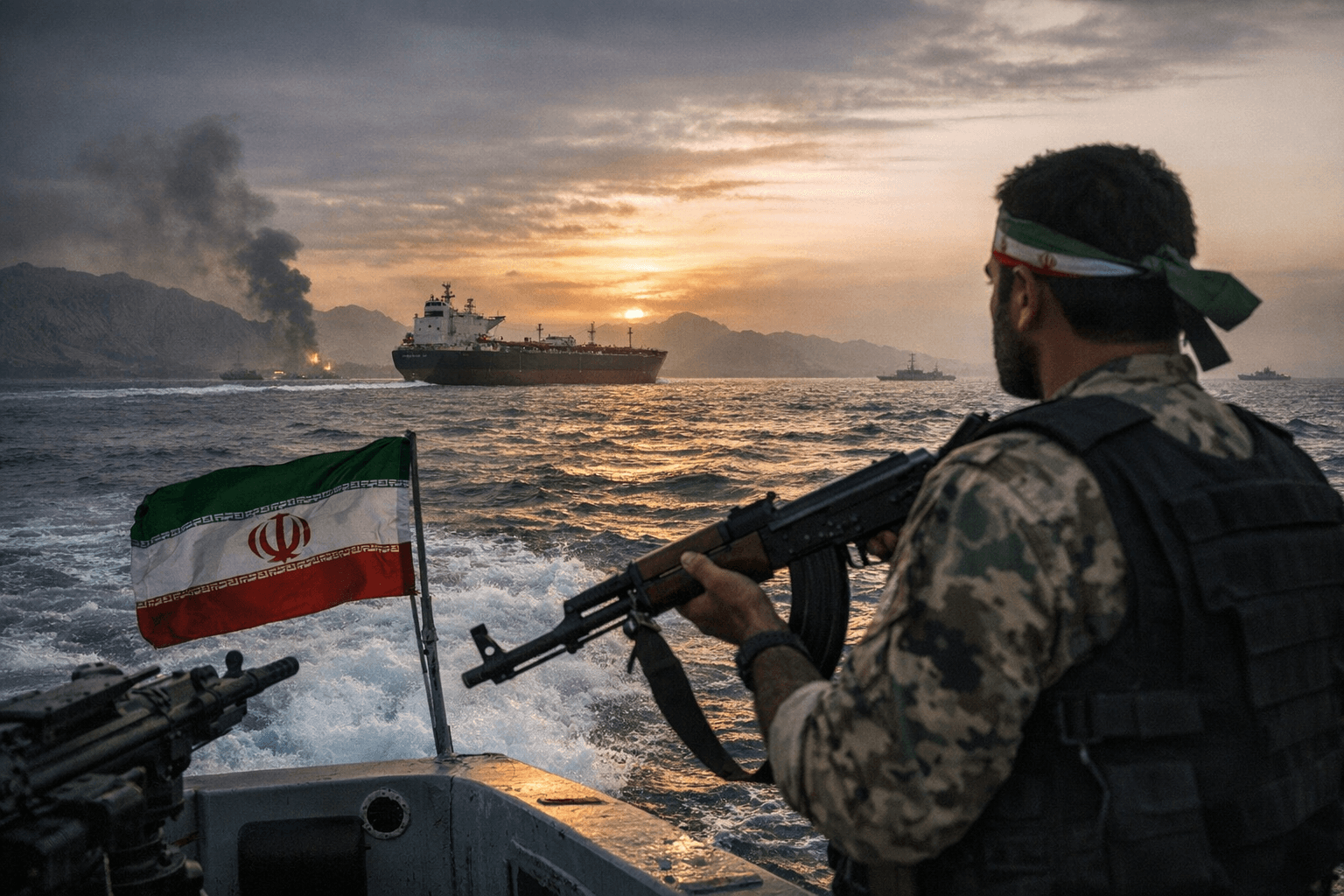
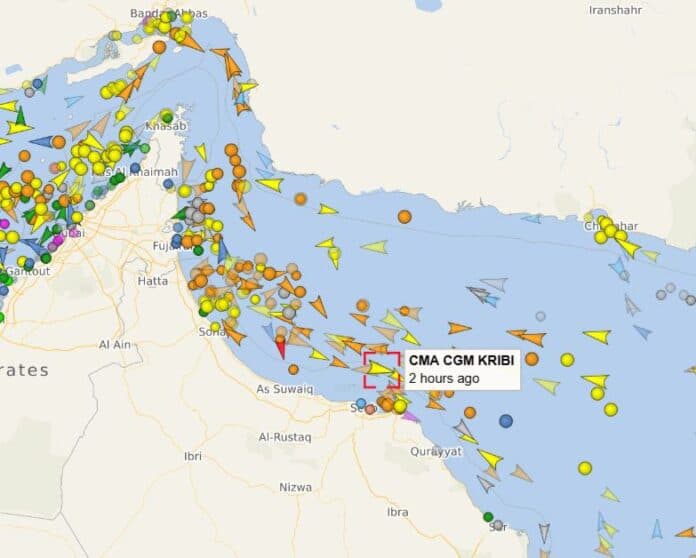
U.S. F-15E Shot Down Over Iran, One Crew Member Rescued by Special Forces
Special forces rescued one F-15E crew member from southwestern Iran after the jet was shot down, two days after Trump claimed Iran had "no anti-aircraft equipment."
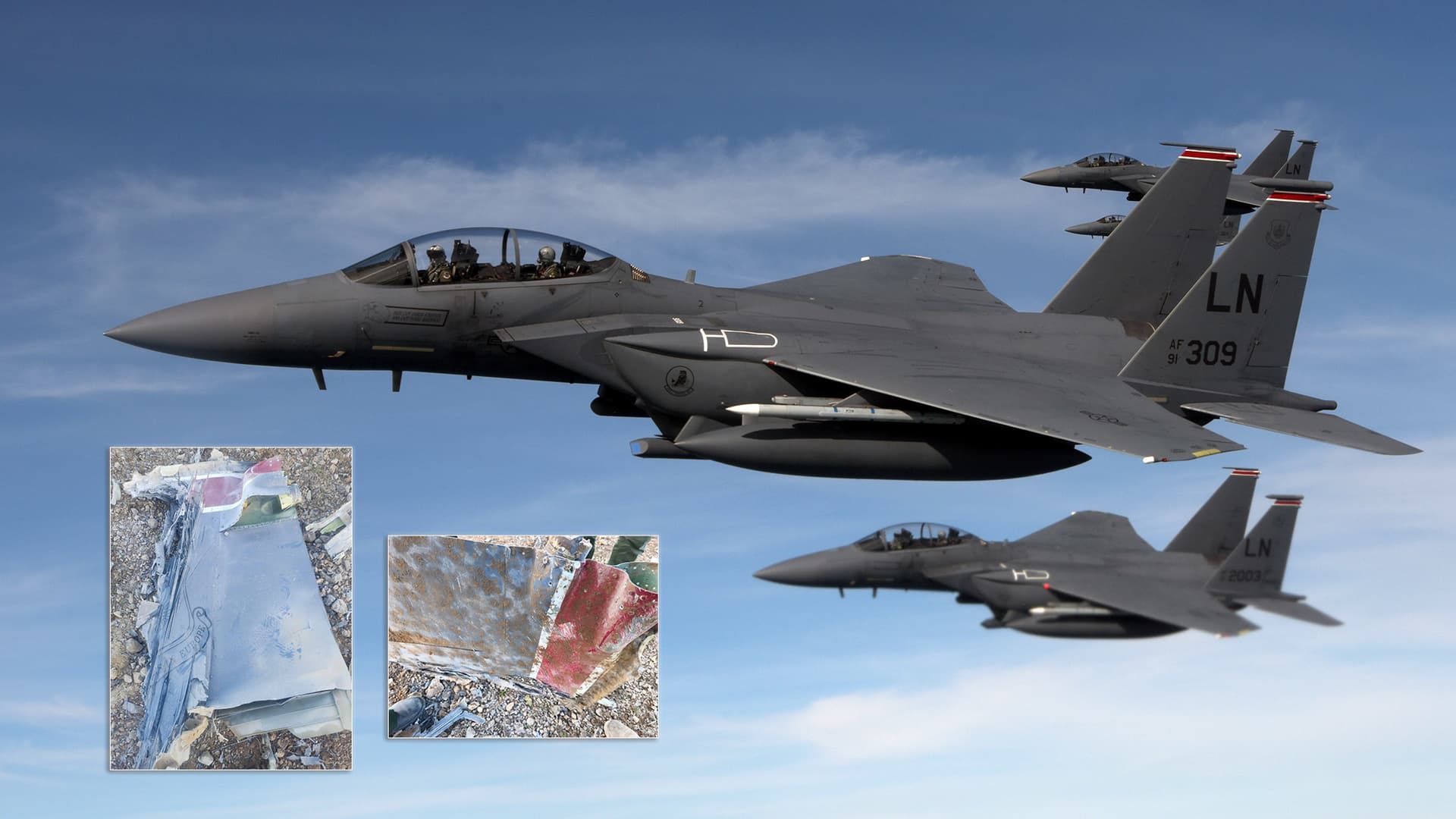
U.S. special forces rescued one of two crew members from a downed F-15E Strike Eagle in southwestern Iran on Friday, setting off a frantic search for the second airman as Iran mobilized civilians across mountainous terrain with a bounty promise for any captured American pilot.
The jet, assigned to the 48th Fighter Wing at RAF Lakenheath in the United Kingdom, went down over Kohgiluyeh and Boyer-Ahmad province, a sparsely populated, mountainous region of southwestern Iran. Tail code markings bearing the letters "LN," visible in wreckage photographs, were independently verified by open-source analysts as belonging to the 48th Fighter Wing's 493rd Fighter Squadron. Iran initially identified the aircraft as an F-35 stealth fighter, but images of the debris were quickly assessed as consistent with an F-15E Strike Eagle.
The rescue is the first confirmed recovery of a U.S. service member downed over enemy territory since Operation Epic Fury launched February 28, 2026. The rescued crew member is alive, in U.S. custody, and receiving medical treatment. Social media footage showed at least one C-130 aircraft and two Black Hawk helicopters flying low over central and southwestern Iran during the operation. An Israeli official confirmed airstrikes had been paused in areas relevant to the rescue effort. White House press secretary Karoline Leavitt confirmed President Trump had been briefed.
Iran moved quickly to pursue the second missing airman. Iranian state television aired a call for residents in Kohgiluyeh and Boyer-Ahmad and the neighboring Chaharmahal and Bakhtiari province to hand over any "enemy pilot" to police, promising a monetary reward. A regional governor separately issued a public bounty for anyone who captured U.S. crew members alive.
The shoot-down delivers a direct challenge to assertions made just days earlier at the highest levels of the U.S. government. On April 1, two days before the jet was downed, Trump stated in a nationally televised address: "They have no anti-aircraft equipment. Their radar is 100 percent annihilated. We are unstoppable as a military force." Defense Secretary Pete Hegseth, speaking at a March 31 Pentagon briefing alongside Chairman of the Joint Chiefs Gen. Dan Caine, declared that an "increase in air superiority" had enabled B-52 Stratofortress bombers to conduct their first overland missions into Iran, adding: "We don't see their navy sailing. We don't see their aircraft flying."

The IRGC-linked outlet Nour News claimed the jet "was destroyed in the skies over central Iran by a new advanced air defense system of the IRGC Aerospace Force." Iran's Khatam al-Anbiya Central Headquarters called the aircraft "completely destroyed" and suggested the pilot's chances of survival were low. Khatam al-Anbiya also separately claimed Iranian forces struck an American A-10 Thunderbolt II attack aircraft the same day, a claim a source with knowledge of the situation subsequently confirmed.
The downed F-15E is the fourth of the type lost in Operation Epic Fury overall. Three others were destroyed in a friendly fire incident over Kuwait around March 1, with no casualties. The U.S. military has also lost at least 16 MQ-9 Reaper drones over Iran since the campaign began. CENTCOM reported at least 13 Americans killed and 348 wounded as of March 31, with 315 of the wounded having returned to duty.
Former Iranian Foreign Minister Mohammad Javad Zarif published an op-ed in Foreign Affairs urging Tehran to use its "upper hand" to negotiate a "comprehensive peace deal" to "end 47 years of belligerence" with Washington, including restrictions on Iran's nuclear program. Iranian Foreign Minister Abbas Araghchi, responding to U.S. rhetoric about bombing Iran "back to the Stone Age," noted pointedly that "there was no oil or gas being pumped in the Middle East back then" — a signal that Tehran retains the capacity, and possibly the intent, to threaten the energy infrastructure that makes the region strategically irreplaceable.
Sources:
Know something we missed? Have a correction or additional information?
Submit a Tip