Iran Believes It Has the Upper Hand, Expert Suzanne Maloney Explains
Despite losing its supreme leader and facing relentless U.S.-Israel strikes, Iran still holds a weapon that no airstrike can neutralize: control of the Strait of Hormuz.
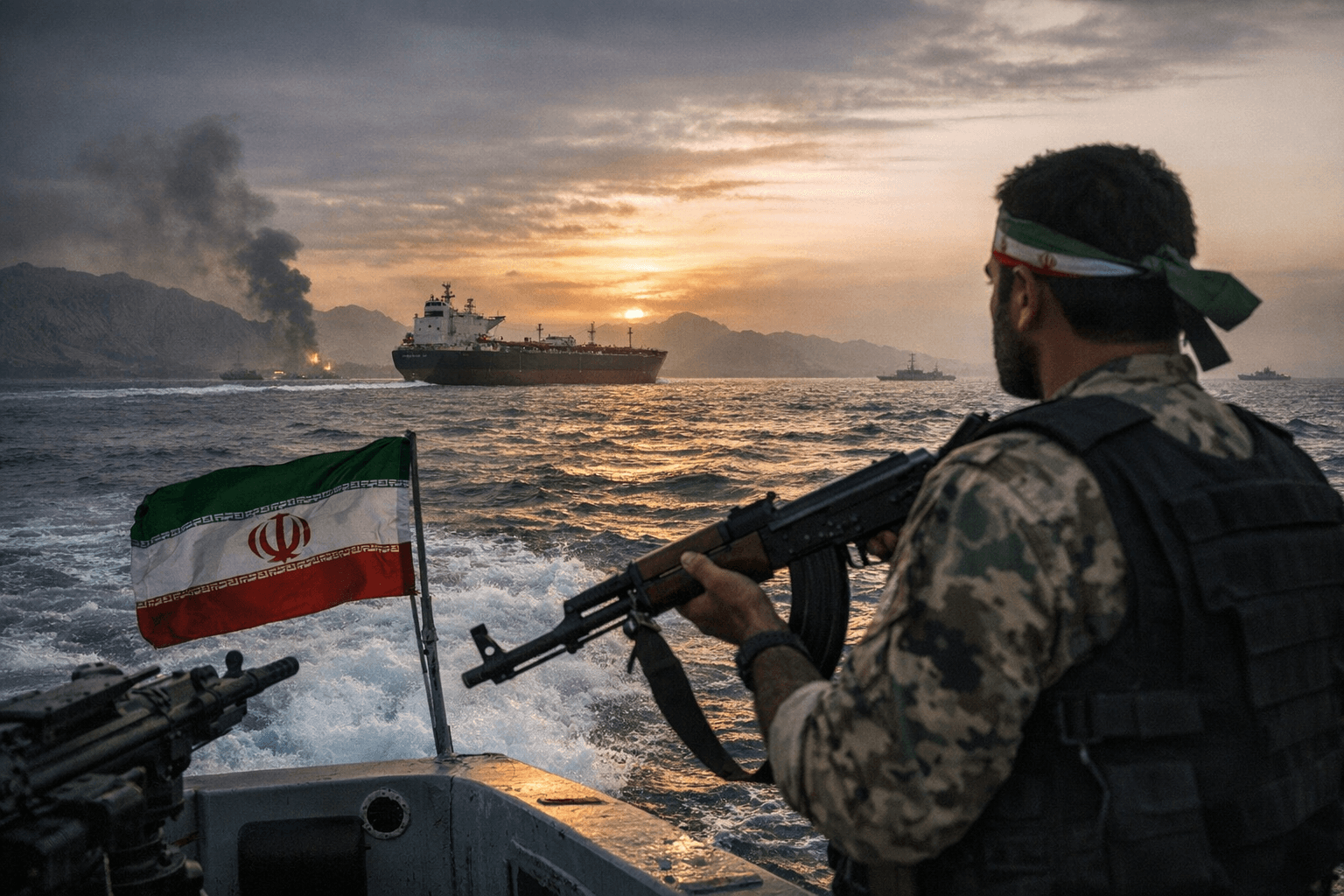
The Chokepoint That Changed Everything
When the United States and Israel launched joint military strikes on Iran on February 28, 2026, including the killing of Supreme Leader Ali Khamenei, the expectation in some Washington circles was rapid capitulation. That expectation has proven badly wrong. Iran might not enjoy the upper hand militarily, but its closure of the Strait of Hormuz gives it disproportionate power. It is precisely this dynamic that Suzanne Maloney, Vice President and Director of the Foreign Policy Program at the Brookings Institution, dissected in a conversation on The Ezra Klein Show published April 3, 2026, titled "Why Iran Believes It Has the Upper Hand."
Maloney is among the most credentialed Iran watchers in the United States. She holds a Ph.D. from the Fletcher School of Law and Diplomacy at Tufts University and has advised both Democratic and Republican administrations on Iran policy, including serving on Secretary of State Condoleezza Rice's Policy Planning staff and as an external adviser to the Obama State Department. Her analysis carries the weight of decades of direct government experience combined with rigorous academic research.
The Strait of Hormuz as Iran's Ultimate Leverage
The Strait of Hormuz, a major maritime chokepoint for global energy trade, has experienced ongoing geopolitical and economic disruption since February 28, 2026, following the joint U.S.-Israel strikes. In response, Iran launched retaliatory missile and drone attacks on U.S. military bases, Israeli territory, and Gulf states, while its Islamic Revolutionary Guard Corps issued warnings prohibiting vessel passage through the strait, leading to an effective halt in shipping traffic.
Iran's move has already triggered economic and fuel crises as far away as Africa and Asia. The episode description for the podcast frames the stakes bluntly: the effective closure of the Strait of Hormuz is about to start really biting, as countries get hit with shortages which would spike prices across the globe.
Iran can't defeat the U.S. and Israel, but it played its ultimate trump card by closing the Strait of Hormuz, a major energy exporting chokepoint, thereby holding the global economy hostage and building political costs for the U.S. The numbers behind that leverage are stark: one-fifth of the world's oil passes through those narrow waters. Iran's IRGC claimed "complete control" of the strait by March 4, and several Iran-approved ships, mostly petroleum vessels bound for China and India, have been allowed through under military escort, while Tehran threatened to set fire to any unauthorized vessel.
Trump's Dilemma and a Shrinking Set of Options
In a primetime address, President Trump proclaimed that America was "on the cusp of ending Iran's sinister threat," but he also kept open the option of boots on the ground. The podcast frames this contradiction as the central question: what are Trump's options now, and what would happen if he simply declared victory and walked away from the fight?
Trump told aides he is willing to end the military campaign against Iran even if the Strait of Hormuz remains largely closed, and leave a complex operation to reopen it for a later date. Trump's first option remains opening the Strait by negotiating an end to the war with the Iranian regime, while a second option would be to demand that allies, especially the Gulf States and NATO, lead operations.
The White House's own messaging has exposed the bind. White House Press Secretary Karoline Leavitt cited Iran's willingness to allow an additional 20 tankers to sail through the Strait in the coming days as a win for "the president's diplomacy," yet the optics are jarring since the U.S., as the world's preeminent military power, is framing a partial Iranian concession as a diplomatic victory. Meanwhile, ensuring safe passage for oil tankers through the Strait of Hormuz is not one of the "core objectives" Trump set for ending his military operation against Iran, according to press secretary Leavitt.
Trump has also threatened escalation, warning he would "obliterate" Iranian power plants if Tehran didn't reopen the strait. The U.S. military hit military facilities on Kharg Island, which handles roughly 90 percent of Iran's crude exports, but sites related to the oil trade on the government-controlled island were not hit, though Trump warned they could be next.
The Regime's Survival After Khamenei
The killing of Supreme Leader Ali Khamenei, far from decapitating the Islamic Republic's ability to resist, has in many analysts' eyes hardened Iranian resolve. Maloney has written extensively on regime durability. A piece she authored for Foreign Affairs in March 2026 is titled "Change Is Coming, but It Won't Be Fast," a headline that captures her core argument: external military pressure rarely produces the rapid political transformation its architects anticipate.
Maloney has also appeared on PBS to discuss the future of the Iranian regime under its new supreme leader, Mojtaba Khamenei, son of the slain Ali Khamenei. The transition, while unprecedented in the history of the Islamic Republic, has not produced the internal collapse some Western officials were counting on. As Maloney noted in a separate NPR interview about the broader arc of U.S.-Iran relations: "This is going to be a different kind of negotiation than we've ever seen with Iran. We can't simply settle for some constraints on its prior bad actions."
The Economic Blowback the U.S. Cannot Escape
A recurring theme in Maloney's recent commentary is the economic boomerang effect on the United States itself. In a Wall Street Journal piece cited on her Brookings profile, she has argued that "energy markets are inherently global, and there is no possibility of insulating the U.S. from the economic damage that is already occurring." Soaring oil and gas prices are rapidly shaping up as a key liability for Republicans ahead of November's midterm elections, giving Iran an indirect lever over American domestic politics that no missile strike can neutralize.
Trump has acknowledged that the strait remains a key sticking point in the war, even as he and other administration officials insist that Iran's military has been "obliterated" and that the U.S. is rapidly achieving its goals.
What Maloney's Analysis Means for the Path Ahead
The core of Maloney's argument, as framed in the Ezra Klein conversation, is that Iran entered this conflict with a clear-eyed understanding of its asymmetric leverage. It cannot match U.S. or Israeli conventional firepower, but it doesn't need to. Control of a single narrow waterway gives Tehran the power to impose costs on every oil-importing nation on earth, transforming a bilateral military confrontation into a global economic crisis that multiplies political pressure on Washington far beyond the battlefield.
That asymmetry, Maloney has long argued, is precisely why Iran's calculus should never be underestimated. The regime's willingness to absorb devastating strikes, lose its supreme leader, and still maintain functional control of the Strait of Hormuz is not irrational defiance; it is a strategy built on decades of planning for exactly this kind of pressure. For policymakers in Washington, that reality demands a level of strategic patience and diplomatic creativity that a purely military campaign simply cannot provide.
This article was produced by Prism’s automated news system from verified source data, official records, and press releases, then run through automated quality and moderation checks before publishing. The system is built and supervised by the people who set the standards it runs under. Read our full AI policy.
Did this article answer your question?


