Diné Biologist Uses Hair-Capture and Indigenous Knowledge to Monitor Chuska Bears
Diné biologist Deandra Jones used hair-capture stations and Indigenous knowledge to monitor black bears in the Chuska Mountains, improving data that matters for local safety and stewardship.
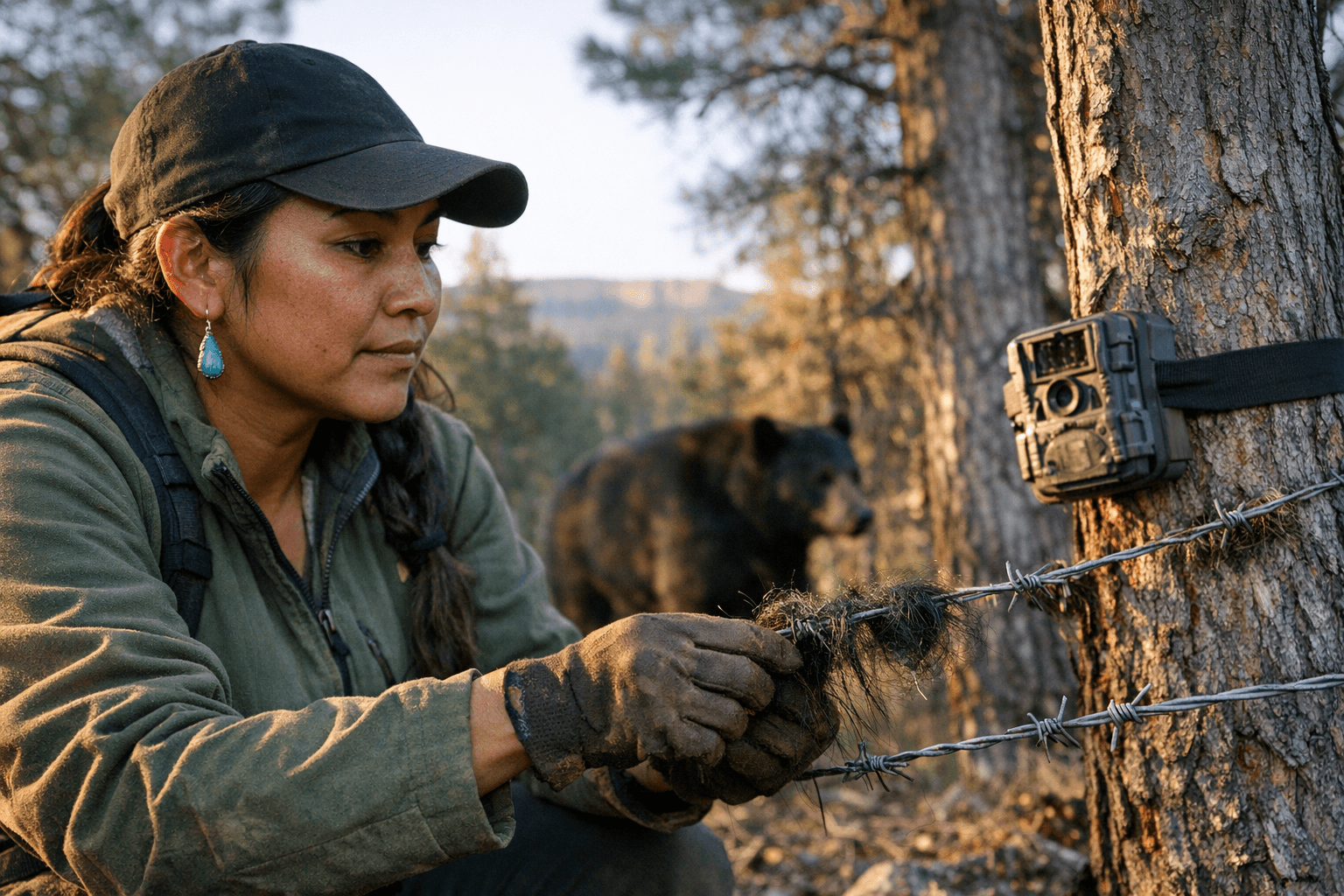
Diné biologist Deandra Jones deployed hair-capture stations in the Chuska Mountains to collect DNA samples from black bears, combining Western field methods with Diné cultural perspectives to strengthen wildlife monitoring in Apache County. Jones set up barbed-wire hair traps baited with attractants and bear lure to snag hairs for genetic analysis, a low-impact technique that yields individual identification and demographic data without handling animals.
The effort aims to fill gaps in population estimates and movement data for black bears that use the Chuska range and adjacent public and tribal lands. Accurate DNA-based monitoring can clarify whether bears are resident, transient, or moving between habitat patches - information that influences livestock safety measures, trail advisories, and habitat protection priorities for residents who live, ranch, and hunt in the region. Combining this science with Diné ecological knowledge also guides where and when to place hair-capture sites to respect seasonal use, cultural areas, and ground conditions.
Jones framed the project as a model of co-produced science: Western techniques such as genetic sampling and data analysis are paired with Diné observations on bear behavior, seasonal plant cycles, and ancestral stewardship obligations. That integration can produce richer datasets and reduce conflicts between management agencies and community priorities by centering local knowledge in study design and interpretation. For Apache County officials and tribal leaders, the approach points toward collaborative monitoring that supports both conservation and public safety.
Institutional implications extend to how tribal, county, and federal managers coordinate data sharing and response. DNA from hair samples can support population trend analyses and identify corridors used by individual bears, informing where to prioritize fencing, carcass removal, or public outreach. The work also underscores the need for sustained funding, laboratory access, and agreements that protect tribal data sovereignty while enabling regional conservation planning.
For local residents, the project offers practical benefits: better information to reduce unexpected encounters, more targeted advisories for grazing and recreation, and culturally informed conservation that respects Diné relationships with the land and its beings. As monitoring continues, results will guide management recommendations and community outreach.
Jones’ combination of hair-capture science and Indigenous knowledge provides a template for wildlife work in the Chuska Mountains and beyond. For Apache County readers, the next steps are clearer data, more cooperative management across jurisdictions, and on-the-ground measures that balance public safety with Diné stewardship obligations.
Sources:
Know something we missed? Have a correction or additional information?
Submit a Tip