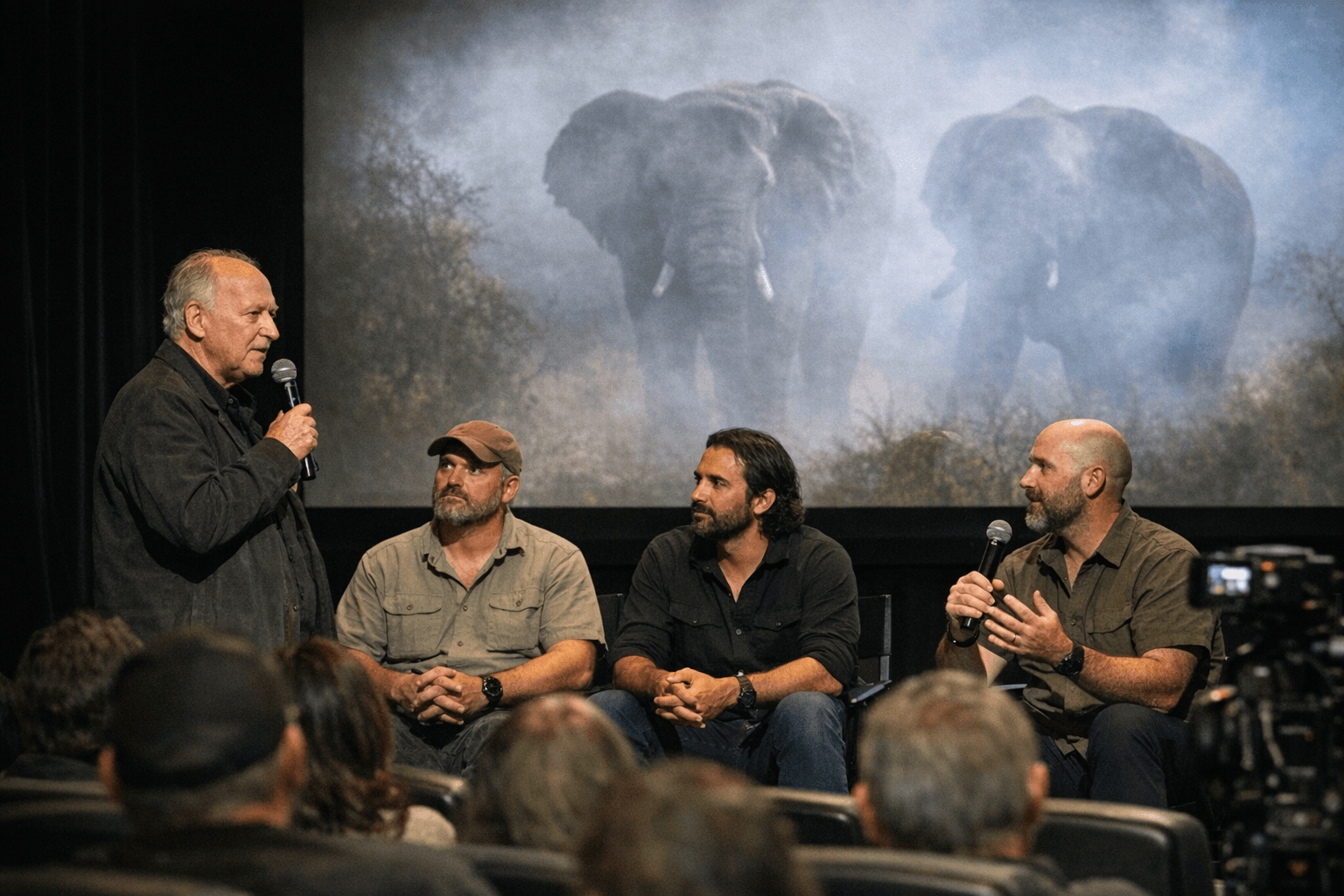
Directors of The Alabama Solution Provide Update on Incarcerated Participants' Safety
Three men featured in the Oscar‑nominated The Alabama Solution — Robert Earl Council, Melvin Ray and Raoul Poole — have been moved into solitary confinement, filmmakers and lawyers say.

Three incarcerated men who feature prominently in the Oscar‑nominated documentary The Alabama Solution have been moved into solitary confinement without explanation," filmmakers Andrew Jarecki and Charlotte Kaufman and an attorney told Deadline, a development the directors provided as a public update after the film’s January 22 Academy Award nomination for Best Documentary Feature.
The Alabama Solution is an HBO documentary that the directors say has been in development for over seven years and relies heavily on contraband cell phone footage purchased on the prison black market. A Deadline photo caption places co‑producer Alex Duran alongside Kaufman and Jarecki at the Sundance portrait studio in Park City on January 27, 2025; the film’s Oscar shortlisting and January 22 nomination have intensified scrutiny of Alabama Department of Corrections practices ahead of the March 15 awards ceremony.
Lawyers representing Robert Earl Council, Melvin Ray and Raoul Poole told The Guardian, "Since their arrival, the men have been cut off from contact with their families and are being held in isolation with no contact with other prisoners or prison staff except for a small group of guards and supervisors." The Guardian also reports an interlocutor named Sledd spoke to Raoul Poole once since the transfer and that Poole said the men are "being held in separate cells on an isolated and closely guarded floor."
Filmmakers and advocates characterize the placements as retaliation tied to the activists' roles in exposing prison abuses and supporting a 2022 prison labor strike. Andrew Jarecki told Democracy Now, "Any authoritarian administration does not want you to see what's going on inside," and added, "They can't really continue to do what they're doing if there's enough public pressure, which is one of the reasons why Alabama is so anxious about this film." Charlotte Kaufman framed the issue in national terms when she told Deadline, "I think the bottom line is the prison system is profitable and they want to keep it operating... and these men have been shown to be able to get their voices raised and lead. They are seen as really powerful activists."
Attorney Tiffany Johnson Cole, identified on Democracy Now as a childhood friend and legal counsel for Robert Earl Council, has filed a lawsuit challenging her client's transfer and said Council, Ray and Poole have "put themselves in harm's way in an effort to bring about change in a system that is truly cruel and inhumane." The Guardian and Deadline accounts note families and attorneys report being cut off from routine contact since the moves; no ADOC disciplinary records or facility names have been provided in the public statements cited so far.

The state response has focused on broader corrections work rather than the transfers themselves. Governor Kay Ivey's press secretary told Deadline, "We already knew the Oscars had a low bar... From recruiting a record number of corrections officers to doing sentencing reforms to constructing needed, new facilities, Governor Ivey is getting the job done and making it safer for inmates, officers and the public alike." Deadline also reported that Jarecki expressed incredulity at that response.
The film documents specific incidents captured on hidden phones, including what the filmmakers say is an apparent cover‑up of a beating death and a case in which filmmakers were told a man named Steven Davis had been beaten, taken to an ICU and was dead by the time the filmmakers arrived, an episode described by The Marshall Project. In the film Melvin Ray tells viewers, "It's a continuous cycle of violence, lack of accountability."
Key facts remain unverified in public reporting: exact calendar dates of the transfers, ADOC explanations or disciplinary records, court filings and dockets for the lawsuit Tiffany Johnson Cole filed, the full identities of the lawyers who issued statements to The Guardian, and facility names where Council, Ray and Poole are being held. Filmmakers, attorneys and families continue to press for those records and for wider public scrutiny as the Oscar nomination has brought renewed attention to the documentary’s allegations.
Know something we missed? Have a correction or additional information?
Submit a Tip