Disconnect boat batteries now to avoid winter electrical failures
Disconnecting and maintaining boat batteries prevents sulfation, corrosion, and fried systems during storage. Follow safe disconnect procedures and use a smart maintainer for long-term protection.
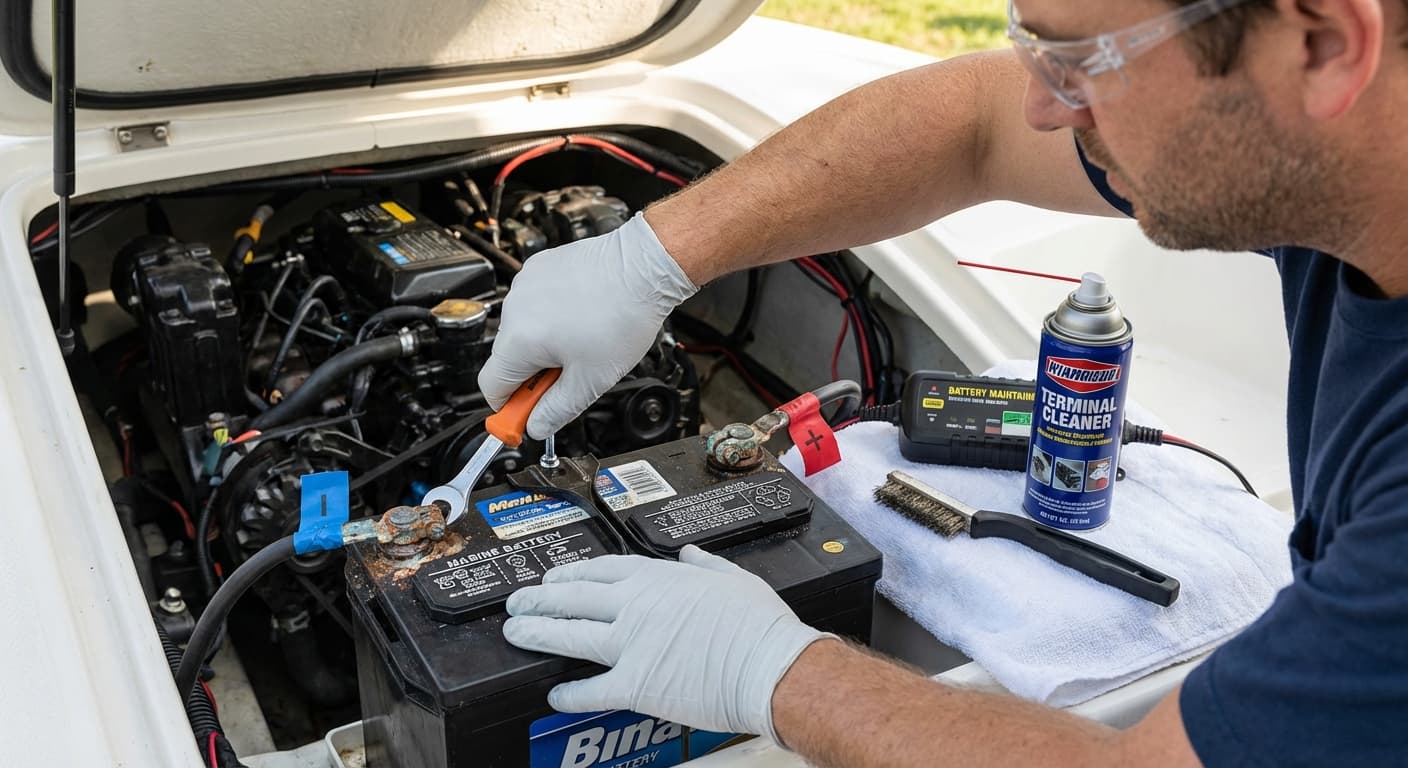
Battery disconnection isn't optional maintenance; it is the difference between firing up your boat next season and facing dead cells, corroded terminals, or a fried electrical system. Parasitic draws from GPS units, stereo memory, alarms, bilge pumps and other electronics will slowly drain batteries during storage, leading to sulfation and permanent capacity loss. Salt air and humid conditions accelerate corrosion, increasing resistance and causing poor starts and charging problems.
Start every disconnect by killing all electrical systems and observing basic safety. Disconnect the negative terminal first because it is grounded; when reconnecting, attach the positive terminal first, then the negative. Wear gloves and eye protection, use insulated tools, and avoid leaning over batteries while disconnecting to reduce exposure to acid and sparks. Ventilate the compartment to prevent hydrogen gas buildup. Never attempt to disconnect a leaking or swollen battery; call a professional.
Clean terminals during disconnection. Use a wire brush for light corrosion or a baking-soda paste for heavier deposits, then rinse and dry completely before applying a terminal protectant. Label cables before removing them so reconnection is foolproof. If storage conditions are extreme, remove batteries from the boat and store upright in a cool, dry, climate-controlled place on a non-conductive surface.
Check and top off charge before storage. A healthy 12V battery should read about 12.6 volts. For long layups use a modern smart battery maintainer rather than leaving batteries connected to the boat. Smart maintainers monitor voltage, switch charging modes, and prevent undercharge over long storage periods; they are insurance, not a luxury.
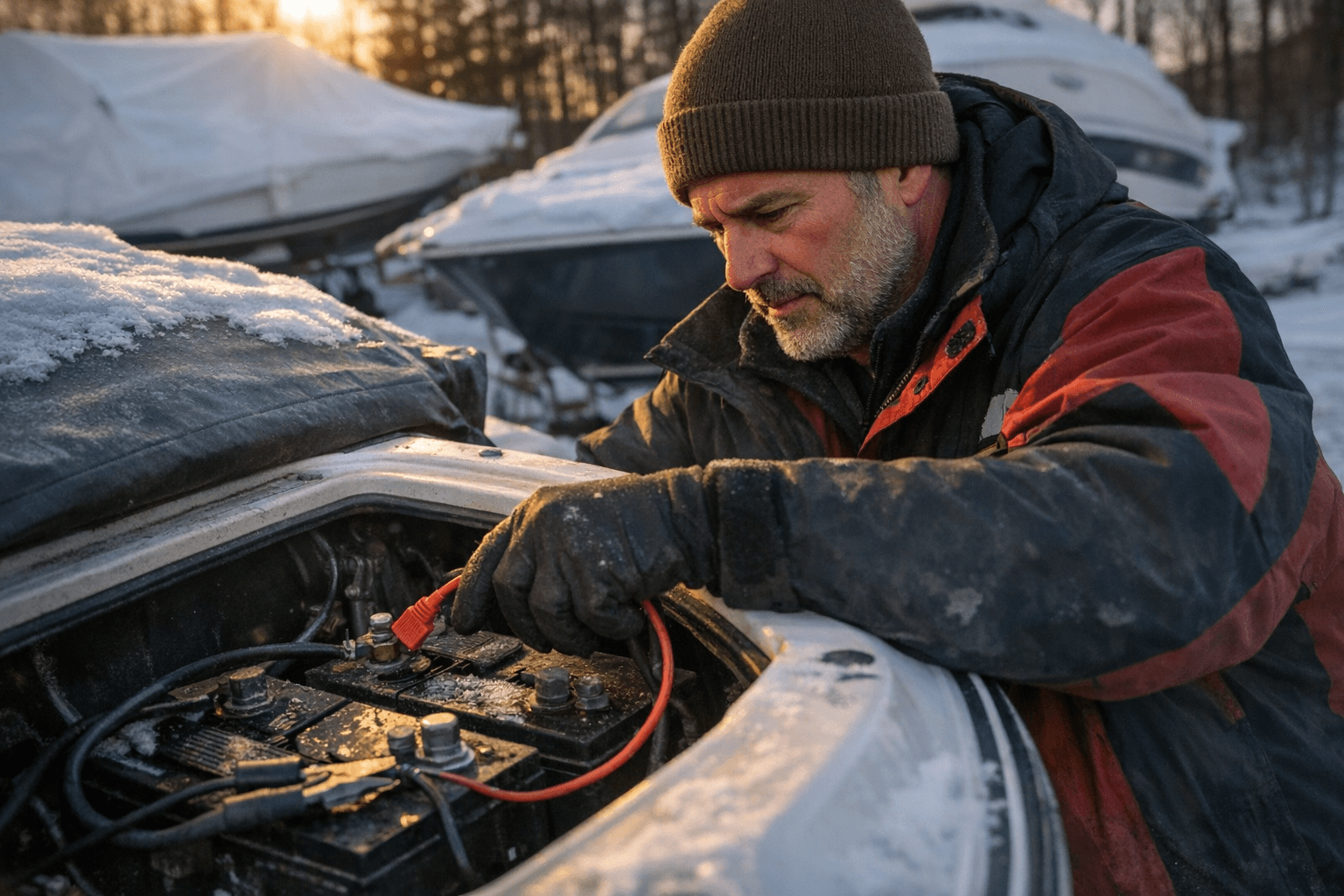
Inspect batteries for physical damage and age. Look for cracks, swelling or leaks. Flooded batteries require electrolyte checks and topping with distilled water, and hydrometers remain the tool of choice for specific-gravity checks on serviceable cells. Batteries older than roughly three to five years should be load-tested and considered for replacement if they fail to hold charge.
Practical tools to keep aboard or in your workshop include insulated wrenches and sockets, a terminal cleaner, a battery maintainer, and a multimeter or hydrometer for flooded cells. Store batteries away from open flames and dispose of old or damaged batteries at certified recycling centers.
For boatowners, this is straightforward, high-value work that pays off in reliability and safety. Verify voltages, label and photograph connections before you pull cables, plan where batteries will live for winter, and invest in a smart maintainer for any battery you expect to keep beyond a season. Following these steps now will save time and money when you next crank the engine.
Know something we missed? Have a correction or additional information?
Submit a Tip