DIY Boat Audio Guide: Waterproof Speakers, 12+ Hour Battery, Mounts
A practical do-it-yourself guide helps boat owners choose waterproof speakers, long-life batteries and secure mounts for reliable audio on the water.
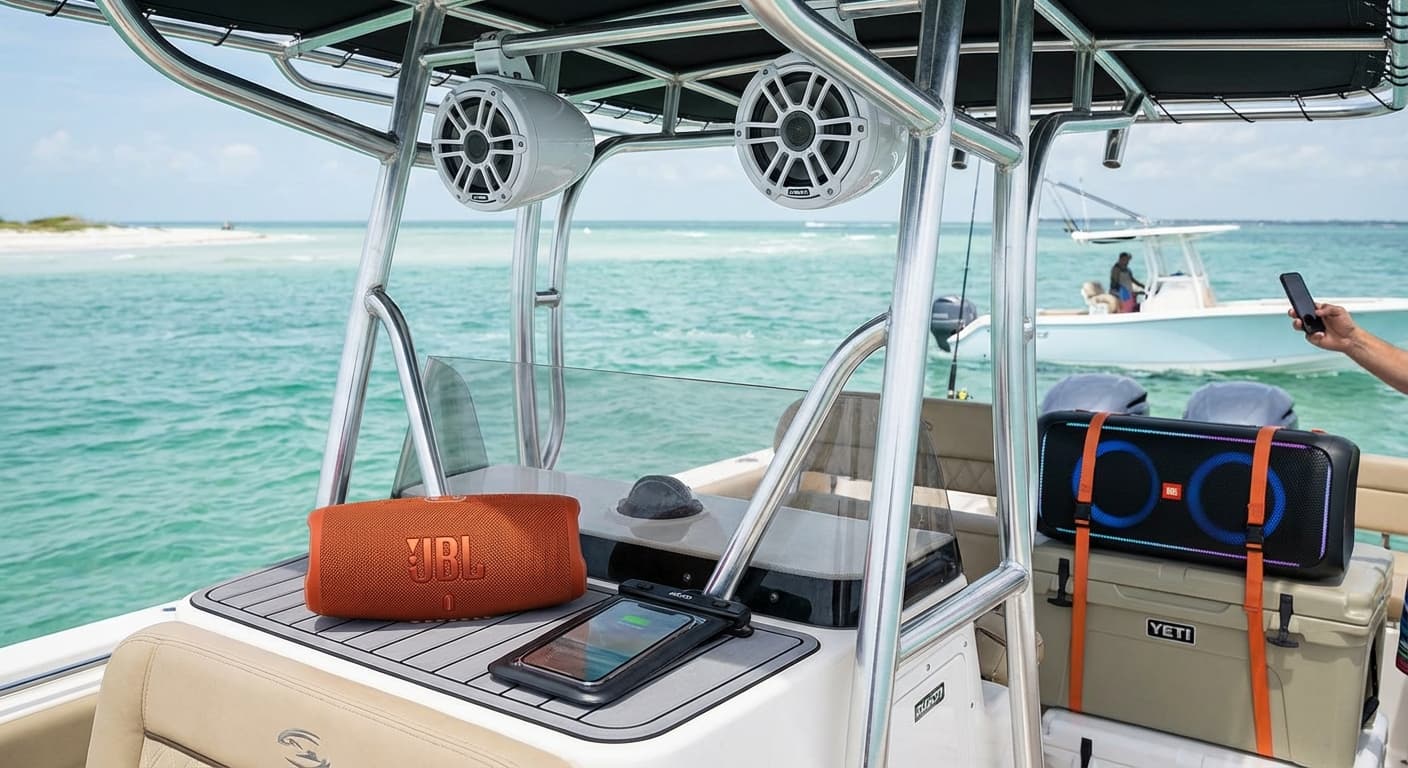
For anyone fitting sound to a skiff, center-console, or weekend cruiser, prioritize waterproofing and battery life first. Choose true waterproof and saltproof designs rated IPX7 or higher; splash-rated units rated IPX4 are marginal for bow spray, transom washes and decks that get drenched. Salt corrosion attacks connectors and mounts as surely as barnacles do hulls, so materials and sealed connections matter as much as driver count.
Plan power around realistic use. Target 12+ hours of runtime for a full day on the water, and expect much shorter runtimes when running at high volume. Portable speakers often quote long runtimes at moderate volume; in open water you will draw more current to reach listenable levels, so charge before departure and consider a portable power bank or a small marine-grade solar panel to top up over multiple days.
Volume and clarity are not the same thing. For open-water use, aim for roughly 20-50 watt-equivalent output and multi-driver designs that separate mids and highs for clarity at distance. Single-driver party speakers can hit high decibels but often muddle vocals and instruments at cruising speed. For larger boats, stereo pairs or multi-speaker mesh systems improve coverage and stage; check brand compatibility before buying because mesh networks and vendor ecosystems are not always interoperable.
Mounting and security are where many DIY installs succeed or fail. For semi-permanent installs, use marine-grade brackets and stainless fasteners; for portable setups, straps, carabiners and marine-grade rail clamps keep gear from going overboard. Non-slip cockpit mats, mesh storage bags and padded rail clamps reduce sliding and abrasion on rough waters. On smaller boats, clamp or strap a portable unit to the stern rail or a dedicated mount point rather than trusting a deck or seat to hold it.
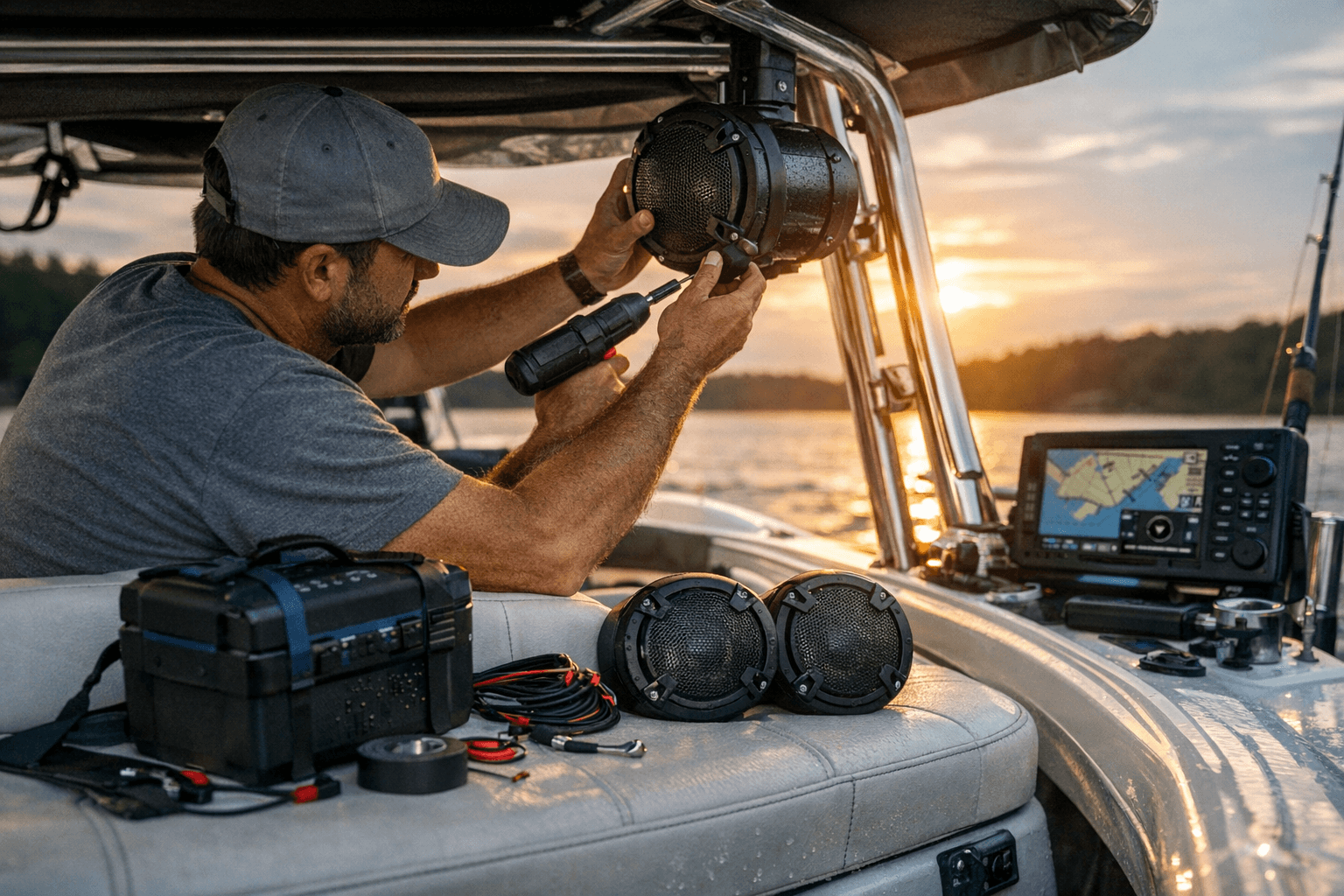
Practical integration matters. Protect phones and Bluetooth sources in waterproof pouches, and wire any fixed speakers with sealed connectors and inline fuses. Test pairing range and re-pairing behavior before you untie lines; some "party" speakers prioritize features over reconnection reliability. If you plan multi-day cruising, add a small power-management plan that includes charging the speaker, keeping a backup battery, and considering solar trickle charging for extended outings.
Etiquette and safety should guide volume choices in anchorages and wildlife areas. Keep volume reasonable where other boats gather and avoid scaring seabirds or disrupting fishing. Sound that’s loud enough to be heard at the dock can be excessive at anchor.
Match your choice to boat size and use-case: rugged portables for anglers and small day-boaters, stereo pairs or networked systems for larger cockpits, party speakers for social days, and marine-grade mounted systems for long-term installs. Test gear in real conditions, secure it against the sea, and plan power around actual use so your soundtrack stays with you and doesn’t walk the plank.
Sources:
Know something we missed? Have a correction or additional information?
Submit a Tip