How to Tell Cosmetic Gelcoat Marks from Structural Hull Damage
Learn fast, practical ways to tell if a gelcoat mark is just cosmetic or a hull problem that needs urgent repair, plus DIY triage and when to call a pro.
1. Material matters
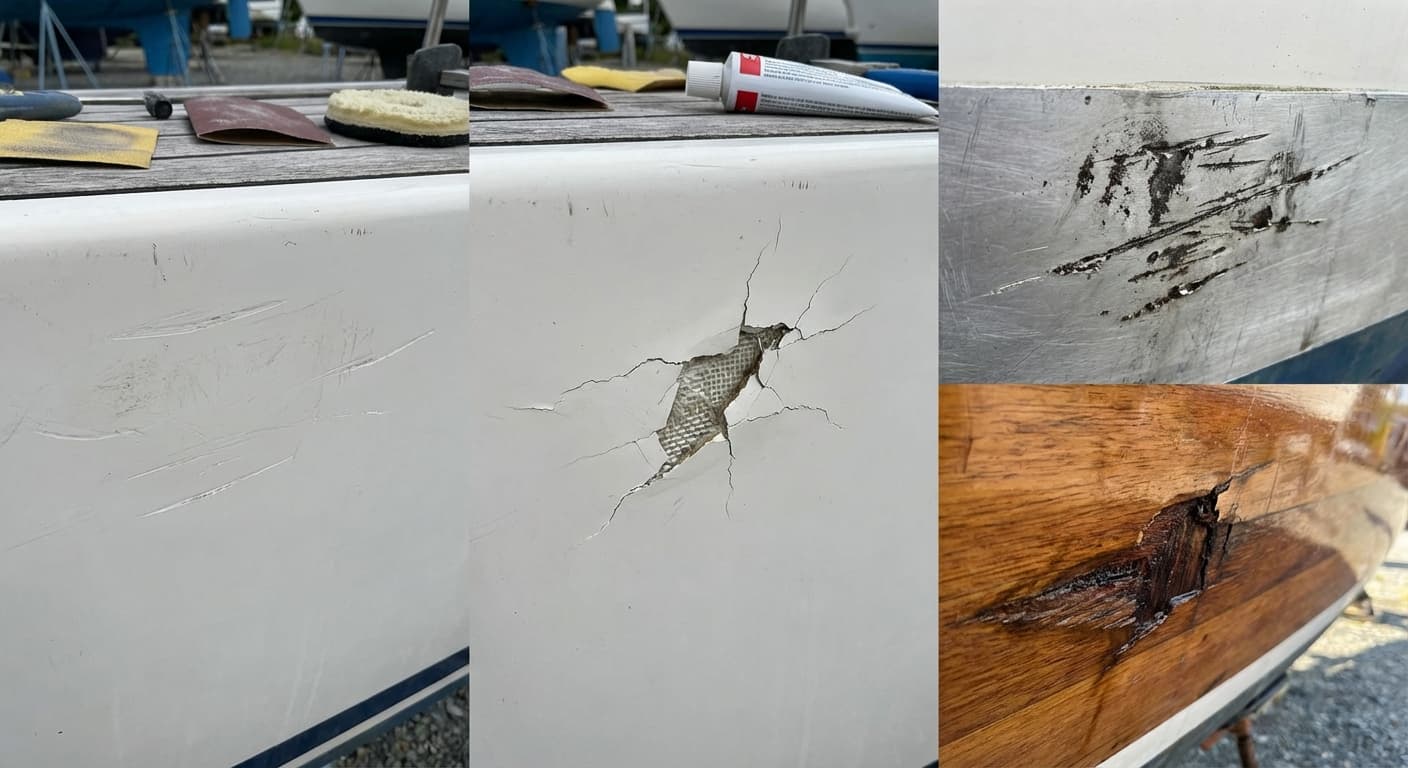
Fiberglass: a surface scratch that only mars the gelcoat is cosmetic; any cut that reveals glass fibers or laminate needs attention because water can reach the core and cause delamination. Run a magnifier over the damage—visible strands, powdery exposed mat, or a soft/chewy spot beneath the gelcoat are red flags for structural repair. Treat fiberglass exposure as a higher priority than surface scuffs to stop small marks becoming large delams.
2. Location matters
Where the mark sits changes the risk dramatically—near seams, deck-to-hull joints, through-hulls, seacocks, or transducer mounts is high priority because loads and leaks concentrate there. Even a shallow scratch by a critical fitting can propagate under stress and should be inspected and, if necessary, reinforced. Prioritize repairs in high-load or water-penetration zones over isolated mid-hull cosmetics.
3. Quick diagnostics: the fingernail test
Run your fingernail across the mark; if it catches, the scratch likely penetrates below the gelcoat and needs more than a polish. This simple, tactile check is a fast triage tool while you’re on the dock—follow up with closer inspection if the nail snags or the surface feels rough. Combine this with a visual check for fiber exposure or matte areas that won’t shine back like intact gelcoat.
4. Quick diagnostics: moisture-meter checks
Use a moisture meter to check for water intrusion around suspicious areas—take baseline readings on sound hull and compare them to readings at the mark. Elevated or inconsistent moisture readings suggest water has penetrated the laminate or core and force you to escalate the repair. Always dry the area and retest; trapped surface moisture can give false positives immediately after splashes.
5. Repair triage (priority order)
Follow this priority list to decide what to fix first: exposed laminate, cracks and spiderwebbing, scratches near fittings, bare aluminum, then purely cosmetic gelcoat marks. Exposed laminate accelerates failure and must be sealed; structural cracks can grow under load; marks near fittings risk leaks; aluminum needs rapid corrosion control; and surface-only marks are last because they don’t compromise strength. This order helps owners allocate time and budget to the riskiest items first.
6. Two-step gelcoat repair for surface marks
For marks that are purely cosmetic, start with a rubbing compound to remove oxidation and light scratches, then finish with a fine polish to restore gloss—this two-step approach restores UV-burned or scuffed gelcoat without sanding. Work small sections, wipe residue, and inspect under good light; repeat gently rather than aggressive polishing which can thin gelcoat. This is a cheap, fast fix that keeps your boat looking sharp between bigger jobs.
7. Gelcoat paste and sanding for deeper chips
Deeper chips that remove gelcoat but don’t reach laminate require gelcoat paste, proper feathering, and sanding to blend the repair. Clean the area, apply paste in layers if needed, allow full cure, then wet-sand with progressing grits until the patch is flush before polishing to match gloss. Take your time—poorly sanded or improperly cured patches trap water and stand out; practice on scrap first if you’re new to gelcoat work.

8. Aluminum and wood specifics
Aluminum scratches that expose bare metal must be cleaned, treated with a corrosion inhibitor, and touched up with primer and paint quickly to stop pitting and galvanic action. Wooden hulls need immediate sealing of any breach—water wicks fast in wood and rot starts quietly; epoxy, sealant, or varnish should be applied promptly. The materials behave differently; prioritize corrosion control on metal and moisture exclusion on wood to preserve structure.
9. When to call a professional
Call a pro for delamination, structural cracks, buckling, or damage adjacent to through-hulls, seacocks, transducers, or load-bearing fittings—these signs often require core repair, reinforcement, or dry-docking. If the damage spans layers, shows soft spots, or moisture-meter readings stay high after drying, get a surveyor or yard to assess. Don’t wait: what looks small at the dock can become a catastrophic failure offshore.
10. Inspection cadence and record-keeping
Inspect hull marks at least monthly during the season and always perform a check before haul-out or extended cruises; develop a simple checklist and photograph damage to track changes. Regular checks catch progressive cracking, spreading delams, or new corrosion before they escalate, and photos give you evidence for warranty work or resale. Community boat nights and swap meets are great times to trade repair tips and parts.
- Fender smart: use rub rails, sacrificial pads, or reinforced chafe areas where you dock and load to reduce impact nicks.
- Fast response: treat exposed laminate, bare metal, or raw wood within days—don’t let seawater do the repair for you.
- Test light and shade: inspect under varied light angles to pick up hairline cracks and spiderwebbing that hide at normal angles.
- Learning curve: practice gelcoat patches on a spare panel; a tidy DIY job saves cash and keeps the community toolbox full.
11. Prevention and practical tips
12. Community relevance and final practical wisdom
Spotting the difference between a scuff and a structural problem keeps your boat safe, resale-ready, and seaworthy—skills every owner shares at the marina. Triage ruthlessly: stop water and corrosion first, then buff for pride. When in doubt, patch temporarily, keep a close eye, and get a pro to sign off before your next passage; a stitch in time prevents a serious tow-home.
Sources:
Know something we missed? Have a correction or additional information?
Submit a Tip