DNI Tulsi Gabbard says she put Trump on speakerphone with FBI agents
Gabbard says she attended the Fulton County election search at the president's request and facilitated a brief call placing Trump on the line with agents; lawmakers demand answers.

Tulsi Gabbard, the director of national intelligence, acknowledged in a letter to congressional intelligence leaders that she was present at the FBI’s operation targeting the Fulton County Elections and Operations Hub and that she “facilitated a brief phone call for the President to thank the agents personally for their work.” The letter, dated Feb. 2, 2026, says her presence was “requested by the President and executed under my broad statutory authority to coordinate, integrate, and analyze intelligence related to election security, including counterintelligence (CI), foreign and other malign influence and cybersecurity.”
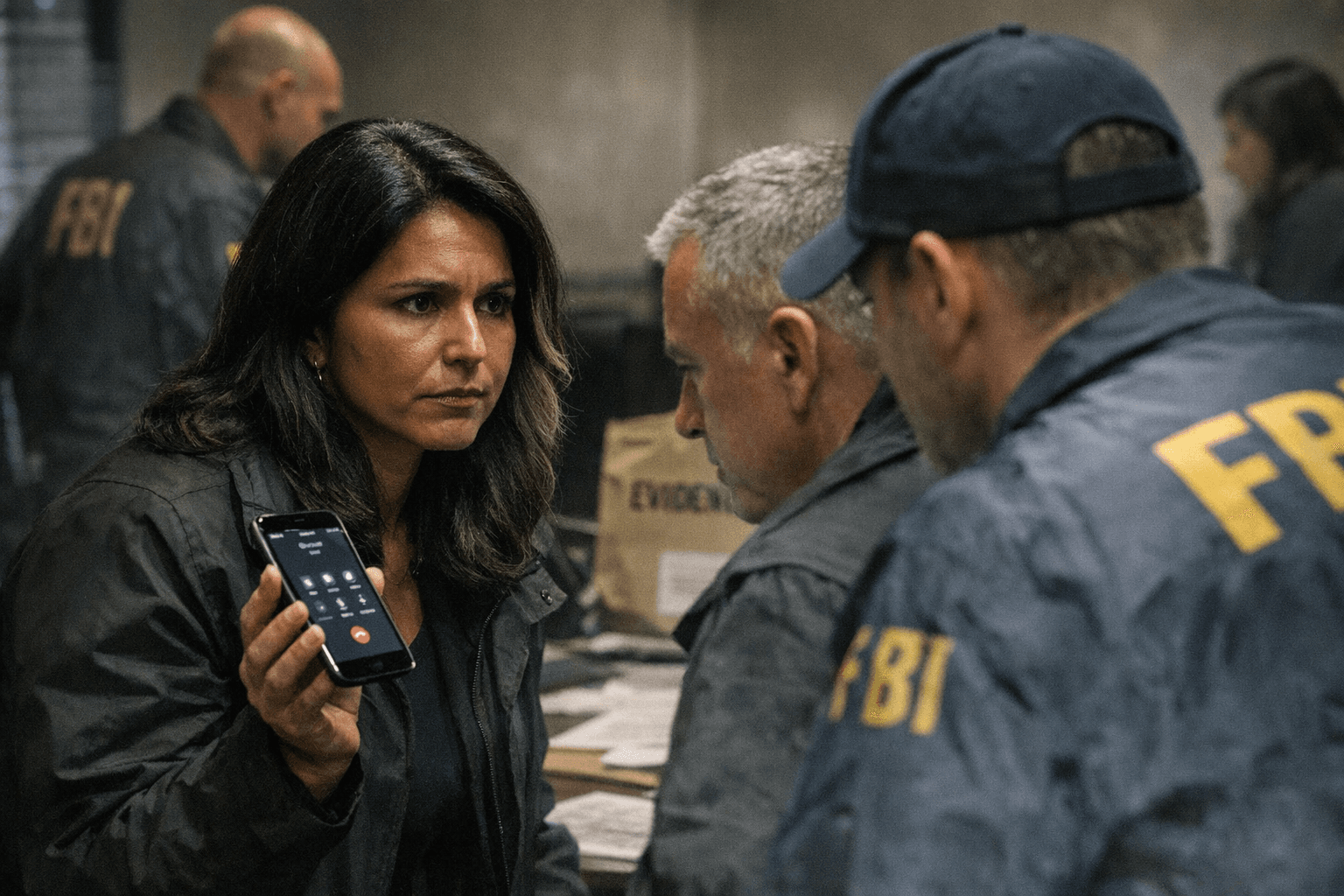
Gabbard wrote that the contacts occurred while she was “visiting the FBI Field Office in Atlanta,” where she thanked agents “for their professionalism and great work” and put the president on speakerphone so he could express appreciation. “He did not ask any questions, nor did he or I issue any directives,” she said.
The search of the Fulton County election center, captured in images dated Jan. 28, 2026, has prompted scrutiny from congressional Democrats and legal experts. Lawmakers on the Senate and House intelligence panels have requested briefings, and Sen. Mark Warner, vice chair of the Senate Intelligence Committee, demanded that Gabbard appear in person to explain her actions. Warner said on the Senate steps: “Let's be clear: It is inappropriate for a sitting president to personally involve himself in a criminal investigation tied to an election he lost.”
People briefed on the matter said the president spoke to agents on speakerphone, offering a brief commendation described by one source as a “pep talk” and telling them they were doing “great work in searching and investigating Georgia's elections.” Officials have not disclosed whether the call involved agents who had been on site during the execution of the warrant or staff at the Atlanta field office.
Gabbard defended her authority, noting that the FBI’s intelligence and counterintelligence components are among the 18 intelligence elements she oversees and pointing to a Domestic DNI Representative structure that places senior FBI field officials in liaison roles with the intelligence community. She said her activities were carried out under those responsibilities.
The episode has raised legal questions about the scope of the DNI’s statutory remit. Robert Litt, a former top ODNI lawyer, said the DNI’s authorities “are set out by statute and they don't include investigating past elections for potential fraud.” That tension between statutory lines and operational practice is now squarely before congressional overseers seeking a fuller accounting.
ODNI spokeswoman Olivia Coleman said the letter “addresses, in detail, much of what Warner said today,” but she did not indicate whether the agency would supply additional records or make Gabbard available for testimony.
The events sit against a charged political backdrop: the search was connected to an inquiry involving ballots from the 2020 election in Georgia and follows repeated, discredited claims by the president about that contest. Oversight officials and legal scholars say the optics of a presidential expression of thanks routed through the nation’s top intelligence official risk undermining the appearance of independence in criminal probes.
Outstanding factual questions remain: whether Gabbard was physically present at the Fulton County site during the warrant’s execution or met agents the following day; the identities and roles of the agents on the call; and whether DOJ or FBI records document the interaction. Committees in both chambers now face decisions about subpoenas, testimony, and the policies that govern interaction between political principals and investigative personnel, decisions that will shape public confidence in institutions and in the fairness of high-stakes election-related investigations.
This article was produced by Prism’s automated news system from verified source data, official records, and press releases, then run through automated quality and moderation checks before publishing. The system is built and supervised by the people who set the standards it runs under. Read our full AI policy.
Did this article answer your question?

