Dog Aging Project studies 53,800 dogs to reveal healthy aging
With 53,800 enrolled dogs, the Dog Aging Project is turning companion animals into a rare model for healthier aging, not just longer lives.
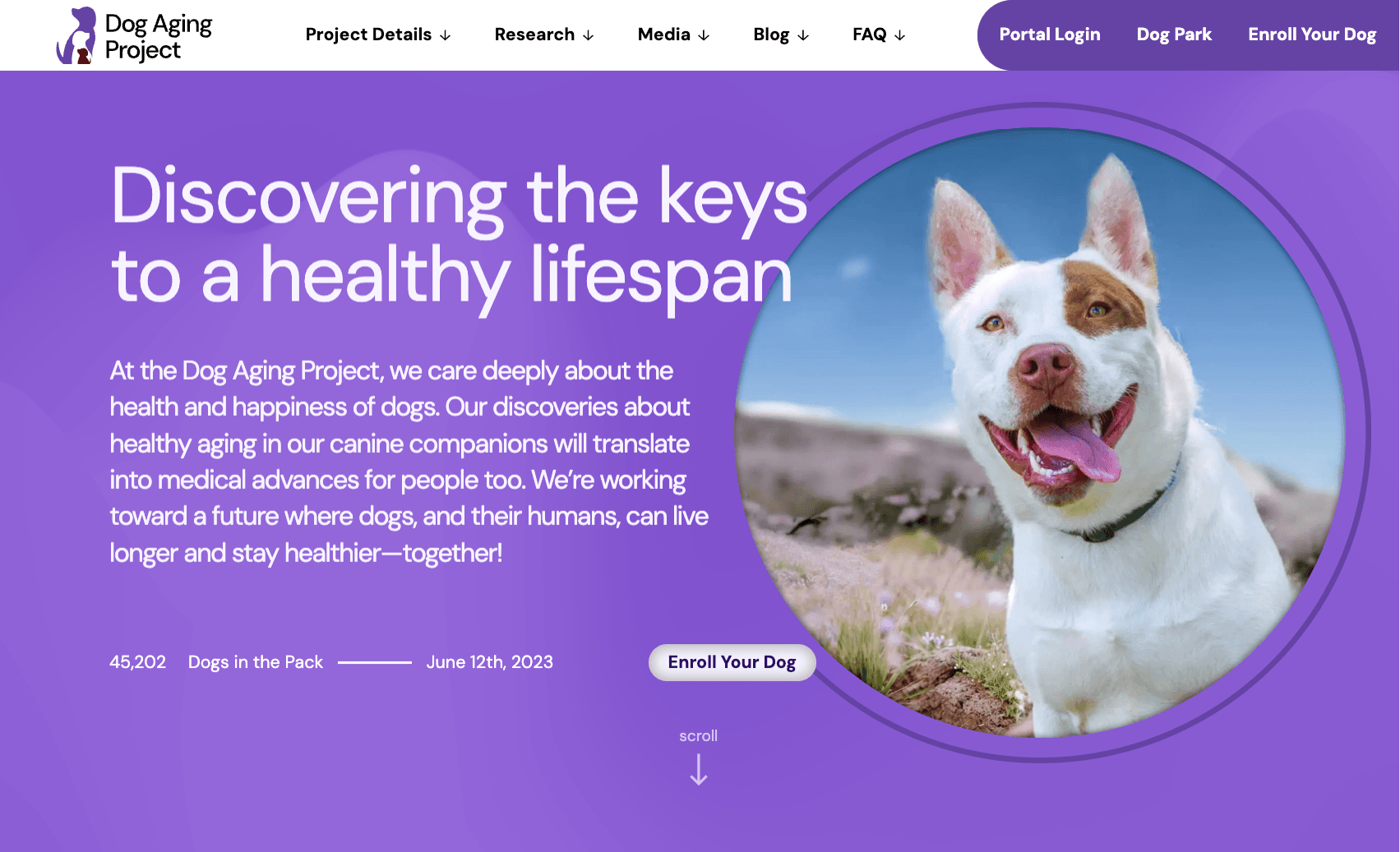
Dogs are becoming one of the most useful ways to study healthy aging because they live where people live, eat what households feed them, and develop many of the same age-related diseases on a shorter timetable. The Dog Aging Project, co-founded in 2014 by biologist Matt Kaeberlein, has grown into a nationwide effort that said it had enrolled 53,800 dogs as of May 5, 2026, making it the world’s most ambitious canine health study.
Why dogs matter for healthy aging
The appeal of dogs as a research model is simple and powerful: they are companions, not lab animals sealed off from ordinary life. The National Institute on Aging and the NIH Division of Aging Biology support the project because companion dogs offer a long-term, real-world look at how genetics, environment, lifestyle, and medical care shape aging across an entire lifespan.
That matters for public health as well as biology. Dogs experience the same kinds of variation that people do, including differences in diet, exercise, and access to veterinary care, which means the study can surface how everyday conditions influence aging rather than just how a controlled lab setting does. For researchers trying to understand health equity, that real-world complexity is part of the value.
How the project follows aging in the real world
The Dog Aging Project is built as a long-term longitudinal study, which means it does not just take a snapshot of canine health. It follows aging in companion dogs over time through annual owner surveys, veterinary medical records, blood samples, and MRI data, allowing scientists to connect what families observe at home with what clinicians measure in the exam room.
CBS News described the effort in a 60 Minutes report that aired March 22, 2026 and was updated June 7, 2026, saying the study involved more than 50,000 dogs and research at hundreds of veterinary clinics and hospitals. That scale matters: by drawing in dogs from many communities and care settings, the project is better positioned to reflect the diversity of real life than a small, highly selected trial ever could.
The research agenda is broad. The project studies genetics, environment, lifestyle, and health outcomes across the canine lifespan, while also tracking canine diets, exercise, blood biomarkers, and brain aging. In practical terms, that gives scientists a way to ask which factors help dogs stay mobile, mentally sharp, and medically stable for longer, and which ones push them toward decline.
Inside TRIAD, the rapamycin trial
One of the project’s signature efforts is TRIAD, short for Test of Rapamycin in Aging Dogs. It is a randomized, placebo-controlled, double-masked, multicenter clinical trial designed to test whether rapamycin can prolong lifespan and improve healthspan metrics in healthy middle-aged dogs.
Rapamycin is attracting attention because it has already been shown to increase lifespan in mice, but dogs are where researchers are trying to see whether that promise translates into a more complex mammalian species living in ordinary homes. The goal is not simply to add years, but to extend the years dogs spend in good health, with better function and less disease.
The trial gained momentum in 2024 when the NIH awarded a $7 million grant to expand it. That funding allowed the work to spread across multiple sites, a design that strengthens the science by making the results less dependent on one clinic, one region, or one narrow population of dogs.
The funding fight behind the science
The project’s reach nearly narrowed sharply in early 2024, when federal support was not renewed and as much as 90 percent of the annual budget was at risk. For a study built on continuity, that kind of lapse is more than a budget line problem. It threatens the kind of long-term data collection that makes aging research meaningful in the first place.
The team later said it was diversifying funding and had created the Dog Aging Institute nonprofit to help sustain the work. That shift underscores a larger policy lesson: large public-health studies often depend on patient, durable investment, especially when the payoff may take years to emerge but could ultimately shape how medicine understands aging itself.
There is also a community dimension to the project’s design. By working through hundreds of veterinary clinics and hospitals, the study is not confined to elite research centers. It reaches into the places where people already care for their dogs, which broadens participation and makes the findings more likely to reflect the social and economic variety of everyday life.
The promise of the Dog Aging Project is not that dogs will become a perfect stand-in for people, but that they may reveal which interventions truly improve the quality of later life. If that works, the benefits could extend beyond veterinary medicine, offering a clearer path toward measuring and supporting healthspan in humans as well.
This article was produced by Prism’s automated news system from verified source data, official records, and press releases, then run through automated quality and moderation checks before publishing. The system is built and supervised by the people who set the standards it runs under. Read our full AI policy.
Did this article answer your question?